If you have any questions, you are always welcome to contact us. We'll get back to you as soon as possible, withing 24 hours on weekdays.
Customer service
All questions about your order, return and delivery must be sent to our customer service team by e-mail at yourstore@yourdomain.com
Sale & Press
If you are interested in selling our products, need more information about our brand or wish to make a collaboration, please contact us at press@yourdomain.com
Help
If you have any questions, you are always welcome to contact us. We'll get back to you as soon as possible, withing 24 hours on weekdays.
Customer service
All questions about your order, return and delivery must be sent to our customer service team by e-mail at yourstore@yourdomain.com
Sale & Press
If you are interested in selling our products, need more information about our brand or wish to make a collaboration, please contact us at press@yourdomain.com
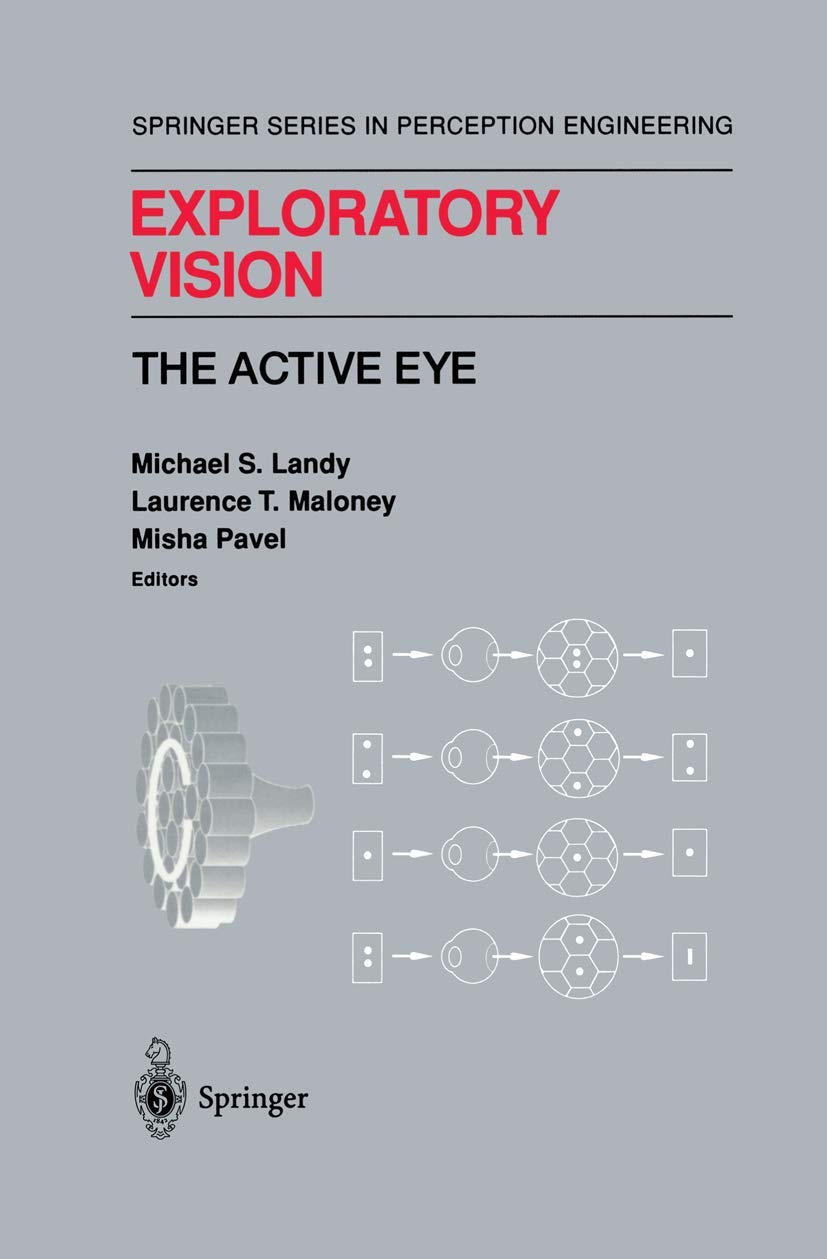
Advances in sensing, signal processing, and computer technology during the past half century have stimulated numerous attempts to design generalpurpose ma chines that see. These attempts have met with at best modest success and more typically outright failure. The difficulties encountered in building working com puter vision systems based on stateoftheart techniques came as a surprise. Perhaps the most frustrating aspect of the problem is that machine vision sys tems cannot deal with numerous visual tasks that humans perform rapidly and effortlessly. In reaction to this perceived discrepancy in performance, various researchers (notably Marr, 1982) suggested that the design of machinevision systems should be based on principles drawn from the study of biological systems. This 'neuro morphic' or 'anthropomorphic' approach has proven fruitful: the use of pyramid (multiresolution) image representation methods in image compression is one ex ample of a successful application based on principles primarily derived from the study of biological vision systems. It is still the case, however, that the perfor of computer vision systems falls far short of that of the natural systems mance they are intended to mimic, suggesting that it is time to look even more closely at the remaining differences between artificial and biological vision systems.
⚠️ WARNING (California Proposition 65):
This product may contain chemicals known to the State of California to cause cancer,
birth defects, or other reproductive harm.
For MAP (Minimum Advertised Price) violations and Intellectual Property (IP) or Trademark concerns, please contact:
support@ergodebooks.com
⚠️ California Proposition 65 Warning: Some products sold on this website may expose you to chemicals known to the State of California to cause cancer, birth defects, or other reproductive harm. For more information, visit www.P65Warnings.ca.gov.