
Title
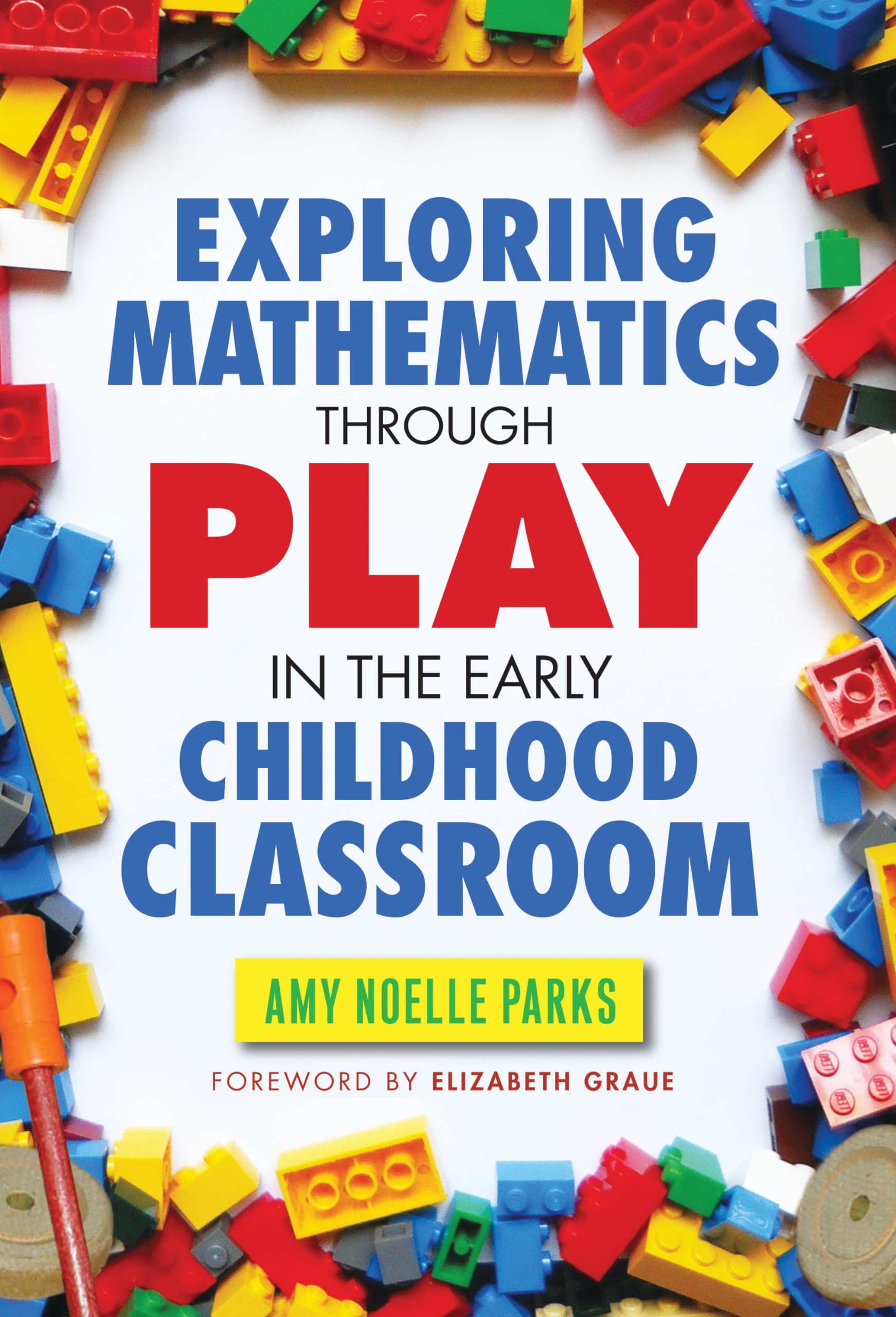
Exploring Mathematics Through Play in the Early Childhood Classroom (Early Childhood Education (Teacher's College Pr)),New
Sold by Ergodebooks, an authorized reseller.
Returns accepted within 30 days | support@ergodebooks.com
Shipping Information
- Free Standard Shipping — United States only
- Processing Time: 3–5 business days
- Estimated Delivery: 6–10 business days after dispatch
- Double-boxed, fully insured & discreetly packaged
- Tracking number sent via email once dispatched
Returns & Refund
Returns accepted within 30 days of delivery.
Damaged or Defective Item
Free return shipping + replacement or full refund
Wrong Item Received
Free return shipping + replacement or full refund
Change of Mind
Return shipping at customer's expense · 25% restocking fee applies
Payment Option

This practical book provides pre and inservice teachers with an understanding of how math can be learned through play. The author helps teachers to recognize the mathematical learning that occurs during play, to develop strategies for mathematizing that play, and to design formal lessons that make connections between mathematics and play. Common Core State Standards are addressed throughout the text to demonstrate the ways in which play is critical to standardsbased mathematics teaching, and to help teachers become more familiar with these standards. Classroom examples illustrate that, unlike most formal tasks, play offers children opportunities to solve nonroutine problems and to demonstrate a variety of mathematical ways of thinkingsuch as perseverance and attention to precision. This book will help put play back into the early childhood classroom where it belongs.Book Features: Makes explicit connections to play and the Common Core State Standards in Mathematics. Offers many examples of free play activities in which mathematics can be highlighted, as well as formal lessons that are inspired by play. Provides strategies for making assessments more playful, helping teachers meet increasing demands for assessment data while also reducing child stress. Includes highlight boxes with recommended resources, questions for reflection, key research findings, vocabulary, lesson plan templates, and more.
⚠️ WARNING (California Proposition 65):
This product may contain chemicals known to the State of California to cause cancer, birth defects, or other reproductive harm.
For more information, please visit www.P65Warnings.ca.gov.
- Q: What is the main focus of 'Exploring Mathematics Through Play in the Early Childhood Classroom'? A: The book focuses on how mathematics can be learned through play, providing strategies for teachers to integrate play into mathematical learning while adhering to Common Core State Standards.
- Q: Who is the author of this book? A: The author of the book is Amy Noelle Parks.
- Q: What age group is this book intended for? A: This book is intended for pre- and inservice teachers working with early childhood education, typically for children aged three to eight.
- Q: How many pages does the book have? A: The book has a total of 160 pages.
- Q: Is this book suitable for both new and experienced teachers? A: Yes, the book is designed for both pre- and inservice teachers, making it suitable for those new to teaching as well as experienced educators.
- Q: What type of binding does the book have? A: The book is available in paperback binding.
- Q: Does the book provide examples of activities for teaching math? A: Yes, it includes many examples of free play activities that highlight mathematical concepts, as well as formal lesson plans inspired by play.
- Q: What educational standards does this book address? A: The book addresses the Common Core State Standards in Mathematics throughout its content.
- Q: When was 'Exploring Mathematics Through Play in the Early Childhood Classroom' published? A: The book was published on January 1, 2015.
- Q: What additional resources does the book provide for teachers? A: The book includes highlight boxes with recommended resources, questions for reflection, key research findings, vocabulary, and lesson plan templates.