If you have any questions, you are always welcome to contact us. We'll get back to you as soon as possible, withing 24 hours on weekdays.
Customer service
All questions about your order, return and delivery must be sent to our customer service team by e-mail at yourstore@yourdomain.com
Sale & Press
If you are interested in selling our products, need more information about our brand or wish to make a collaboration, please contact us at press@yourdomain.com
Help
If you have any questions, you are always welcome to contact us. We'll get back to you as soon as possible, withing 24 hours on weekdays.
Customer service
All questions about your order, return and delivery must be sent to our customer service team by e-mail at yourstore@yourdomain.com
Sale & Press
If you are interested in selling our products, need more information about our brand or wish to make a collaboration, please contact us at press@yourdomain.com
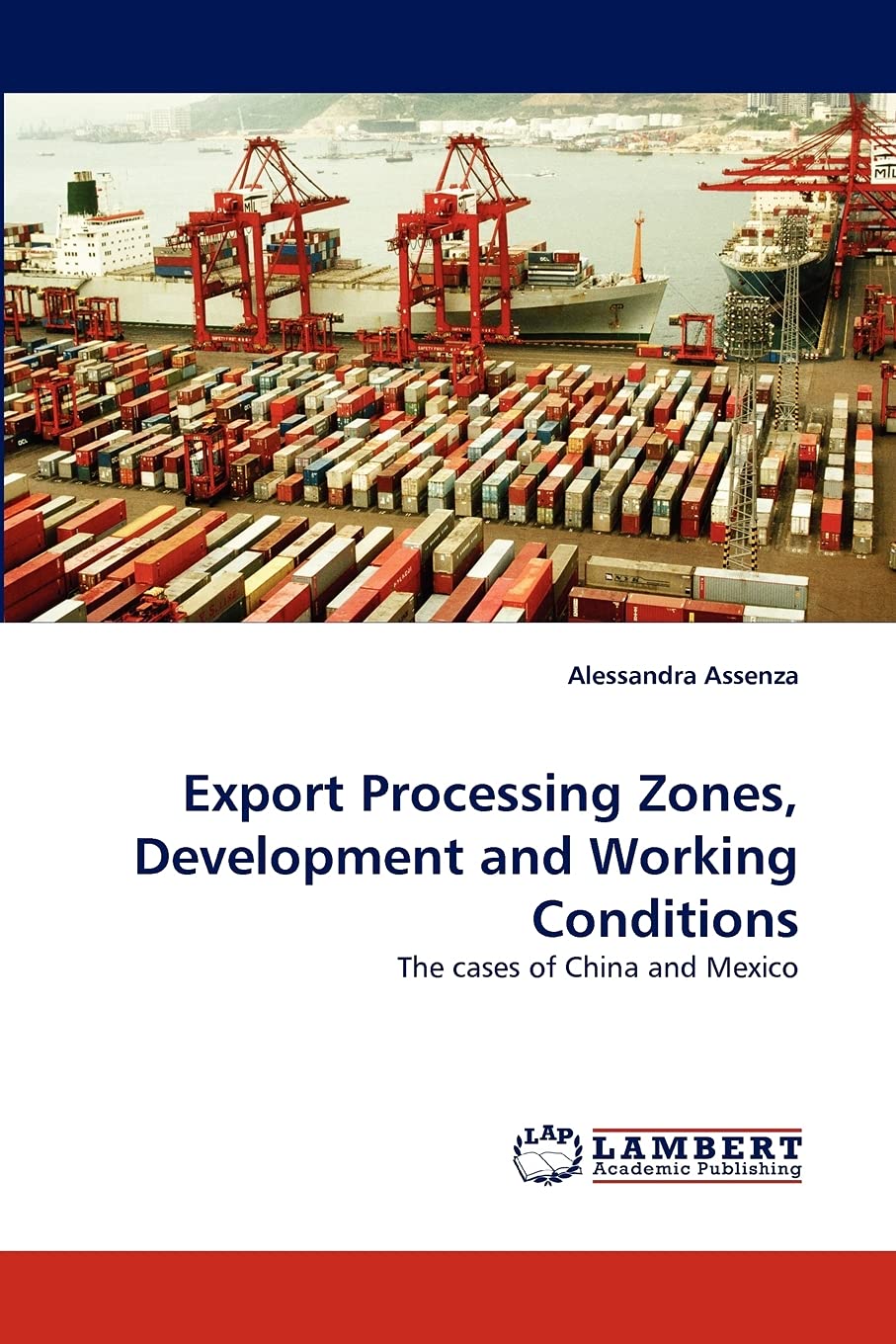
Considered as "engines" for development and trade liberalisation in developing countries, Export Processing Zones (EPZs) have been introduced and massively expanded in the last decades with the aim to increase exports and FDI, while generating employment and upgrading technology. Today there are around 3500 EPZs throughout the world, operating in 130 countries and employing 66 million of people. While analysing the cases of EPZs in China and Mexico, this book proposes an answer to the following question: How an EPZ, built up as a trade policy tool, can be an instrument of sustainable economic and social development? This work therefore provides the reader with a general framework on EPZs and examines several possible solutions to improve their social sustainability. It argues that EPZs reproduce a model similar to the economy of the rest of the country, but potentially easier for government to influence and monitor. Thus, if further inserted in a wider programme of development, zones can represent a driving force towards decent work, social justice and social inclusion.
⚠️ WARNING (California Proposition 65):
This product may contain chemicals known to the State of California to cause cancer,
birth defects, or other reproductive harm.
For MAP (Minimum Advertised Price) violations and Intellectual Property (IP) or Trademark concerns, please contact:
support@ergodebooks.com
⚠️ California Proposition 65 Warning: Some products sold on this website may expose you to chemicals known to the State of California to cause cancer, birth defects, or other reproductive harm. For more information, visit www.P65Warnings.ca.gov.