
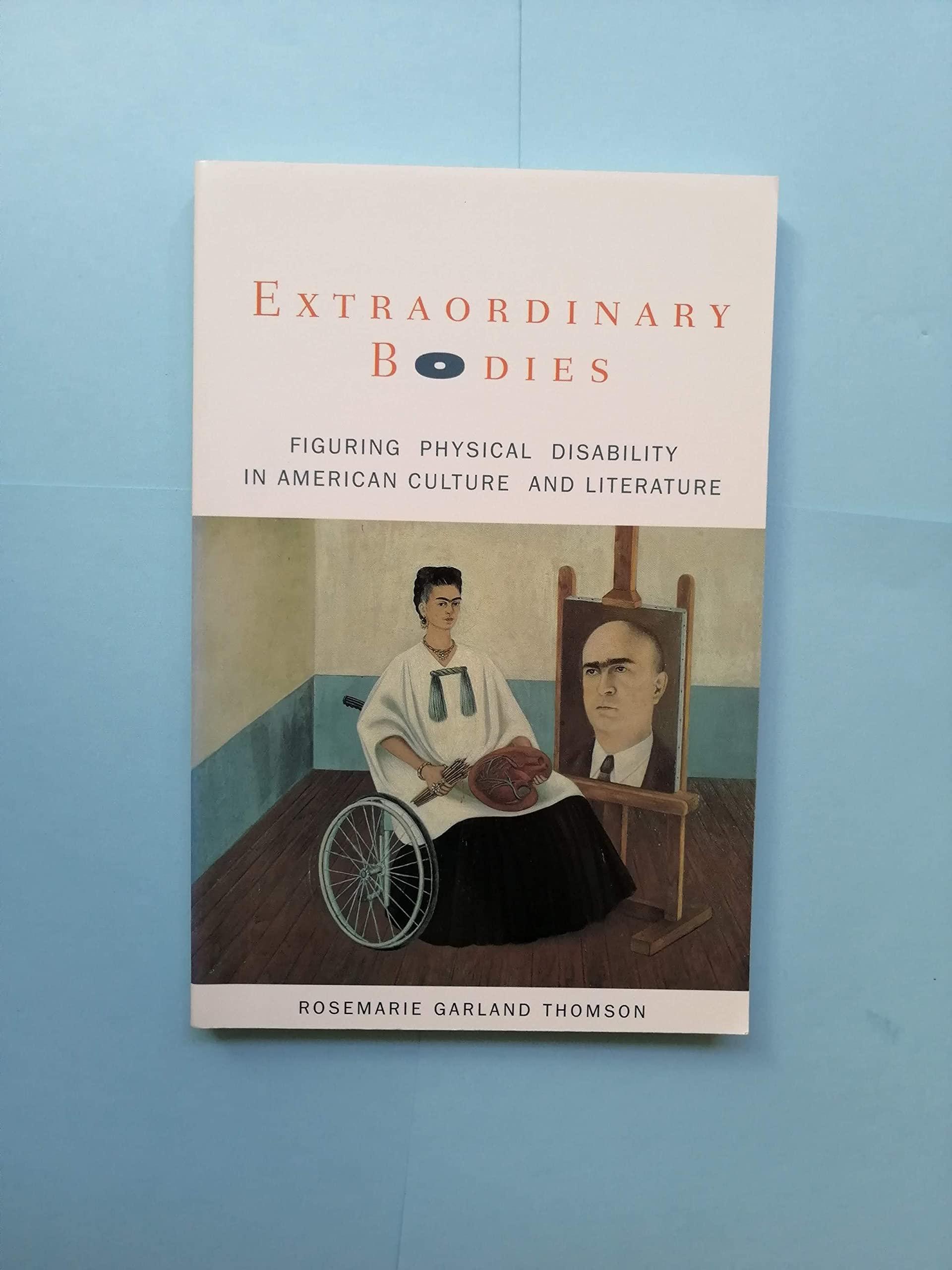
Title
Extraordinary Bodies: Figuring Physical Disability In American Culture And Literature
Sold by Ergodebooks, an authorized reseller.
Returns accepted within 30 days | support@ergodebooks.com
Shipping Information
- Free Standard Shipping — United States only
- Processing Time: 3–5 business days
- Estimated Delivery: 6–10 business days after dispatch
- Double-boxed, fully insured & discreetly packaged
- Tracking number sent via email once dispatched
Returns & Refund
Returns accepted within 30 days of delivery.
Damaged or Defective Item
Free return shipping + replacement or full refund
Wrong Item Received
Free return shipping + replacement or full refund
Change of Mind
Return shipping at customer's expense · 25% restocking fee applies
Payment Option

Inaugurates A New Field Of Disability Studies By Framing Disability As A Minority Discourse Rather Than A Medical One, Revising Oppressive Narratives And Revealing Liberatory Ones. The Book Examines Disabled Figures In Harriet Beecher Stowe'S Uncle Tom'S Cabin And Rebecca Harding Davis'S Life In The Iron Mills, In Africanamerican Novels By Toni Morrison And Audre Lorde, And In The Popular Cultural Ritual Of The Freak Show.
⚠️ WARNING (California Proposition 65):
This product may contain chemicals known to the State of California to cause cancer, birth defects, or other reproductive harm.
For more information, please visit www.P65Warnings.ca.gov.
- Q: How many pages does this book have? A: This book has two hundred pages. It provides an in-depth exploration of physical disability in American culture and literature.
- Q: What is the binding type of this book? A: The binding type is paperback. This makes it lightweight and flexible for easy handling and reading.
- Q: What are the dimensions of the book? A: The book measures approximately six inches wide, nine inches tall, and zero point five one inches thick. These dimensions make it a convenient size for reading.
- Q: What themes does this book explore? A: This book explores themes of physical disability as a minority discourse. It revises oppressive narratives and reveals liberatory perspectives.
- Q: Who is the author of this book? A: The author is Rosemarie Garland Thomson. She is known for her contributions to disability studies and cultural criticism.
- Q: In which category is this book listed? A: This book is listed under the category of Sports and Entertainment. It engages with cultural narratives surrounding disability.
- Q: How can this book be used for academic purposes? A: This book can be used as a foundational text in disability studies. It offers critical analyses that can support various research projects.
- Q: Is this book suitable for all ages? A: Yes, the book is suitable for a general audience, including students and educators. It addresses complex themes in an accessible manner.
- Q: What is the main focus of the book? A: The main focus is on how physical disability is represented in American culture and literature. It highlights both historical and contemporary narratives.
- Q: How should I store this book? A: Store this book in a cool, dry place. Keep it upright on a shelf to maintain its shape and prevent damage.
- Q: Can I lend this book to others? A: Yes, you can lend this book to others. Just ensure that it is returned in good condition to preserve its quality.
- Q: What if the book arrives damaged? A: If the book arrives damaged, contact the seller for return instructions. Most sellers have policies for damaged goods.
- Q: How can I clean the book if it gets dirty? A: Wipe the book cover with a soft, dry cloth to remove dust. Avoid using liquids to prevent damage to the pages.
- Q: Is there a warranty for this book? A: No, there is typically no warranty for books. However, check with the retailer for their specific return policy.
- Q: What kind of illustrations are included in the book? A: The book includes thirteen illustrations that complement the text. These visuals help to enhance the reader's understanding of the themes.
- Q: Is this book part of a series? A: No, this book is not part of a series. It stands alone as a significant contribution to disability studies.