
Title
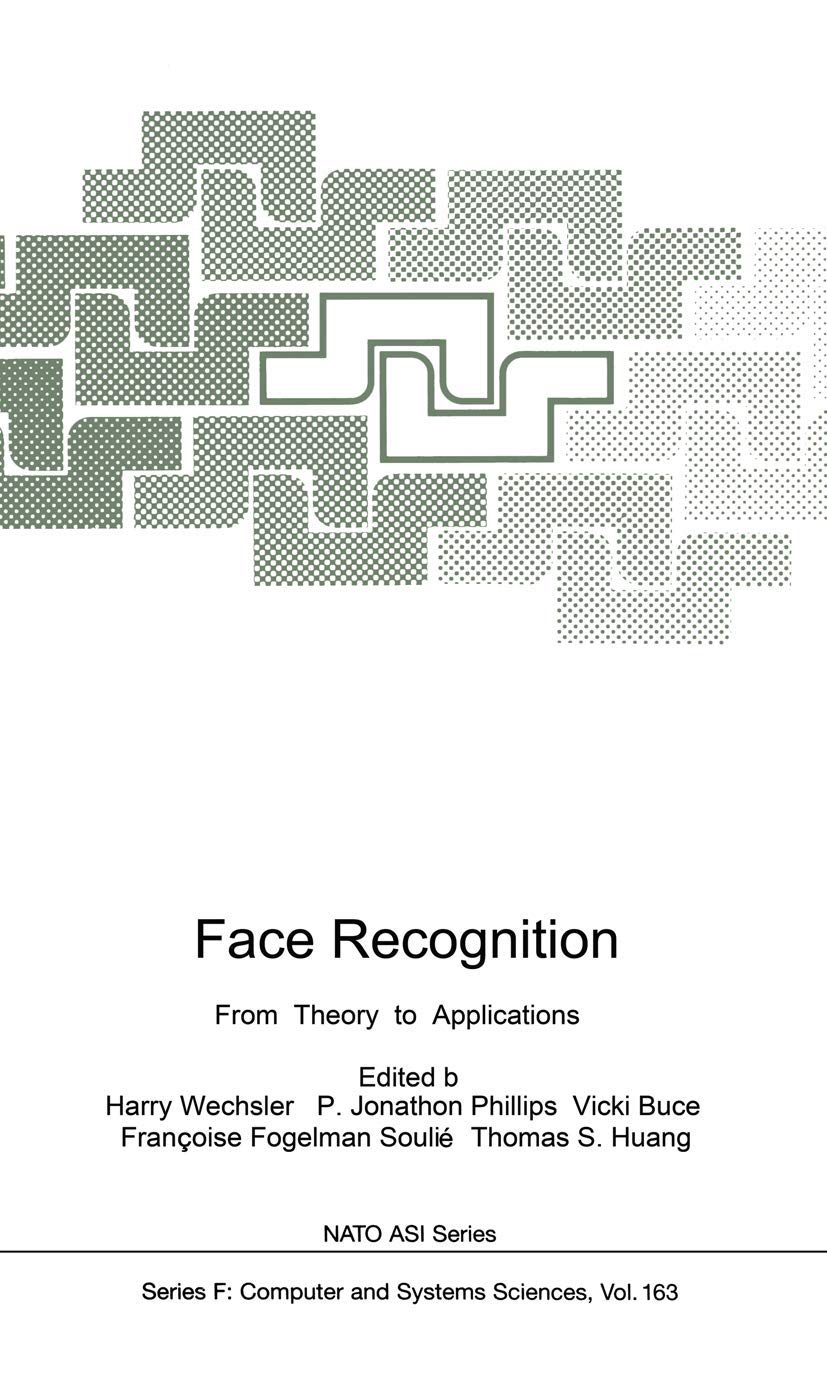
Face Recognition: From Theory to Applications (NATO ASI Subseries F:, 163),Used
Sold by Ergodebooks, an authorized reseller.
Returns accepted within 30 days | support@ergodebooks.com
Shipping Information
- Free Standard Shipping — United States only
- Processing Time: 3–5 business days
- Estimated Delivery: 6–10 business days after dispatch
- Double-boxed, fully insured & discreetly packaged
- Tracking number sent via email once dispatched
Returns & Refund
Returns accepted within 30 days of delivery.
Damaged or Defective Item
Free return shipping + replacement or full refund
Wrong Item Received
Free return shipping + replacement or full refund
Change of Mind
Return shipping at customer's expense · 25% restocking fee applies
Payment Option

The NATO Advanced Study Institute (ASI) on Face Recognition: From Theory to Applications took place in Stirling, Scotland, UK, from June 23 through July 4, 1997. The meeting brought together 95 participants (including 18 invited lecturers) from 22 countries. The lecturers are leading researchers from academia, govemment, and industry from allover the world. The lecturers presented an encompassing view of face recognition, and identified trends for future developments and the means for implementing robust face recognition systems. The scientific programme consisted of invited lectures, three panels, and (oral and poster) presentations from students attending the AS!. As a result of lively interactions between the participants, the following topics emerged as major themes of the meeting: (i) human processing of face recognition and its relevance to forensic systems, (ii) face coding, (iii) connectionist methods and support vector machines (SVM), (iv) hybrid methods for face recognition, and (v) predictive learning and performance evaluation. The goals of the panels were to provide links among the lectures and to emphasis the themes of the meeting. The topics of the panels were: (i) How the human visual system processes faces, (ii) Issues in applying face recognition: data bases, evaluation and systems, and (iii) Classification issues involved in face recognition. The presentations made by students gave them an opportunity to receive feedback from the invited lecturers and suggestions for future work.
⚠️ WARNING (California Proposition 65):
This product may contain chemicals known to the State of California to cause cancer, birth defects, or other reproductive harm.
For more information, please visit www.P65Warnings.ca.gov.