
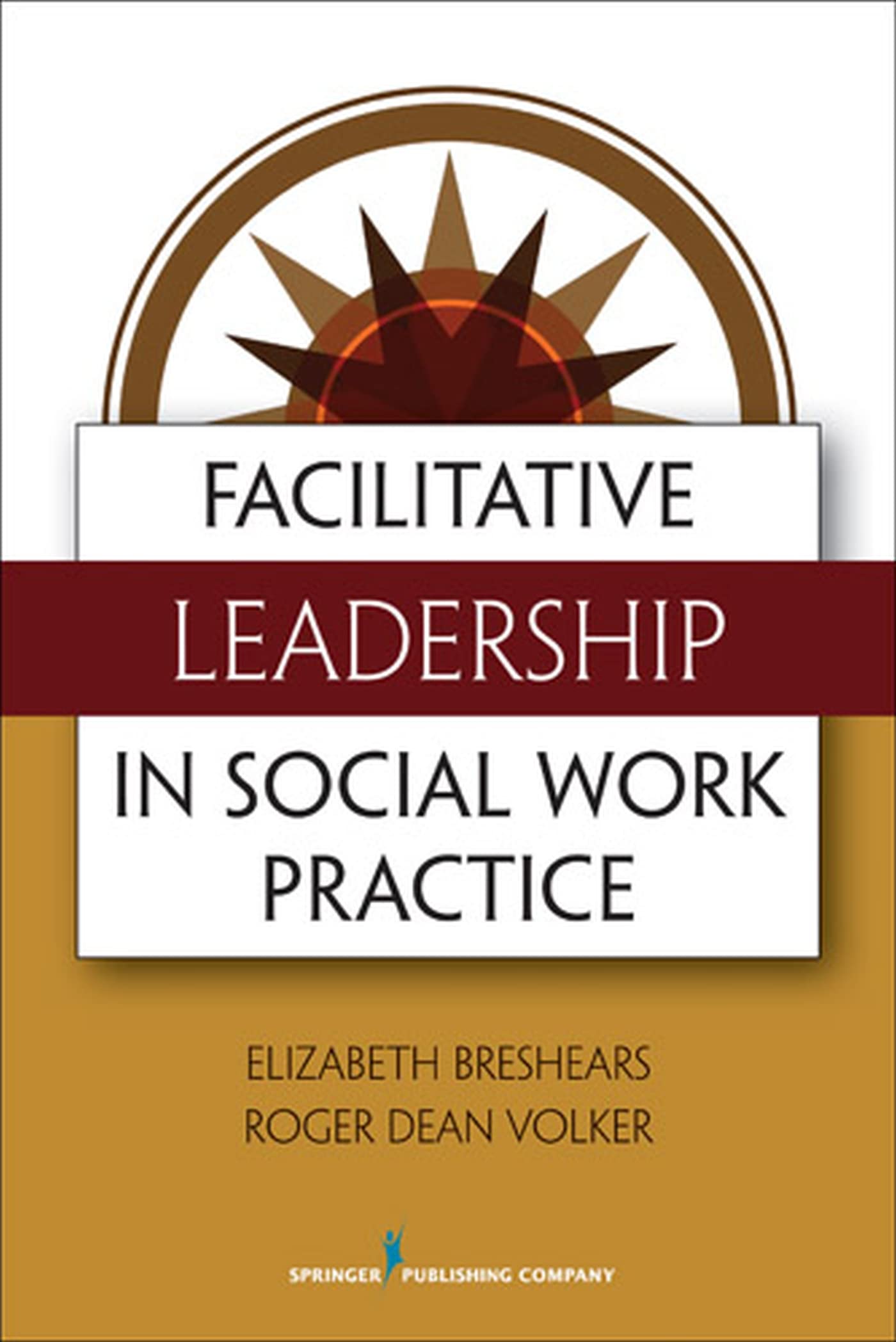
Title
Facilitative Leadership in Social Work Practice,Used
Sold by Ergodebooks, an authorized reseller.
Returns accepted within 30 days | support@ergodebooks.com
Shipping Information
- Free Standard Shipping — United States only
- Processing Time: 3–5 business days
- Estimated Delivery: 6–10 business days after dispatch
- Double-boxed, fully insured & discreetly packaged
- Tracking number sent via email once dispatched
Returns & Refund
Returns accepted within 30 days of delivery.
Damaged or Defective Item
Free return shipping + replacement or full refund
Wrong Item Received
Free return shipping + replacement or full refund
Change of Mind
Return shipping at customer's expense · 25% restocking fee applies
Payment Option

I believe social work students and social workers lucky enough to stumble onto a copy of this book will hang onto it. It is a handy reference to a variety of group activities, but it is so much more than that. Group leaders will find it a selfhelp guide. Frustrated work teams will find it a diagnostic tool to understand what is going wrong. The chair of every committee can only hope that committee members are familiar with the content. I highly recommend that practitioners and students get a copy of this book and implement it in their practice. We will all be better off for doing so."The New Social WorkerThis foundationlevel training manual for social work students and practitioners will help readers become more effective agents of change through understanding the meaning, principles, and characteristics of facilitative leadership. Facilitative leadership is a form of leadership in which the leader directs a group but does not dictate the outcome of the group discussion. This form of leadership is essential for, and uniquely suited to, social workers whose entire profession is based on helping clients determine their own goals and how to achieve them.The book describes, stepbystep, the skills needed to successfully perform formal and informal leadership roles in group, agency, and community settings. All aspects of the facilitative process are addressed, including the phases of group development, how to organize a meeting, when and how to intervene, and how to know if facilitative leadership is working. The book explains how facilitative leadership relates to the social work code of ethics, and discusses the ground rules for effective communication. A number of leadership theories that inform facilitative leadership are examined. The text also includes skill building and critical reflection exercises in each section along with case studies to enhance learning.Key Features: Describes the concept, principles, and characteristics of facilitative leadership and how they relate to the social work code of ethics Clarifies the facilitative leader's role and distinguishes it from that of trainer, consultant, or chairperson Identifies the phases of group development and their significance Instills competence and ease in the use of group process techniques Promotes facilitative leadership skills in formal and informal situations
⚠️ WARNING (California Proposition 65):
This product may contain chemicals known to the State of California to cause cancer, birth defects, or other reproductive harm.
For more information, please visit www.P65Warnings.ca.gov.
- Q: How many pages does the book have? A: The book contains two hundred thirty-two pages. It provides a comprehensive overview of facilitative leadership tailored for social work.
- Q: What are the dimensions of this book? A: The book measures six inches in length, zero point five one inches in width, and nine point zero two inches in height. Its compact size makes it easy to handle.
- Q: What type of binding does this book have? A: This book is bound in paperback. This binding style is lightweight and suitable for easy reading.
- Q: Who is the author of this book? A: The author is Elizabeth Breshears, who holds degrees in education and social work. Her expertise enriches the content significantly.
- Q: What is the main focus of this book? A: The book focuses on facilitative leadership within social work practice. It aims to enhance the effectiveness of social work students and practitioners.
- Q: How can I apply the techniques from this book? A: Readers can apply the techniques by engaging in group settings and facilitating discussions. The book provides practical exercises and case studies to help implement these skills.
- Q: Is this book suitable for beginners in social work? A: Yes, this book is suitable for beginners. It serves as a foundational training manual for social work students and practitioners.
- Q: Can I use this book for group training sessions? A: Yes, this book is designed for use in group training sessions. It provides guidance on facilitating discussions and activities among group members.
- Q: Are there exercises included in the book? A: Yes, the book includes skill-building exercises and critical reflection activities. These are designed to enhance learning and practical application.
- Q: What safety precautions should I consider when using this book? A: There are no specific safety precautions needed for this book. However, it is advisable to keep it in a clean, dry place for preservation.
- Q: How should I store this book to keep it in good condition? A: Store this book upright on a shelf away from direct sunlight. This will help maintain its condition and prevent any damage.
- Q: Is this book suitable for advanced practitioners? A: Yes, advanced practitioners can benefit from this book as it offers insights into facilitative leadership techniques. It provides a refresher on group dynamics and communication.
- Q: What if the book arrives damaged? A: If the book arrives damaged, you should contact the seller for a return or exchange. Most sellers have a customer service policy for such issues.
- Q: How can I get support if I have questions about the book? A: For support, you can reach out to the publisher or consult online forums related to social work. Many communities discuss literature and resources.
- Q: Can this book help with team dynamics in social work? A: Yes, it addresses team dynamics and provides tools for improving group interactions. Understanding facilitative leadership is essential for effective teamwork.
- Q: Is there a digital version of this book available? A: Availability of a digital version may vary. You can check with the publisher or online retailers for e-book options.