
Title

Facing Social Class: How Societal Rank Influences Interaction,Used
Sold by Ergodebooks, an authorized reseller.
Returns accepted within 30 days | support@ergodebooks.com
Shipping Information
- Free Standard Shipping — United States only
- Processing Time: 3–5 business days
- Estimated Delivery: 6–10 business days after dispatch
- Double-boxed, fully insured & discreetly packaged
- Tracking number sent via email once dispatched
Returns & Refund
Returns accepted within 30 days of delivery.
Damaged or Defective Item
Free return shipping + replacement or full refund
Wrong Item Received
Free return shipping + replacement or full refund
Change of Mind
Return shipping at customer's expense · 25% restocking fee applies
Payment Option

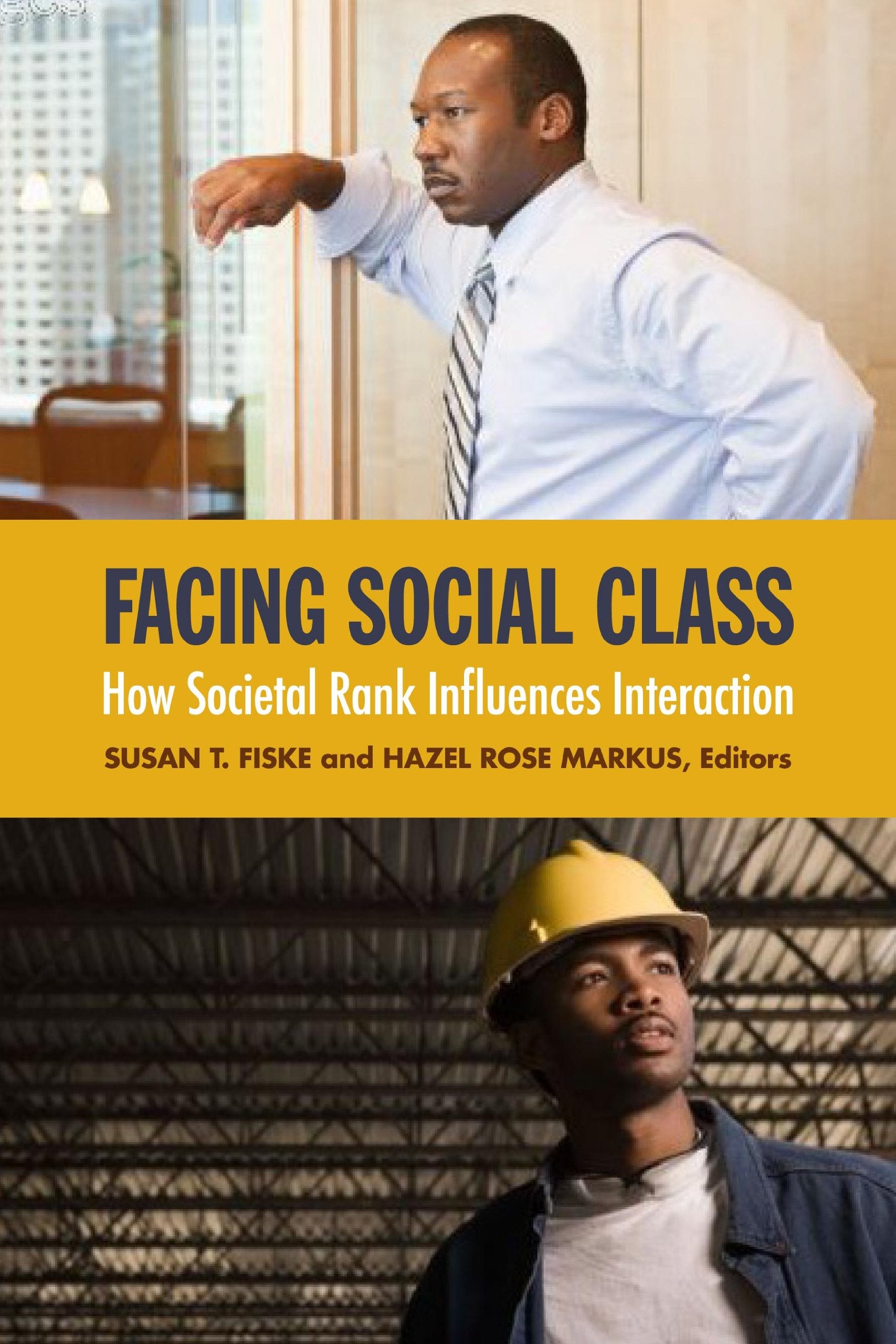
Many Americans, holding fast to the American Dream and the promise of equal opportunity, claim that social class doesn't matter. Yet the ways we talk and dress, our interactions with authority figures, the degree of trust we place in strangers, our religious beliefs, our achievements, our senses of morality and of ourselvesall are marked by social class, a powerful factor affecting every domain of life. In Facing Social Class, social psychologists Susan Fiske and Hazel Rose Markus, and a team of sociologists, anthropologists, linguists, and legal scholars, examine the many ways we communicate our class position to others and how social class shapes our daily, facetoface interactionsfrom casual exchanges to interactions at school, work, and home. Facing Social Class exposes the contradiction between the American ideal of equal opportunity and the harsh reality of growing inequality, and it shows how this tension is reflected in cultural ideas and values, institutional practices, everyday social interactions, and psychological tendencies. Contributor Joan Williams examines cultural differences between middle and workingclass people and shows how the cultural gap between social class groups can influence everything from voting practices and political beliefs to work habits, home life, and social behaviors. In a similar vein, Annette Lareau and Jessica McCrory Calarco analyze the cultural advantages or disadvantages exhibited by different classes in institutional settings, such as those between parents and teachers. They find that middleclass parents are better able to advocate effectively for their children in school than are workingclass parents, who are less likely to challenge a teacher's authority. Michael Kraus, Michelle Rheinschmidt, and Paul Piff explore the subtle ways we signal class status in social situations. Conversational style and how close one person stands to another, for example, can influence the balance of power in a business interaction. Diana Sanchez and Julie Garcia even demonstrate that markers of low socioeconomic status such as incarceration or unemployment can influence whether individuals are categorized as white or blacka finding that underscores how race and class may work in tandem to shape advantage or disadvantage in social interactions. The United States has one of the highest levels of income inequality and one of the lowest levels of social mobility among industrialized nations, yet many Americans continue to buy into the myth that theirs is a classless society. Facing Social Class faces the reality of how social class operates in our daily lives, why it is so pervasive, and what can be done to alleviate its effects.
⚠️ WARNING (California Proposition 65):
This product may contain chemicals known to the State of California to cause cancer, birth defects, or other reproductive harm.
For more information, please visit www.P65Warnings.ca.gov.