If you have any questions, you are always welcome to contact us. We'll get back to you as soon as possible, withing 24 hours on weekdays.
Customer service
All questions about your order, return and delivery must be sent to our customer service team by e-mail at yourstore@yourdomain.com
Sale & Press
If you are interested in selling our products, need more information about our brand or wish to make a collaboration, please contact us at press@yourdomain.com
Help
If you have any questions, you are always welcome to contact us. We'll get back to you as soon as possible, withing 24 hours on weekdays.
Customer service
All questions about your order, return and delivery must be sent to our customer service team by e-mail at yourstore@yourdomain.com
Sale & Press
If you are interested in selling our products, need more information about our brand or wish to make a collaboration, please contact us at press@yourdomain.com
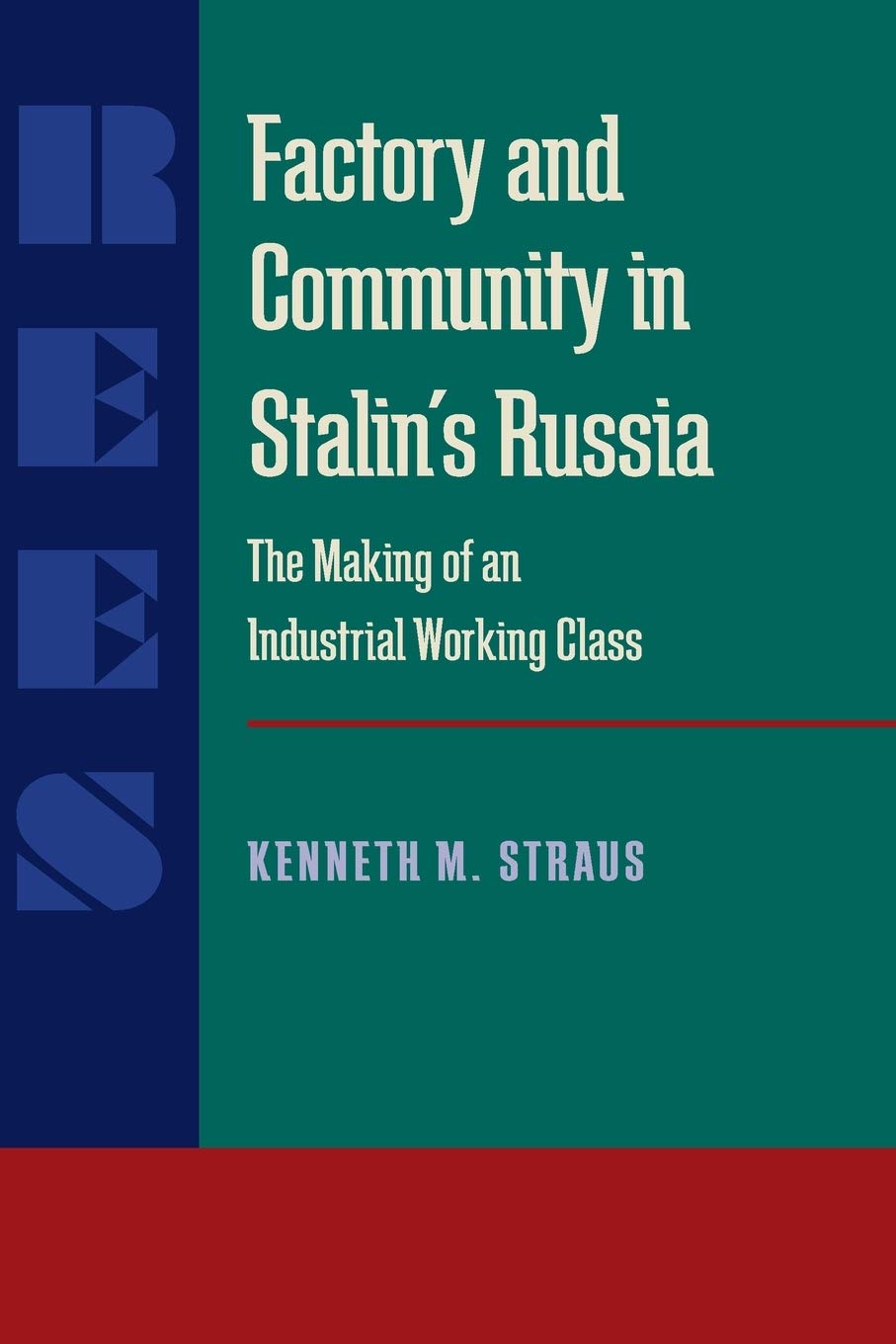
Kenneth Straus weaves together many threads in Russian social history to develop a new theory of workingclass formation in the years of Stalins First Five Year Plan. In so doing, he addresses a longstanding debate among historians by suggesting new answers to an old question: Was there social support for the Stalin regime among the Soviet working class during the 1930s, and if so, why?Straus argues that the keys for interpreting Stalinism lie in occupational specialization, on the one hand, and community organization, on the other. He focuses on the daily life of the new Soviet workers in the factory and community, arguing that the most significant new trends saw peasants becoming open hearth steel workers, housewives becoming auto assembly line workers and machine operatives, and youth training en masse rather than occupations categories in the vocational schools in the factories, the FZU.Tapping archival material only recently available and a wealth of published sources, Straus presents Soviet social history within a new analytical framework, suggesting that Stalinist forced industrialization and Soviet proletarianization is best understood within a comparative European framework, in which the theories of Marx, Durkheim, and Weber best elucidate both the broad similarities with Western trends and the striking exceptional aspects of the Soviet experience.
⚠️ WARNING (California Proposition 65):
This product may contain chemicals known to the State of California to cause cancer,
birth defects, or other reproductive harm.
For MAP (Minimum Advertised Price) violations and Intellectual Property (IP) or Trademark concerns, please contact:
support@ergodebooks.com
⚠️ California Proposition 65 Warning: Some products sold on this website may expose you to chemicals known to the State of California to cause cancer, birth defects, or other reproductive harm. For more information, visit www.P65Warnings.ca.gov.