
Title
Factory Lives: Four NineteenthCentury WorkingClass Autobiographies,Used
Sold by Ergodebooks, an authorized reseller.
Returns accepted within 30 days | support@ergodebooks.com
Shipping Information
- Free Standard Shipping — United States only
- Processing Time: 3–5 business days
- Estimated Delivery: 6–10 business days after dispatch
- Double-boxed, fully insured & discreetly packaged
- Tracking number sent via email once dispatched
Returns & Refund
Returns accepted within 30 days of delivery.
Damaged or Defective Item
Free return shipping + replacement or full refund
Wrong Item Received
Free return shipping + replacement or full refund
Change of Mind
Return shipping at customer's expense · 25% restocking fee applies
Payment Option

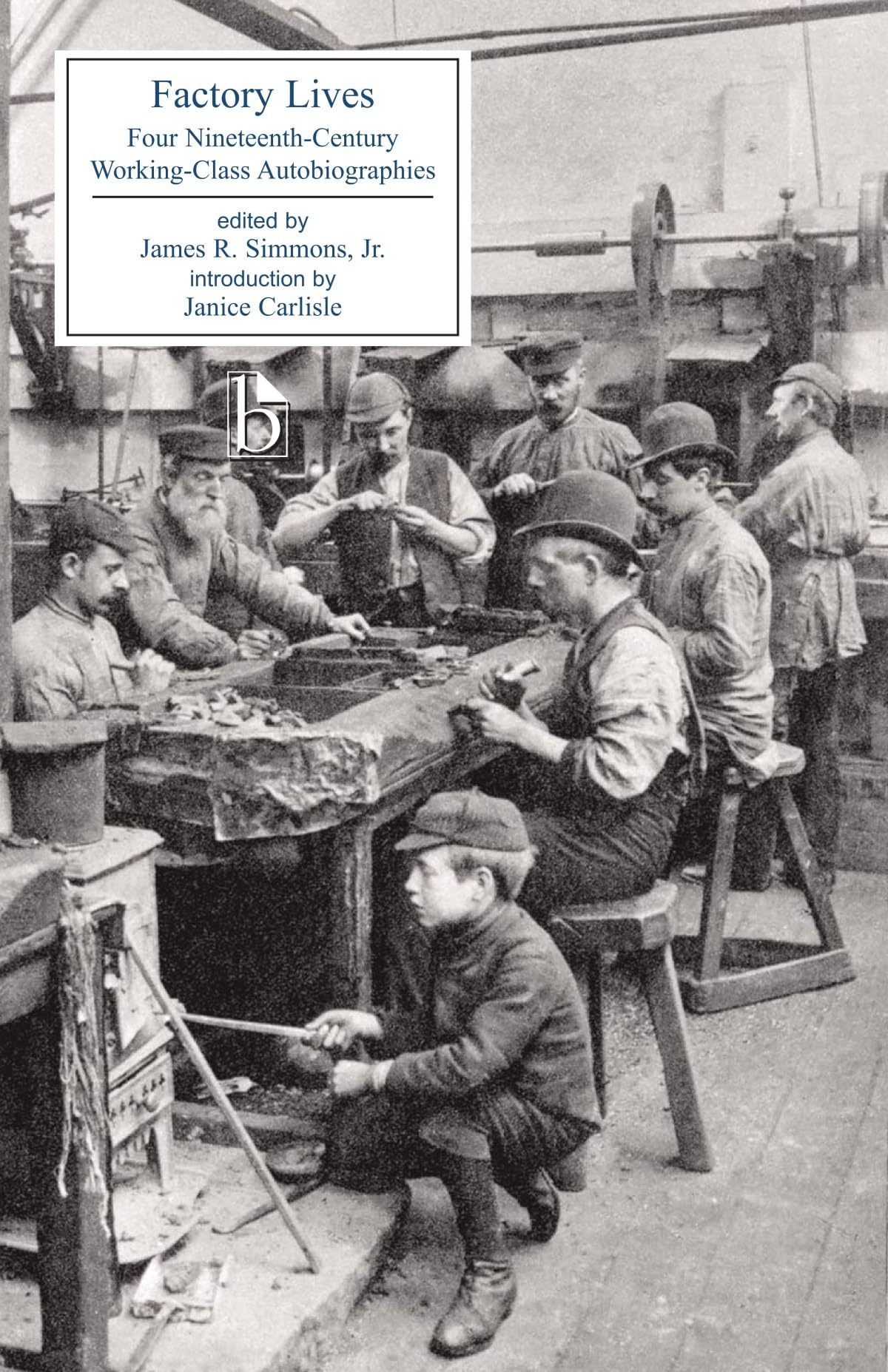
Factory Lives contains four works of great importance in the field of nineteenthcentury workingclass autobiography: John Browns A Memoir of Robert Blincoe; William Dodds A Narrative of the Experience and Sufferings of William Dodd; Ellen Johnstons Autobiography; and James Myless Chapters in the Life of a Dundee Factory Boy.This Broadview edition also includes a remarkably rich selection of historical documents that provide context for these works. Appendices include contemporary responses to the autobiographies, debates on factory legislation, transcripts of testimony given before parliamentary committees on child labour, and excerpts from literary works on factory life by Harriet Martineau, Frances Trollope, and Elizabeth Barrett Browning, among others.
⚠️ WARNING (California Proposition 65):
This product may contain chemicals known to the State of California to cause cancer, birth defects, or other reproductive harm.
For more information, please visit www.P65Warnings.ca.gov.
- Q: How many pages are in 'Factory Lives'? A: This book contains four hundred ninety-six pages. It's a comprehensive collection of important autobiographies from the nineteenth century.
- Q: What is the binding type of 'Factory Lives'? A: The binding type is paperback. This makes it lightweight and easy to handle for casual reading.
- Q: What are the dimensions of 'Factory Lives'? A: The dimensions are five point five one inches in length, zero point seven five inches in width, and eight point five inches in height. These measurements make it a convenient size for bookshelves or bags.
- Q: Who is the author of 'Factory Lives'? A: The author is James R. Simmons, Jr. He has curated this collection of autobiographies to highlight working-class experiences.
- Q: What historical context does 'Factory Lives' provide? A: The book includes a rich selection of historical documents. These documents offer context for the autobiographies and cover topics like factory legislation and child labor.
- Q: How do I read 'Factory Lives'? A: You can read it like any standard paperback book. Simply open the book and follow the text from the beginning to the end.
- Q: Is 'Factory Lives' suitable for all ages? A: Yes, it is suitable for a general audience. However, the themes may resonate more with those interested in historical and social issues.
- Q: What themes are explored in 'Factory Lives'? A: This book explores themes of working-class life, labor conditions, and personal struggles during the nineteenth century. It's essential for understanding that historical period.
- Q: How should 'Factory Lives' be stored? A: Store it upright on a bookshelf or in a cool, dry place. This helps prevent bending or damage to the pages.
- Q: Can I clean 'Factory Lives'? A: Yes, you can gently wipe the cover with a soft, dry cloth. Avoid using liquids as they can damage the paper.
- Q: What if I receive a damaged copy of 'Factory Lives'? A: You should contact the seller or retailer for a return or exchange. Most retailers have policies in place for damaged items.
- Q: What if I want to know more about the authors in 'Factory Lives'? A: You can research each author's biography or works online. The book's introduction may also provide insights into their lives.
- Q: Are there any illustrations in 'Factory Lives'? A: No, the book primarily consists of text and historical documents without illustrations. It focuses on written narratives.
- Q: Is this book a good resource for research? A: Yes, it is an excellent resource for research on working-class history and autobiographies. It includes primary sources and contextual documents.
- Q: Does 'Factory Lives' include any appendices? A: Yes, it includes appendices with contemporary responses to the autobiographies and discussions on factory legislation. This enhances the understanding of the texts.