
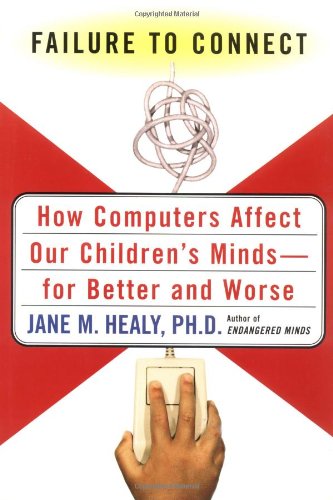
Title
Failure To Connect: How Computers Affect Our Childrens Mindsfor Better And Worse-new
Sold by Ergodebooks, an authorized reseller.
Returns accepted within 30 days | support@ergodebooks.com
Shipping Information
- Free Standard Shipping — United States only
- Processing Time: 3–5 business days
- Estimated Delivery: 6–10 business days after dispatch
- Double-boxed, fully insured & discreetly packaged
- Tracking number sent via email once dispatched
Returns & Refund
Returns accepted within 30 days of delivery.
Damaged or Defective Item
Free return shipping + replacement or full refund
Wrong Item Received
Free return shipping + replacement or full refund
Change of Mind
Return shipping at customer's expense · 25% restocking fee applies
Payment Option

A Cautionary Approach To Classroom Computer Use Is Advocated In This Thoughtful Examination Of How Modern Educational Goals Are Not Always Best Served By Technology And How Children React Both Physically And Mentally To The Extensive Use Of Computers. 25,000 First Printing. Tour.
⚠️ WARNING (California Proposition 65):
This product may contain chemicals known to the State of California to cause cancer, birth defects, or other reproductive harm.
For more information, please visit www.P65Warnings.ca.gov.
- Q: What is the page count of this book? A: This book contains three hundred fifty-two pages. It offers a comprehensive examination of how computers impact children's minds.
- Q: What are the dimensions of this book? A: The book measures six and a half inches long, one point two six inches wide, and nine point seven six inches tall.
- Q: What type of binding does this book have? A: This book is bound in hardcover. The hardcover binding enhances durability for frequent reading.
- Q: Who is the author of this book? A: The author is Jane M. Healy, Ph.D. She is known for her insights into children's education and technology.
- Q: What is the main focus of this book? A: The main focus is on the effects of computer use on children. It discusses both positive and negative impacts of technology in education.
- Q: Is this book suitable for parents and educators? A: Yes, this book is suitable for both parents and educators. It provides valuable insights into managing technology in classrooms.
- Q: How can I apply the insights from this book? A: You can apply the insights by evaluating your child's technology use. It encourages thoughtful approaches to classroom computer usage.
- Q: Is there guidance on classroom technology use in the book? A: Yes, the book advocates for a cautionary approach to classroom technology use. It provides recommendations for educators.
- Q: Is this book appropriate for children to read? A: No, this book is intended for adults. It discusses complex ideas about technology's impact on children.
- Q: What themes are explored in this book? A: The book explores themes of technology, education, and child psychology. It examines how children react to computers physically and mentally.
- Q: How does this book address children's mental health? A: The book discusses how extensive computer use can affect children's mental health. It provides a balanced view of technology's benefits and drawbacks.
- Q: What is the author's perspective on technology in education? A: The author advocates for a cautious approach to technology in education. She emphasizes that modern educational goals may not always align with technology.
- Q: Are there case studies or examples in this book? A: Yes, the book includes case studies and examples. These illustrate the real-world effects of computer use on children.
- Q: How is the content structured in the book? A: The content is structured thoughtfully to provide a comprehensive examination. It combines research findings with practical advice for parents and educators.
- Q: What is the intended audience for this book? A: The intended audience includes educators, parents, and anyone interested in children's technology use. It aims to inform and guide decision-making.
- Q: Is this book part of a series or standalone? A: This book is a standalone title. It offers a unique perspective on the intersection of technology and childhood development.