If you have any questions, you are always welcome to contact us. We'll get back to you as soon as possible, withing 24 hours on weekdays.
Customer service
All questions about your order, return and delivery must be sent to our customer service team by e-mail at yourstore@yourdomain.com
Sale & Press
If you are interested in selling our products, need more information about our brand or wish to make a collaboration, please contact us at press@yourdomain.com
Help
If you have any questions, you are always welcome to contact us. We'll get back to you as soon as possible, withing 24 hours on weekdays.
Customer service
All questions about your order, return and delivery must be sent to our customer service team by e-mail at yourstore@yourdomain.com
Sale & Press
If you are interested in selling our products, need more information about our brand or wish to make a collaboration, please contact us at press@yourdomain.com
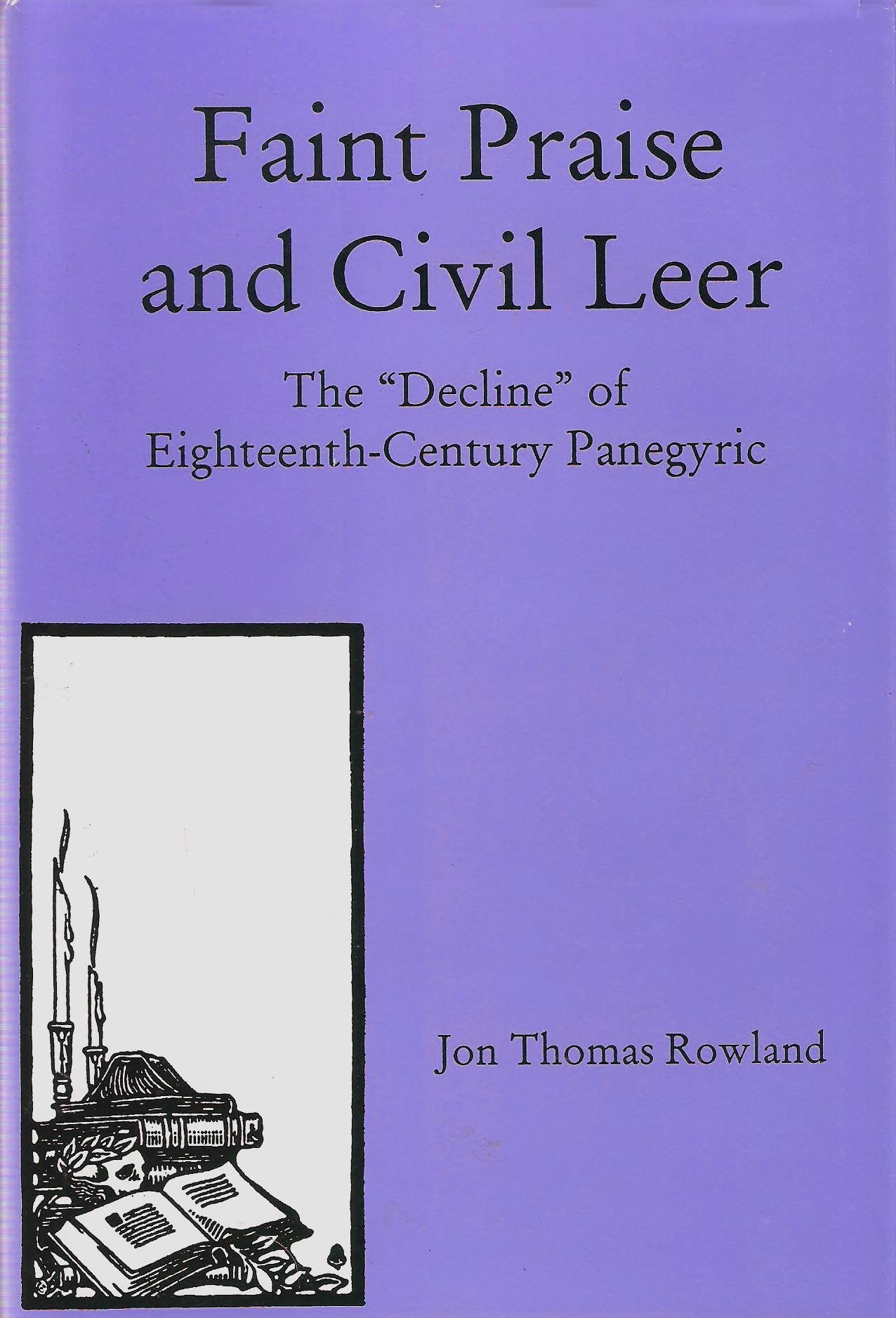
Rowland examines Marvell's political poetry and Dryden's Annus Mirabilis, showing how panegyrical writing developed into mockpanegyric and satire, increasingly as much in response to versions of events as to the events themselves. The author then describes how Marvell exploits panegyrical strategies to subvert its conventional deliberative function, as his equal virtuosity at praise and blame actually undermines his ethos and separates his advice from any clear authority capable of implementing it. Moreover, in Marvell the addressee of conventional panegyric, while remaining ostensibly Charles II, is internalized in a series of grotesques resembling, in various ways, the megalomaniacal "Bayes" (Samuel Parker, Bishop of Oxford). Marvell uses variations on the abuse of the conventional panegyrical arrangement of people, poet, and prince as a metaphor for the abuse of the proper relationship between all signifieds and their signifiers.Writing a generation later, Swift borrows many of the themes and motifs of The Rehearsal Transpros'd for his satire in A Tale of a Tub, in particular the association of the preface with panegyric, as a metaphor of the reversal that occurs between praiser and praised, vehicle and tenor, when proper relationships are abused. Rowland also explores how Swift moves from the unsatisfactory use of analogy in his panegyrical "Odes," to more satisfactory use of it in the Tale and then concentrates on the prefaces of the Tale as "Panegyrical paratext."
⚠️ WARNING (California Proposition 65):
This product may contain chemicals known to the State of California to cause cancer,
birth defects, or other reproductive harm.
For MAP (Minimum Advertised Price) violations and Intellectual Property (IP) or Trademark concerns, please contact:
support@ergodebooks.com
⚠️ California Proposition 65 Warning: Some products sold on this website may expose you to chemicals known to the State of California to cause cancer, birth defects, or other reproductive harm. For more information, visit www.P65Warnings.ca.gov.