
Title
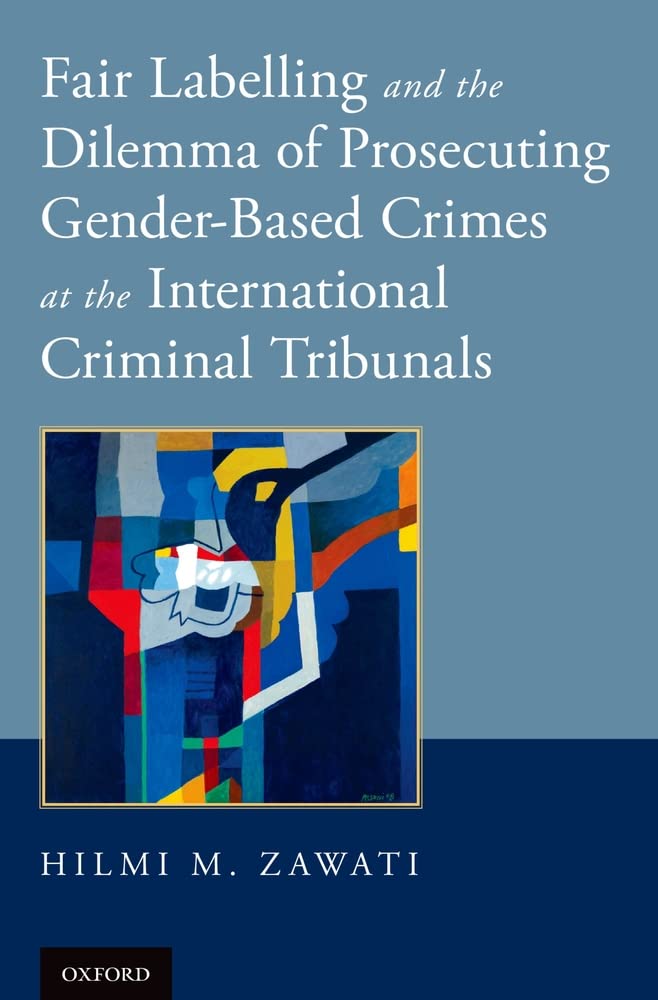
Fair Labelling and the Dilemma of Prosecuting GenderBased Crimes at the International Criminal Tribunals,Used
Sold by Ergodebooks, an authorized reseller.
Returns accepted within 30 days | support@ergodebooks.com
Shipping Information
- Free Standard Shipping — United States only
- Processing Time: 3–5 business days
- Estimated Delivery: 6–10 business days after dispatch
- Double-boxed, fully insured & discreetly packaged
- Tracking number sent via email once dispatched
Returns & Refund
Returns accepted within 30 days of delivery.
Damaged or Defective Item
Free return shipping + replacement or full refund
Wrong Item Received
Free return shipping + replacement or full refund
Change of Mind
Return shipping at customer's expense · 25% restocking fee applies
Payment Option

This scholarly legal work focuses on the dilemma of prosecuting genderbased crimes under the statutes of the international criminal tribunals with reference to the principle of fair labelling. In this book Hilmi M. Zawati explains how the abstractness and lack of accurate description of genderbased crimes in the statutory laws of the international criminal tribunals and courts infringe the principle of fair labelling, lead to inconsistent verdicts and punishments, and cause inadequate prosecution of these crimes. This inquiry deals with genderbased crimes as a case study, and with fair labelling as a legal principle and a theoretical framework.Critical and timely, this study contributes to existing scholarship in many different ways. It is the first legal analysis to focus on the dilemma of prosecuting and punishing wartime genderbased crimes in the statutory laws of the international criminal tribunals and the ICC in the context of fair labelling. Moreover, it emphasizes that applying fair labelling to wartime genderbased crimes would enable the tribunals and the ICC to deliver fair judgments, eliminate inconsistent prosecution, overcome shortcomings in addressing genderbased crimes within their jurisprudence, while breaking the cycle of impunity for these crimes.Consisting of two parts, this work begins by outlining the central focus and theoretical legal framework of the study. It concentrates on fair labelling as an imperative legal principle and a legal framework, examines its intellectual development, scope and justification, and illustrates its applicability to genderbased crimes. The second part addresses the dilemma of prosecuting genderbased crimes in the international criminal tribunals.
⚠️ WARNING (California Proposition 65):
This product may contain chemicals known to the State of California to cause cancer, birth defects, or other reproductive harm.
For more information, please visit www.P65Warnings.ca.gov.