
Title
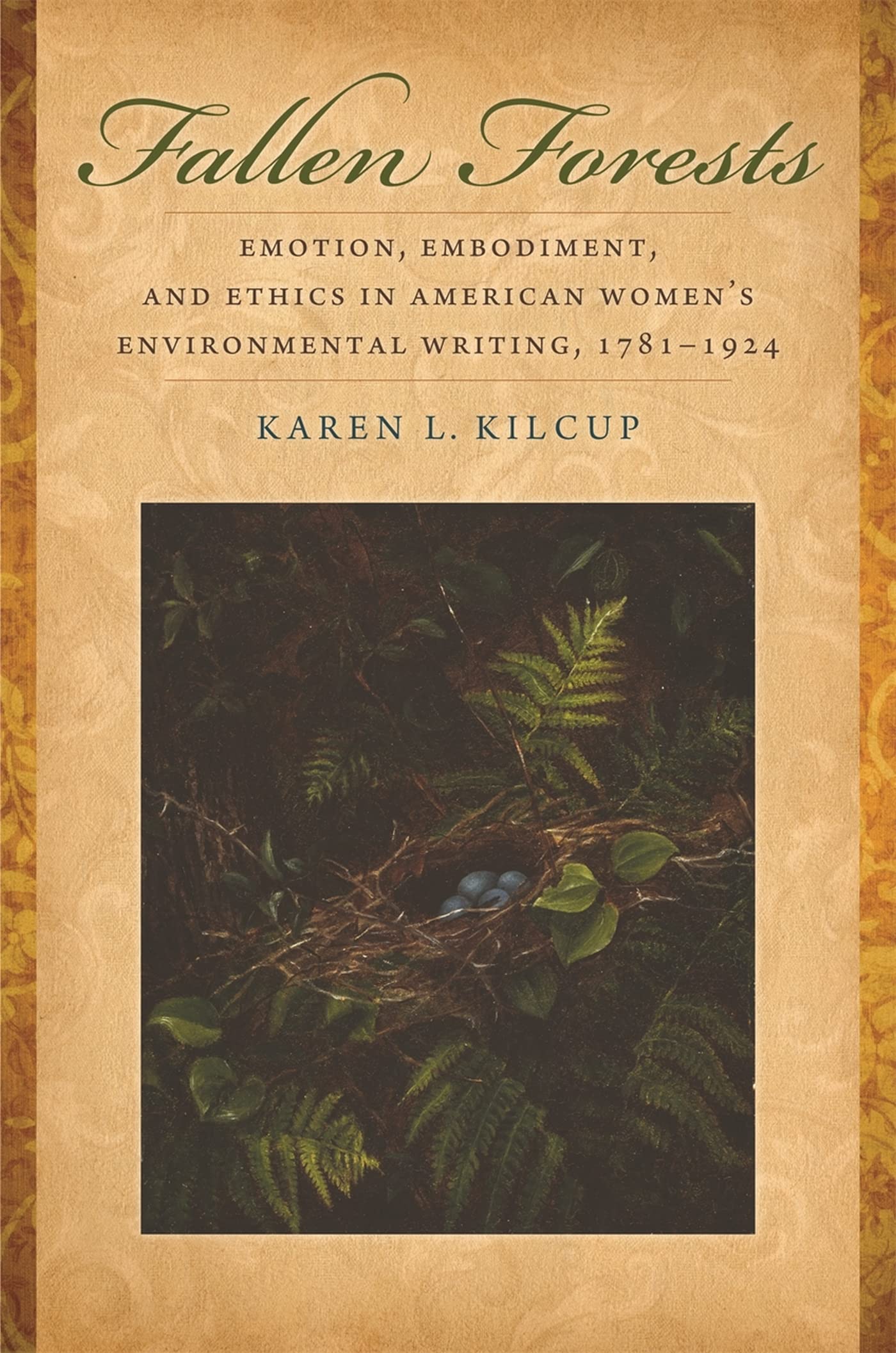
Fallen Forests: Emotion, Embodiment, and Ethics in American Women's Environmental Writing, 17811924,Used
Sold by Ergodebooks, an authorized reseller.
Returns accepted within 30 days | support@ergodebooks.com
Shipping Information
- Free Standard Shipping — United States only
- Processing Time: 3–5 business days
- Estimated Delivery: 6–10 business days after dispatch
- Double-boxed, fully insured & discreetly packaged
- Tracking number sent via email once dispatched
Returns & Refund
Returns accepted within 30 days of delivery.
Damaged or Defective Item
Free return shipping + replacement or full refund
Wrong Item Received
Free return shipping + replacement or full refund
Change of Mind
Return shipping at customer's expense · 25% restocking fee applies
Payment Option

In 1844, Lydia Sigourney asserted, "Man's warfare on the trees is terrible." Like Sigourney many American women of her day engaged with such issues as sustainability, resource wars, globalization, voluntary simplicity, Christian ecology, and environmental justice. Illuminating the foundations for contemporary women's environmental writing, Fallen Forests shows how their nineteenthcentury predecessors marshaled powerful affective, ethical, and spiritual resources to chastise, educate, and motivate readers to engage in positive social change.Fallen Forests contributes to scholarship in American women's writing, ecofeminism, ecocriticism, and feminist rhetoric, expanding the literary, historical, and theoretical grounds for some of today's most pressing environmental debates. Karen L. Kilcup rejects prior critical emphases on sentimentalism to show how women writers have drawn on their literary emotional intelligence to raise readers' consciousness about social and environmental issues. She also critiques ecocriticism's idealizing tendency, which has elided women's complicity in agendas that depart from today's environmental orthodoxies.Unlike previous ecocritical works, Fallen Forests includes marginalized texts by African American, Native American, Mexican American, workingclass, and nonProtestant women. Kilcup also enlarges ecocriticism's genre foundations, showing how Cherokee oratory, travel writing, slave narrative, diary, polemic, sketches, novels, poetry, and expos intervene in important environmental debates.
⚠️ WARNING (California Proposition 65):
This product may contain chemicals known to the State of California to cause cancer, birth defects, or other reproductive harm.
For more information, please visit www.P65Warnings.ca.gov.