If you have any questions, you are always welcome to contact us. We'll get back to you as soon as possible, withing 24 hours on weekdays.
Customer service
All questions about your order, return and delivery must be sent to our customer service team by e-mail at yourstore@yourdomain.com
Sale & Press
If you are interested in selling our products, need more information about our brand or wish to make a collaboration, please contact us at press@yourdomain.com
Help
If you have any questions, you are always welcome to contact us. We'll get back to you as soon as possible, withing 24 hours on weekdays.
Customer service
All questions about your order, return and delivery must be sent to our customer service team by e-mail at yourstore@yourdomain.com
Sale & Press
If you are interested in selling our products, need more information about our brand or wish to make a collaboration, please contact us at press@yourdomain.com
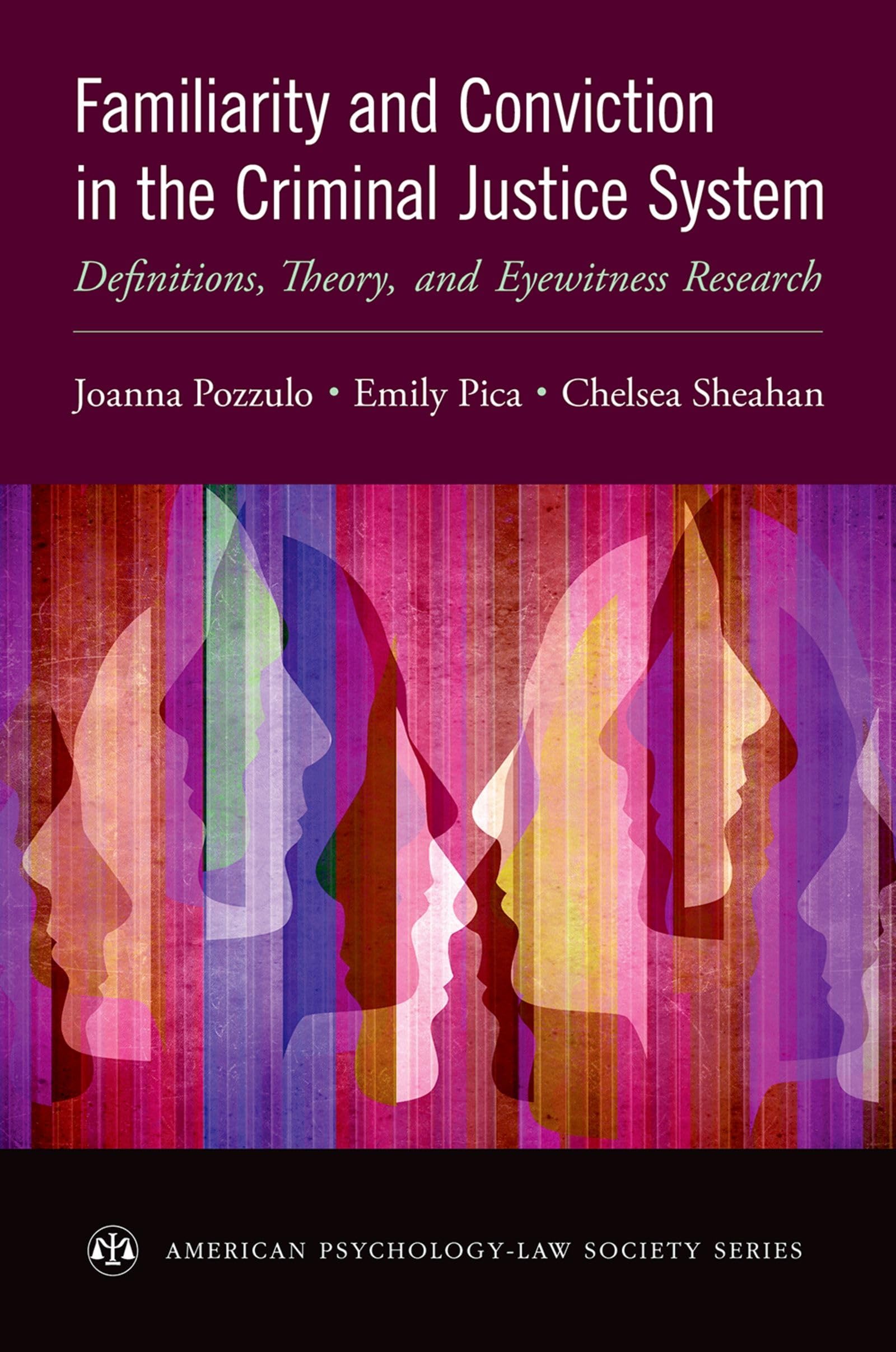
Eyewitness research has focused mainly on stranger identification, but identification is also critical for the 'familiar stranger', and understanding how variability in an eyewitness's familiarity with the perpetrator may influence recall and recognition accuracy will facilitate swifter and more just resolutions to crime. Familiarity and Conviction in the Criminal Justice System examines the notion of familiarity between an eyewitness/victim and a perpetrator, ranging from complete unfamiliarity (as with a total stranger) to a very familiar other. Authors Joanna Pozzulo, Emily Pica, and Chelsea Sheahan define what is meant by 'familiarity' in an eyewitness context and how it has been operationalized and manipulated, exploring factors that may interact with familiarity and examining jurors' perceptions of it. The first half of the book draws on various subareas of psychology to understand familiarity against the backdrop of eyewitness identification: social psychology theories of how familiarity is established; cognitive psychology and its theories of recognition; face processing literature; and eyewitness literature. The second half of the book surveys system and estimator variables that influence identification, such as lineup procedures, interviewing techniques, the role of age, race, and more; as well as how familiarity is weighed in juror decisionmaking. A final chapter issues a call for continuing research examining the notion of familiarity and its impact on the criminal justice system.
⚠️ WARNING (California Proposition 65):
This product may contain chemicals known to the State of California to cause cancer,
birth defects, or other reproductive harm.
For MAP (Minimum Advertised Price) violations and Intellectual Property (IP) or Trademark concerns, please contact:
support@ergodebooks.com
⚠️ California Proposition 65 Warning: Some products sold on this website may expose you to chemicals known to the State of California to cause cancer, birth defects, or other reproductive harm. For more information, visit www.P65Warnings.ca.gov.