
Title
Family Fantasies and Community Space,New
Sold by Ergodebooks, an authorized reseller.
Returns accepted within 30 days | support@ergodebooks.com
Shipping Information
- Free Standard Shipping — United States only
- Processing Time: 3–5 business days
- Estimated Delivery: 6–10 business days after dispatch
- Double-boxed, fully insured & discreetly packaged
- Tracking number sent via email once dispatched
Returns & Refund
Returns accepted within 30 days of delivery.
Damaged or Defective Item
Free return shipping + replacement or full refund
Wrong Item Received
Free return shipping + replacement or full refund
Change of Mind
Return shipping at customer's expense · 25% restocking fee applies
Payment Option

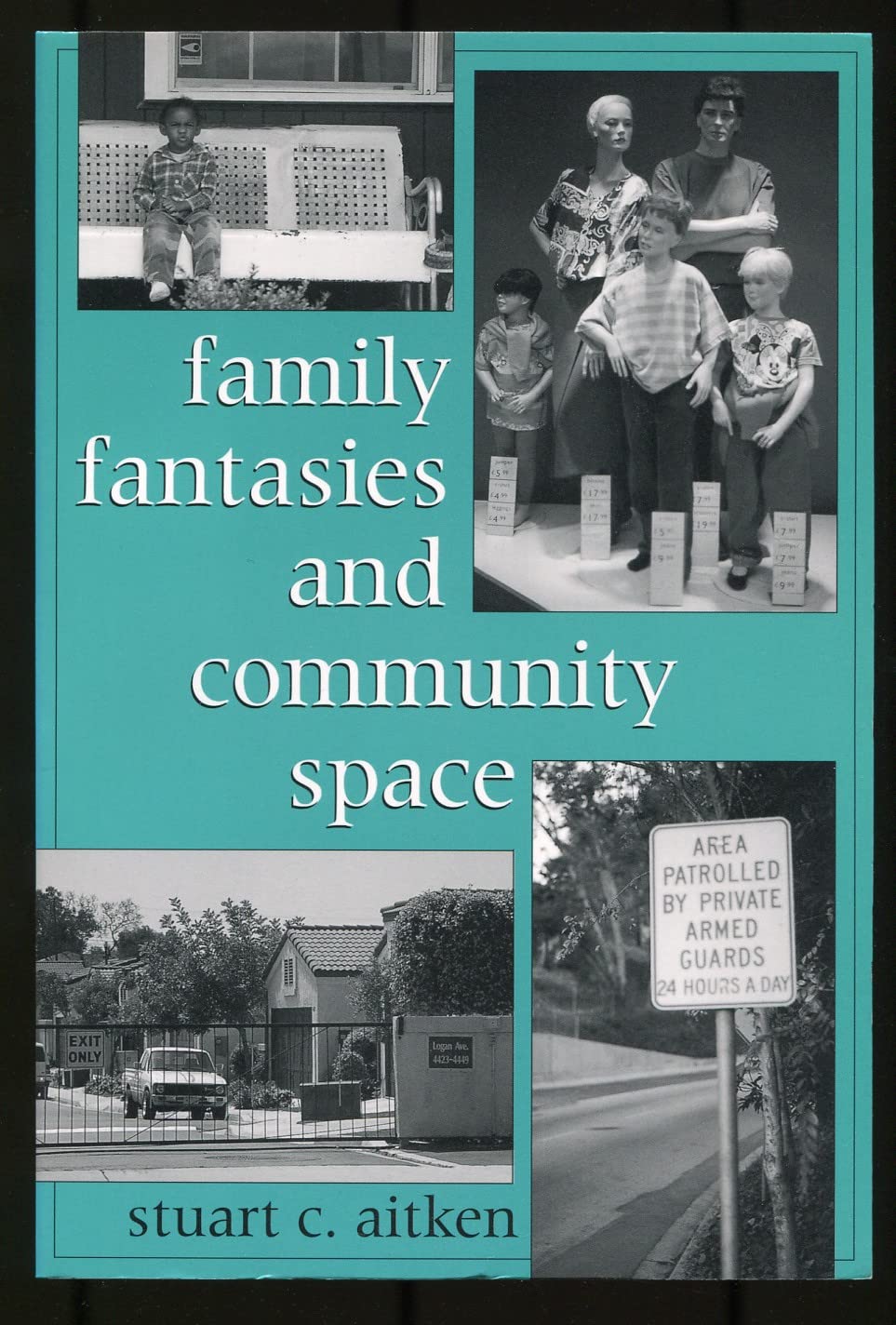
Family forms are changing rapidly in Western society, and with them, the microenvironments within which men, women, and children live together. Stuart Aitken argues that, whether environment is taken as physical space or as a metaphor for the social, economic, and psychological basis of families, there remains a tendency to keep defining the meaning of families and communities in terms of older, traditional, 'imagined,' and idealized structures of politics, gender, and geography.Using the stories of several families in San Diego, Aitken describes geographies of everyday life that contest definitions of cities and communities as mosaics reflecting patterns of social relations. He begins inside the family circle, looking at patriarchal power and the subordination of women, men, and children. Moving beyond the household, he then stresses the importance of place in defining the social and political character of communities and families' interplay within themwhether 'communities' are viewed as neighborhoods, towns, or organizations that provide space for fellowship and common purpose. In turn, he shows that as the individual child reaches beyond family life to find a place in these communities, political cultures are reproduced through the child.Aitken suggests ways in which individual and family identities are complexly intertwined with the cultural politics of communities, cities, and regions. He concludes that family and community spaces reproduce and reconstruct themselves daily according to divisions of race, class, gender, and differential access to housing, work, and childcare.
⚠️ WARNING (California Proposition 65):
This product may contain chemicals known to the State of California to cause cancer, birth defects, or other reproductive harm.
For more information, please visit www.P65Warnings.ca.gov.
- Q: What is the main theme of 'Family Fantasies and Community Space'? A: The main theme of 'Family Fantasies and Community Space' revolves around the evolving nature of family structures in Western society and how these changes impact the microenvironments where families live. The author, Stuart Aitken, explores the complex interplay between families and their communities, focusing on issues of power dynamics, identity, and social relations.
- Q: Who is the author of this book? A: The author of 'Family Fantasies and Community Space' is Stuart Aitken.
- Q: What is the condition of the book being sold? A: The book is listed as 'Used Book in Good Condition', indicating it may have some wear but is still functional and readable.
- Q: What topics does the book cover? A: The book covers topics such as family dynamics, community interactions, power structures within families, and the cultural politics that shape identities in different social contexts.
- Q: How many pages does 'Family Fantasies and Community Space' have? A: 'Family Fantasies and Community Space' has a total of 256 pages.
- Q: What edition of the book is available? A: The available edition of the book is the First Edition.
- Q: When was 'Family Fantasies and Community Space' published? A: 'Family Fantasies and Community Space' was published on January 1, 1998.
- Q: What binding type does this book have? A: The book is available in paperback binding.
- Q: Is there any specific audience this book is geared towards? A: The book is geared towards academics, students, and readers interested in sociology, geography, and family studies, as it provides insights into the changing nature of family and community.
- Q: What can readers expect to learn from this book? A: Readers can expect to learn about the complexities of family identity, the impact of social and political environments on family structures, and the significance of place in shaping community interactions.