
Title
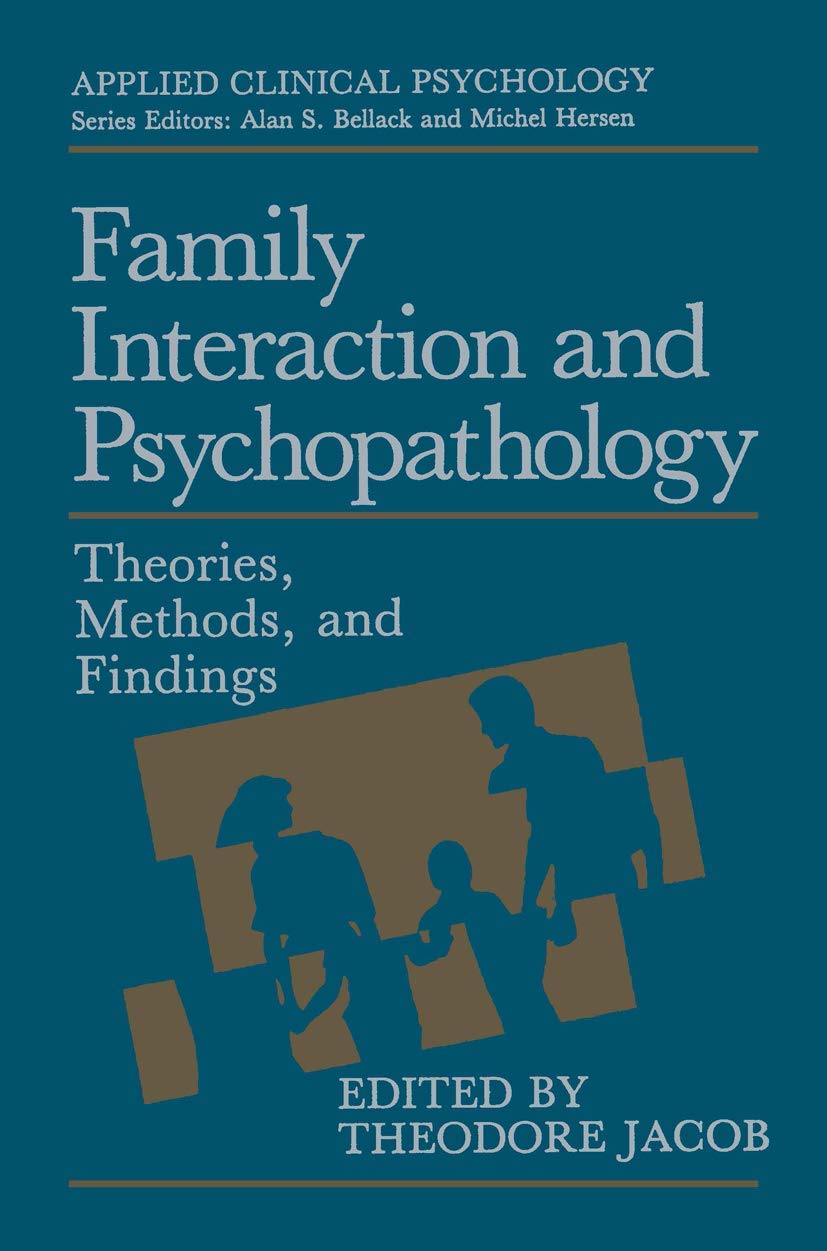
Family Interaction and Psychopathology: Theories, Methods and Findings (NATO Science Series B:),New
Sold by Ergodebooks, an authorized reseller.
Returns accepted within 30 days | support@ergodebooks.com
Shipping Information
- Free Standard Shipping — United States only
- Processing Time: 3–5 business days
- Estimated Delivery: 6–10 business days after dispatch
- Double-boxed, fully insured & discreetly packaged
- Tracking number sent via email once dispatched
Returns & Refund
Returns accepted within 30 days of delivery.
Damaged or Defective Item
Free return shipping + replacement or full refund
Wrong Item Received
Free return shipping + replacement or full refund
Change of Mind
Return shipping at customer's expense · 25% restocking fee applies
Payment Option

Throughout the past 30 years, there have been significant developments in theory and research relating family variables to various psychopathologies. The potential importance of such efforts is obviously great, given the implications that reliable and valid findings would hold for treatment and preventive inter ventions across a variety of settings and populations. The purpose of this volume is to present a critical evaluation of this field of inquiry through a detailed assessment of the theoretical perspectives, the methodological issues, and the substantive findings that have characterized family studies of psychopathology during the past several decades. The book is divided into four parts, each con taining contributions from leading researchers and theorists in the field. The first part, 'Background,' presents a review of the major streams of influence that have shaped the development and the present character of the field. The second part, 'Conceptual Foundations,' contains presentations of gen eral models and orientations relevant to family studies of psychopathology. In most cases, a particular theoretical perspective provides the primary underpin ning of the approach, the exception to this format being the family model of David Reiss based on the concept of the family paradigm. The major objective of this part is to present a broad yet detailed set of chapters that address the conceptual status of the field. It is hoped that this material will provide a rich background against which subsequent discussions of specific theories, methods, and findings can be more fully appreciated.
⚠️ WARNING (California Proposition 65):
This product may contain chemicals known to the State of California to cause cancer, birth defects, or other reproductive harm.
For more information, please visit www.P65Warnings.ca.gov.