
Title
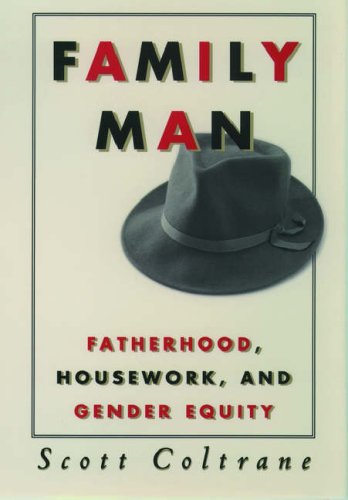
Family Man: Fatherhood, Housework, and Gender Equity,Used
Sold by Ergodebooks, an authorized reseller.
Returns accepted within 30 days | support@ergodebooks.com
Shipping Information
- Free Standard Shipping — United States only
- Processing Time: 3–5 business days
- Estimated Delivery: 6–10 business days after dispatch
- Double-boxed, fully insured & discreetly packaged
- Tracking number sent via email once dispatched
Returns & Refund
Returns accepted within 30 days of delivery.
Damaged or Defective Item
Free return shipping + replacement or full refund
Wrong Item Received
Free return shipping + replacement or full refund
Change of Mind
Return shipping at customer's expense · 25% restocking fee applies
Payment Option

The typical American family has changed dramatically since the days of "Ozzie and Harriet" and "Father Knows Best." Doubleincome families are now the rule, and fathers are much more involved in raising the children and cleaning house. Reactions to these changes have been diverse, ranging from grave misgivings to a sense of liberation and new possibility. Groups as diverse as Promise Keepers, the Million Man March, and Robert Bly's mythopoetic men's movement tell us that fathers are important. From the fundamentalist right to the feminist left, opinions about the changing nature of the familyand the consequent rethinking of gender roleshave been vehement, if not always very wellfounded.In Family Man, sociologist Scott Coltrane brings a wealth of compelling evidence to this debate over the American family. Drawing on his own extensive research and many fascinating interviews, Coltrane explodes many of the common myths about shared parenting, provides firsthand accounts of men's and women's feelings in twojob families, and reveals some innovative solutions that couples have developed to balance job and family commitments. Readers will find an insightful discussion of precisely how and why family life has changed, what forms it may take in the future, and what new kinds of fathers may be on the horizon. The author firmly places these questions within a broad contextual framework. He provides, for instance, an illuminating history of the family that shows that, far from being a fixed structure, the family has always adapted to changing economic, social, and ideological pressures. And by examining how families operate in a variety of nonindustrial societies, he demonstrates that our own notions of genderspecific work and parenting roles are culturally rather than biologically determined, and thus inherently flexible. And indeed these roles are changing. While contemporary American women still perform the bulk of domestic tasks, Family Man gives us decisive evidence that men are becoming increasingly involved in both housework and childrearing. Coltrane argues convincingly that this trend will continue. Given the current economic situationwith twojob households now the normand the gradual ideological shift away from restrictive gender roles, more and more couples will find it both necessary and desirable to share the workload. More important, Coltrane suggests that as fathers participate more fully in raising their children and performing traditionally female household tasks, men will themselves be transformed by the experience in profoundly positive ways and American society as a whole will move closer to true gender equity.Family Man succeeds brilliantly in bringing clarity, perspective, and above all hope to a discussion that is too often shrill, chaotic, and beset with the rhetoric of nostalgia. It shows us not only exactly where the family is today, but where it has been and what it may become.
⚠️ WARNING (California Proposition 65):
This product may contain chemicals known to the State of California to cause cancer, birth defects, or other reproductive harm.
For more information, please visit www.P65Warnings.ca.gov.