
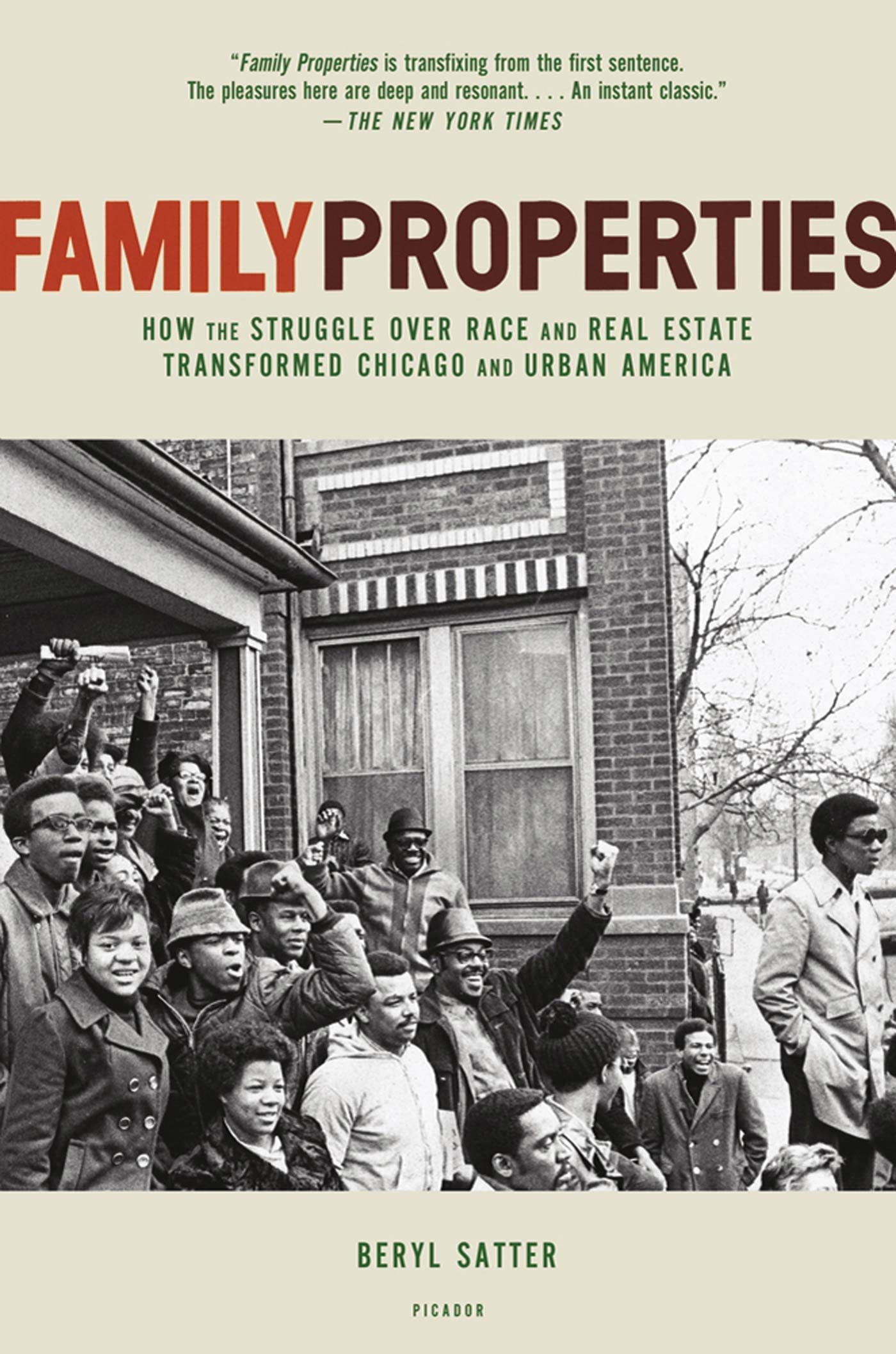
Title
Family Properties: How The Struggle Over Race And Real Estate Transformed Chicago And Urban America
Sold by Ergodebooks, an authorized reseller.
Returns accepted within 30 days | support@ergodebooks.com
Shipping Information
- Free Standard Shipping — United States only
- Processing Time: 3–5 business days
- Estimated Delivery: 6–10 business days after dispatch
- Double-boxed, fully insured & discreetly packaged
- Tracking number sent via email once dispatched
Returns & Refund
Returns accepted within 30 days of delivery.
Damaged or Defective Item
Free return shipping + replacement or full refund
Wrong Item Received
Free return shipping + replacement or full refund
Change of Mind
Return shipping at customer's expense · 25% restocking fee applies
Payment Option

Beryl Satter'S Family Properties Is Really An Incredible Book. It Is, By Far, The Best Book I'Ve Ever Read On The Relationship Between Blacks And Jews. That'S Because It Hones In On The Relationship Between One Specific Black Community And One Specific Jewish Community And Thus Revels In The Particular Humanity Of All Its Actors. In Going Small, It Ultimately Goes Big. Tanehisi Coates, The Atlanticpart Family Story And Part Urban History, A Landmark Investigation Of Segregation And Urban Decay In Chicago And Cities Across The Nationthe Promised Land For Thousands Of Southern Blacks, Postwar Chicago Quickly Became The Most Segregated City In The North, The Site Of The Nation'S Worst Ghettos And The Target Of Martin Luther King Jr.'S First Campaign Beyond The South. In This Powerful Book, Beryl Satter Identifies The True Causes Of The City'S Black Slums And The Ruin Of Urban Neighborhoods Throughout The Country: Not, As Some Have Argued, Black Pathology, The Culture Of Poverty, Or White Flight, But A Widespread And Institutionalized System Of Legal And Financial Exploitation.In Satter'S Riveting Account Of A City In Crisis, Unscrupulous Lawyers, Slumlords, And Speculators Are Pitched Against Religious Reformers, Community Organizers, And An Impassioned Attorney Who Launched A Crusade Against The Profiteersthe Author'S Father, Mark J. Satter. At The Heart Of The Struggle Stand The Black Migrants Who, Having Left The South With Its Legacy Of Sharecropping, Suddenly Find Themselves Caught In A New Kind Of Debt Peonage. Satter Shows The Interlocking Forces At Work In Their Oppression: The Discriminatory Practices Of The Banking Industry; The Federal Policies That Created The Country'S Shameful Dual Housing Market; The Economic Anxieties That Fueled White Violence; And The Tempting Profits To Be Made By Preying On The City'S Most Vulnerable Population.Family Properties: Race, Real Estate, And The Exploitation Of Black Urban America Is A Monumental Work Of History, This Tale Of Racism And Real Estate, Politics And Finance, Will Forever Change Our Understanding Of The Forces That Transformed Urban America.Gripping . . . This Painstaking Portrayal Of The Human Costs Of Financial Racism Is The Most Important Book Yet Written On The Black Freedom Struggle In The Urban North.David Garrow, The Washington Post
⚠️ WARNING (California Proposition 65):
This product may contain chemicals known to the State of California to cause cancer, birth defects, or other reproductive harm.
For more information, please visit www.P65Warnings.ca.gov.
- Q: What is the page count of 'Family Properties'? A: The book has five hundred twenty-eight pages. This extensive length allows for an in-depth exploration of race and real estate in Chicago.
- Q: What is the binding type for 'Family Properties'? A: The book is available in paperback binding. This makes it more flexible and easier to handle for readers.
- Q: Who is the author of 'Family Properties'? A: The author is Beryl Satter. She provides a unique perspective on the intersection of race and real estate.
- Q: What are the dimensions of 'Family Properties'? A: The book measures six point two six inches in length, one inch in width, and nine point two nine inches in height. These dimensions make it suitable for easy storage and reading.
- Q: What genre does 'Family Properties' belong to? A: The book is categorized under Black and African American literature. It addresses significant historical and social themes.
- Q: Is 'Family Properties' suitable for young readers? A: The book is not specifically aimed at children. It covers complex themes of race, real estate, and urban history that may be more suitable for adult readers.
- Q: How does 'Family Properties' approach its subject matter? A: The book combines family storytelling with urban history. It offers a historical investigation into segregation and exploitation in Chicago.
- Q: What themes are explored in 'Family Properties'? A: Key themes include race relations, urban decay, and financial exploitation. The narrative highlights the struggles of black communities in Chicago.
- Q: How should I care for my copy of 'Family Properties'? A: To keep your book in good condition, store it upright in a cool, dry place. Avoid exposure to direct sunlight to prevent fading.
- Q: What should I do if my copy of 'Family Properties' arrives damaged? A: If your book is damaged upon arrival, contact the retailer for their return policy. Most retailers offer a replacement or refund.
- Q: Is there any adult content in 'Family Properties'? A: No, the book does not contain explicit adult content. It focuses on historical and social issues relevant to urban America.
- Q: Can I find 'Family Properties' in libraries? A: Yes, many libraries carry 'Family Properties'. You can check your local library's catalog for availability.
- Q: Is 'Family Properties' a good choice for learning about urban history? A: Yes, it is an excellent resource for understanding urban history. The book provides a detailed analysis of race and housing in Chicago.
- Q: How does the author present the story in 'Family Properties'? A: Beryl Satter presents the story through a blend of personal narrative and historical research. This approach gives readers a comprehensive view of the issues discussed.
- Q: What unique perspective does 'Family Properties' offer? A: The book offers a unique perspective by highlighting the intersection of race and real estate through personal and community stories. It sheds light on systemic issues affecting urban America.