
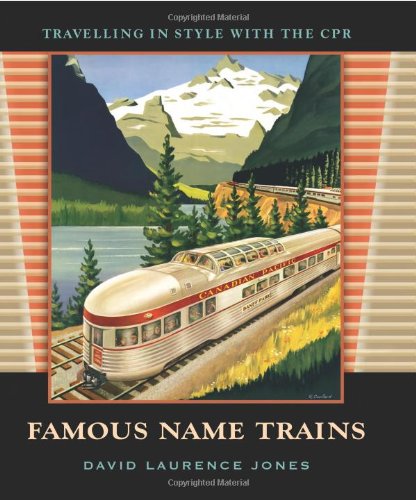
Title
Famous Name Trains: Travelling in Style with the CPR,Used
Sold by Ergodebooks, an authorized reseller.
Returns accepted within 30 days | support@ergodebooks.com
Shipping Information
- Free Standard Shipping — United States only
- Processing Time: 3–5 business days
- Estimated Delivery: 6–10 business days after dispatch
- Double-boxed, fully insured & discreetly packaged
- Tracking number sent via email once dispatched
Returns & Refund
Returns accepted within 30 days of delivery.
Damaged or Defective Item
Free return shipping + replacement or full refund
Wrong Item Received
Free return shipping + replacement or full refund
Change of Mind
Return shipping at customer's expense · 25% restocking fee applies
Payment Option

With a Forward by Gary Anderson, director of the Canadian Museum of Rail Travel.Have you ever wondered, while sitting in traffic or waiting to board a crowded airplane, what it was like to travel the rails? In his new book, Famous Name Trains: Travelling in Style with the CPR, former CPR archivist David Laurence Jones goes back in time to describe what it was like to travel on some of the CPR's famous "name trains," like the Pacific Express, the Imperial Limited, and the Canadian. Jones evokes both the practical interiors of the early colonist cars with their communal sleeping arrangements and wooden bench seats, and the luxury of the higherend cars that looked and felt like rolling men's clubs with wooden veneers, plush carpets, and upholstered chairs. These firstclass cars would later become fivestar hotels on wheels. Jones tracks the evolution of the passenger train, detailing improvements in engine strength, heating, lighting, interior design, and innovative sleeping arrangements. Although the focus of the book is the CPR's famous name trains, Jones talks about other CPR enterprises that fed into and contributed to the railway. These included the dining halls and mountain chalets built at railway divisional points across the country, the rustic bungalow camps operated in both Ontario and within the Canadian Rockies, and the CPR's iron steamships that sailed the Great Lakes. Steamships like the Algoma, Alberta, and Athabasca provided passenger service between Owen Sound and what is now part of Thunder Bay, connecting passengers to CPR trains heading west. As the reader will find out, the steamships have their own stories to tell, both romantic and tragic.
⚠️ WARNING (California Proposition 65):
This product may contain chemicals known to the State of California to cause cancer, birth defects, or other reproductive harm.
For more information, please visit www.P65Warnings.ca.gov.