
Title
Fangs Of Malice: Hypocrisy Sincerity And Acting (Volume 1) (Studies Theatre Hist & Culture),Used
Sold by Ergodebooks, an authorized reseller.
Returns accepted within 30 days | support@ergodebooks.com
Shipping Information
- Free Standard Shipping — United States only
- Processing Time: 3–5 business days
- Estimated Delivery: 6–10 business days after dispatch
- Double-boxed, fully insured & discreetly packaged
- Tracking number sent via email once dispatched
Returns & Refund
Returns accepted within 30 days of delivery.
Damaged or Defective Item
Free return shipping + replacement or full refund
Wrong Item Received
Free return shipping + replacement or full refund
Change of Mind
Return shipping at customer's expense · 25% restocking fee applies
Payment Option

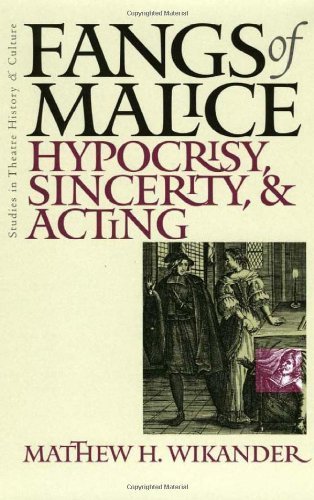
The idea that actors are hypocrites and fakes and therefore dangerous to society was widespread in the seventeenth and eighteenth centuries. Fangs of Malice examines the equation between the vice of hypocrisy and the craft of acting as it appears in antitheatrical tracts, in popular and high culture, and especially in plays of the period. Rousseau and others argue that actors, expert at seeming other than they are, pose a threat to society; yet dissembling seems also to be an inevitable consequence of human social intercourse. The antitheatrical prejudice offers a unique perspective on the high value that modern western culture places on sincerity, on being true to one's own self.Taking a cue from the antitheatrical critics themselves, Matthew Wikander structures his book in acts and scenes, each based on a particular slander against actors. A prologue introduces his main issues. Act One deals with the proposition They Dress Up: foppish slavery to fashion, crossdressing, and dressing as clergy. Act Two treats the proposition They Lie by focusing on social dissembling and the phenomenon of the selfdeceiving hypocrite and the public, princely hypocrite. Act Three, They Drink, examines a wide range of antisocial behavior ascribed to actors, such as drinking, gambling, and whoring. An epilogue ties the ancient ideas of possession and the panic that actors inspire to contemporary anxieties about representation not only in theatre but also in the visual and literary arts.Fangs of Malice will be of great interest to scholars and students of drama as well as to theatre professionals and buffs.
⚠️ WARNING (California Proposition 65):
This product may contain chemicals known to the State of California to cause cancer, birth defects, or other reproductive harm.
For more information, please visit www.P65Warnings.ca.gov.