
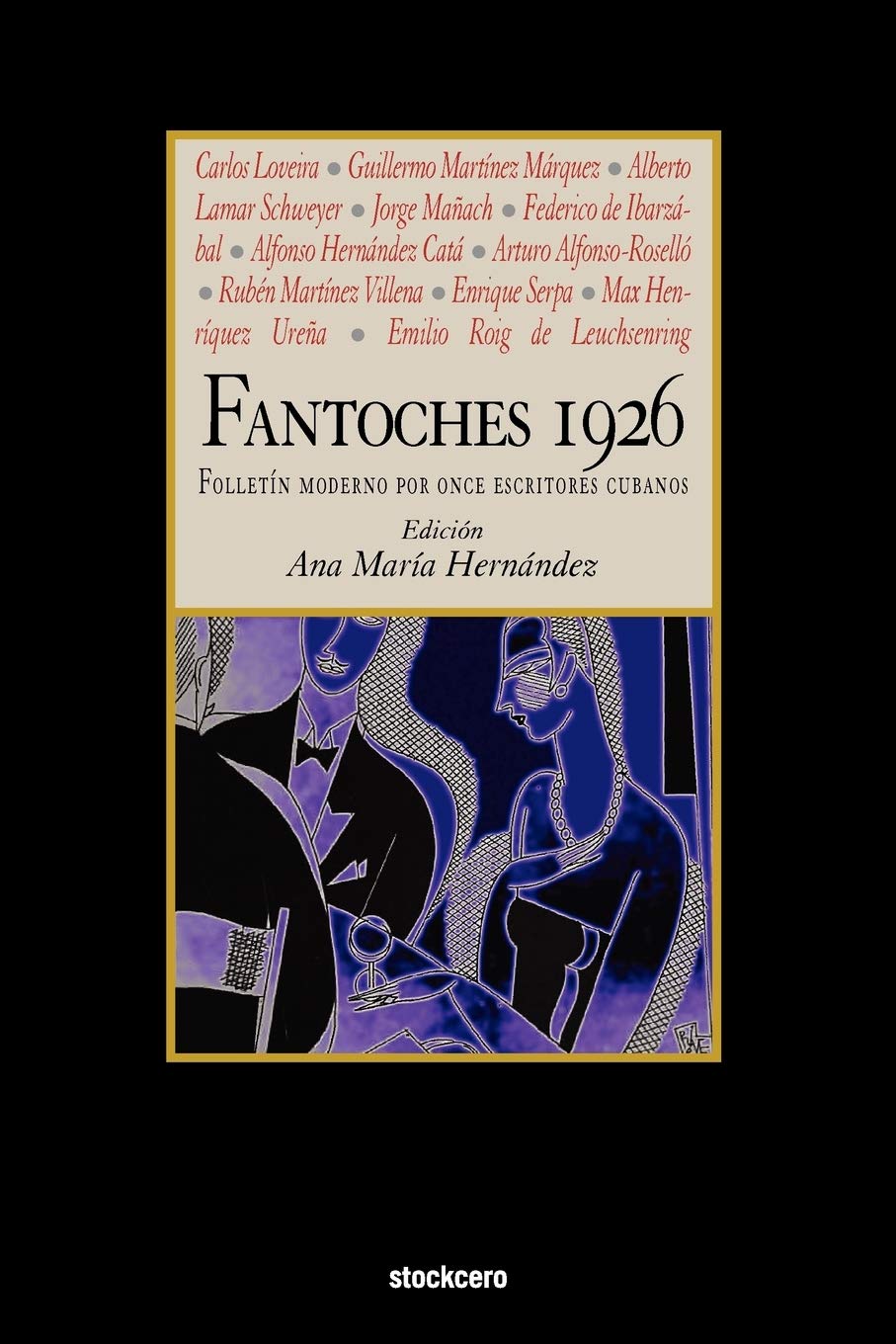
Title
Fantoches 1926 (Spanish Edition),Used
Sold by Ergodebooks, an authorized reseller.
Returns accepted within 30 days | support@ergodebooks.com
Shipping Information
- Free Standard Shipping — United States only
- Processing Time: 3–5 business days
- Estimated Delivery: 6–10 business days after dispatch
- Double-boxed, fully insured & discreetly packaged
- Tracking number sent via email once dispatched
Returns & Refund
Returns accepted within 30 days of delivery.
Damaged or Defective Item
Free return shipping + replacement or full refund
Wrong Item Received
Free return shipping + replacement or full refund
Change of Mind
Return shipping at customer's expense · 25% restocking fee applies
Payment Option

But, unfortunately, such is Havana. It is impossible to change its condition as a port, as a crossroad, or its cosmopolitism, its vicious immigration, its propitiatory hiding places, its mixture of races, its fiery sun, all that diabolical entanglement of factors and circumstances that is here, amongst us, the board where the shady games of love and hatred are played'(Rubn Martnez Villena, 68). Throughout 1926, the literary journal Social publishes the detection narrative Fantoches (Puppets), a collective endeavor of eleven writers and eleven illustrators associated with the Grupo Minorista. Halfway between a Surrealist collective improvisation and a British detective novel, Fantoches 1926 is a unique creation, a confluence of intellectual currents that combine the innovations of the European avantgrade and autochthonous sociopolitical movements during the early Cuban Republic. An irreverent work influenced by the British sensation novels and the French romans clef, Fantoches blurs the boundaries that separate fiction from reality by featuring writers as characters and by incorporating analytical essays into the plot. The inclusion of digressions about Cuba's African heritage anticipates the mature works of writers and artists from the thirties such as Carpentier, Guilln, Abela and Enrquez. This edition, gleaned from the issues of Social in the collection of the New York Public Library, reproduces the illustrations and typographical ornamentations from the original. Editorial changes have been kept to a minimum, modernizing the spelling of fue, vio, dio and other monosyllabic words, and standardizing the spelling of some names that vary among authors. On a few occasions, unusual spellings that were interpreted as typographical errors ('vendabal' for 'vendaval'; 'Brocadero' for 'Trocadero') were changed. The original subtitle 'A Modern Novel by Twelve Cuban Writers' was changed to 'Eleven Cuban Writers' since the same author, Carlos Loveira, writes the first and the last chapters.
⚠️ WARNING (California Proposition 65):
This product may contain chemicals known to the State of California to cause cancer, birth defects, or other reproductive harm.
For more information, please visit www.P65Warnings.ca.gov.