
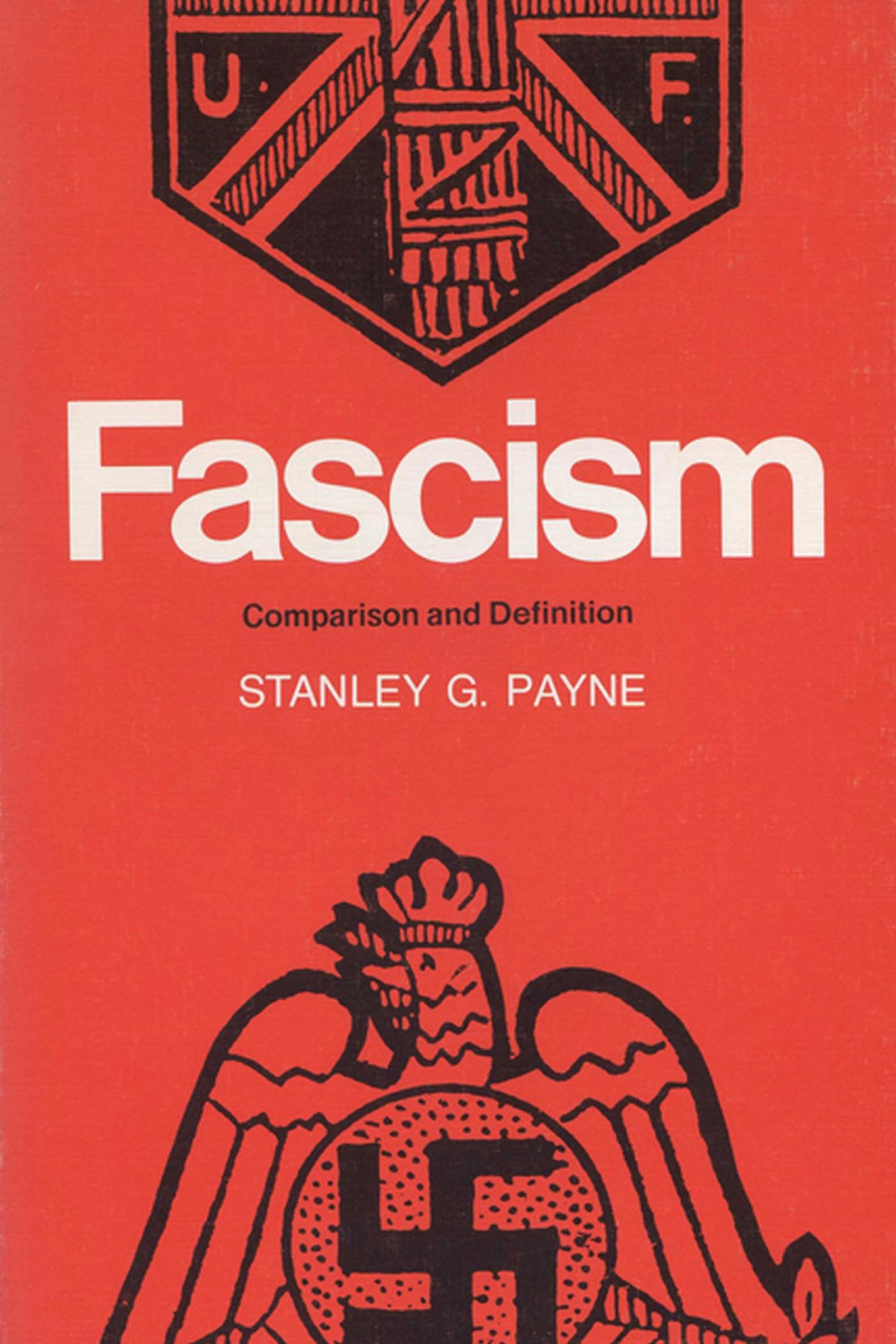
Title

Fascism: Comparison and Definition,Used
Sold by Ergodebooks, an authorized reseller.
Returns accepted within 30 days | support@ergodebooks.com
Shipping Information
- Free Standard Shipping — United States only
- Processing Time: 3–5 business days
- Estimated Delivery: 6–10 business days after dispatch
- Double-boxed, fully insured & discreetly packaged
- Tracking number sent via email once dispatched
Returns & Refund
Returns accepted within 30 days of delivery.
Damaged or Defective Item
Free return shipping + replacement or full refund
Wrong Item Received
Free return shipping + replacement or full refund
Change of Mind
Return shipping at customer's expense · 25% restocking fee applies
Payment Option

An impressive review of reputed fascist movements, at once setting them apart from other authoritarian nationalist organizations and bringing them together within a qualified generic category. Running throughout the volume, and valuable to readers at every level, is a careful critique of the major debates that divide scholars on this most unintelligible ism of them all. Payne precisely defines issues, cites the best literature in the major European languages, and offers with moderation and intelligence his own conclusions on the question.Gilbert Allardyce, American Historical Review
⚠️ WARNING (California Proposition 65):
This product may contain chemicals known to the State of California to cause cancer, birth defects, or other reproductive harm.
For more information, please visit www.P65Warnings.ca.gov.
- Q: How many pages does the book 'Fascism: Comparison and Definition' have? A: The book has two hundred forty-two pages. This provides an in-depth exploration into fascist movements and their distinctions.
- Q: What is the binding type of 'Fascism: Comparison and Definition'? A: The book is paperback bound. This makes it lightweight and easy to handle for reading.
- Q: What are the dimensions of 'Fascism: Comparison and Definition'? A: The dimensions are eight point twenty-four inches in length, five point fifty-five inches in width, and zero point sixty-three inches in height. This size makes it portable for readers.
- Q: Who authored 'Fascism: Comparison and Definition'? A: The author is Stanley G. Payne. He is known for his expertise in historical analysis of fascist ideologies.
- Q: What is the target audience for 'Fascism: Comparison and Definition'? A: The book is suitable for readers at every level. It includes a critique of major scholarly debates on fascism.
- Q: Is 'Fascism: Comparison and Definition' suitable for students? A: Yes, it is suitable for students. It provides valuable insights for those studying political science and history.
- Q: Can I read 'Fascism: Comparison and Definition' for a beginner's understanding? A: Yes, beginners can understand it. The author carefully defines complex issues related to fascism.
- Q: Is there a specific age group that should read 'Fascism: Comparison and Definition'? A: It is generally suited for high school age and older. The content discusses complex political ideologies.
- Q: How should I store 'Fascism: Comparison and Definition' to maintain its condition? A: Store it in a cool, dry place. Avoid direct sunlight to prevent fading of the cover and pages.
- Q: Are there any special care instructions for 'Fascism: Comparison and Definition'? A: No special care is needed beyond typical book care. Keeping it away from moisture will preserve its quality.
- Q: What if 'Fascism: Comparison and Definition' arrives damaged? A: You should contact the seller for a return or exchange. Most sellers have policies for damaged items.
- Q: Is there a warranty for 'Fascism: Comparison and Definition'? A: Typically, there is no warranty for books. However, check with the seller for specific policies.
- Q: Can I return 'Fascism: Comparison and Definition' if I don't like it? A: Yes, returns are usually accepted within a specified period. Review the seller's return policy for details.
- Q: How does 'Fascism: Comparison and Definition' compare to other books on fascism? A: It offers a unique critique of major debates among scholars, distinguishing it from more generalized texts.
- Q: Is 'Fascism: Comparison and Definition' a good choice for comprehensive learning on fascism? A: Yes, it is an excellent choice for comprehensive learning. It engages with both historical context and scholarly discourse.
- Q: What are the main themes discussed in 'Fascism: Comparison and Definition'? A: Main themes include the definition of fascism and comparisons with other authoritarian movements. It provides a nuanced view of political ideologies.