If you have any questions, you are always welcome to contact us. We'll get back to you as soon as possible, withing 24 hours on weekdays.
Customer service
All questions about your order, return and delivery must be sent to our customer service team by e-mail at yourstore@yourdomain.com
Sale & Press
If you are interested in selling our products, need more information about our brand or wish to make a collaboration, please contact us at press@yourdomain.com
Help
If you have any questions, you are always welcome to contact us. We'll get back to you as soon as possible, withing 24 hours on weekdays.
Customer service
All questions about your order, return and delivery must be sent to our customer service team by e-mail at yourstore@yourdomain.com
Sale & Press
If you are interested in selling our products, need more information about our brand or wish to make a collaboration, please contact us at press@yourdomain.com
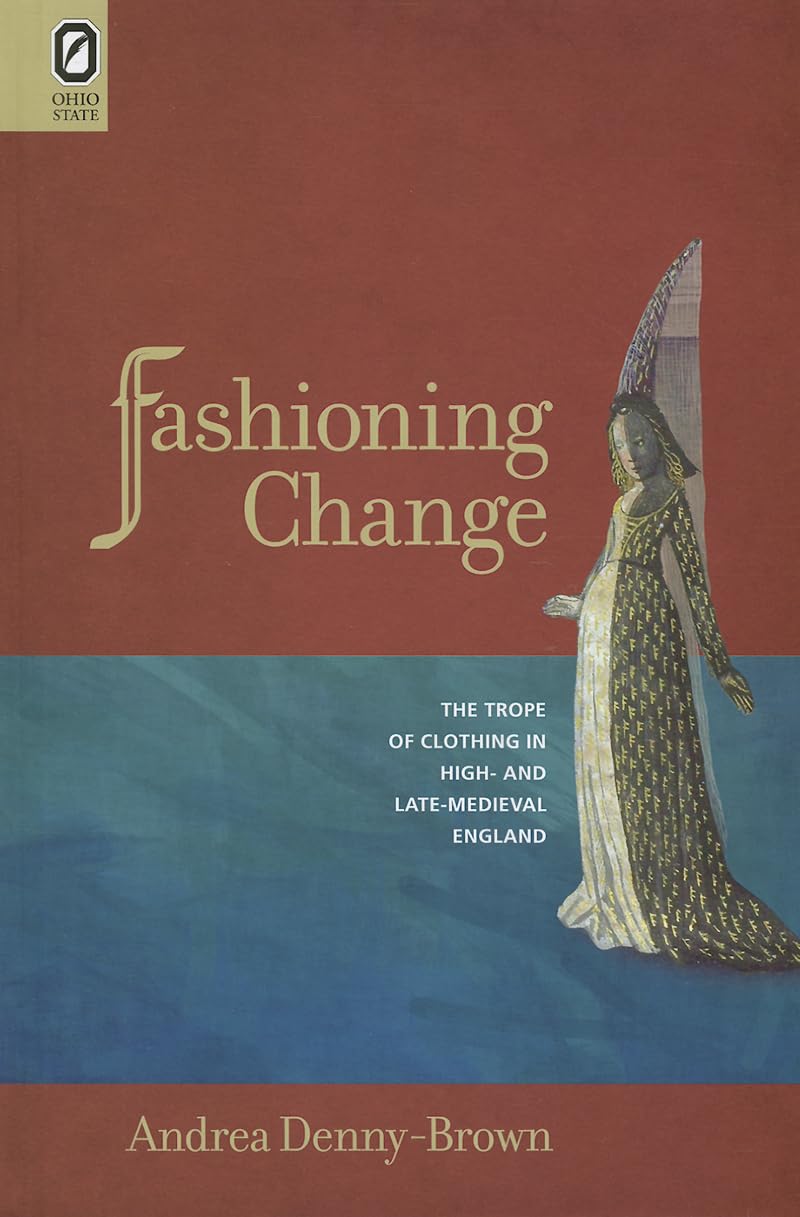
Medieval European culture was obsessed with clothing. In Fashioning Change: The Trope of Clothing in Highand LateMedieval England, Andrea DennyBrown explores the central impact of clothing in medieval ideas about impermanence and the ethical stakes of human transience. Studies of dress frequently contend with a prevailing cultural belief that bodily adornment speaks to interests that are frivolous, superficial, and cursory. Taking up the vexed topic of clothings inherent changeability, DennyBrown uncovers an important new genealogy of clothing as a representational device, one imbued with a surprising philosophical pedigree and a long history of analytical weightiness.Considering writers as diverse as Boethius, Alain de Lille, William Durand, Chaucer, and Lydgate, among others, DennyBrown tracks the development of a literary and cultural trope that begins in the sixth century and finds its highest expression in the vernacular poetry of fifteenthcentury England. Among the topics covered are Boethian discourses on the care of the self, the changing garments of Lady Fortune, novelty in ecclesiastical fashions, the sartorial legacy of Chaucers Griselda, and the emergence of the English gallant. These literary treatments of vestimentary variationwhich develop an aesthetics of change itselfenhance our understanding of clothing as a phenomenological and philosophical category in medieval Europe and illustrate the centrality of the Middle Ages to theories of aesthetics, of materiality, and of cultural change.
⚠️ WARNING (California Proposition 65):
This product may contain chemicals known to the State of California to cause cancer,
birth defects, or other reproductive harm.
For MAP (Minimum Advertised Price) violations and Intellectual Property (IP) or Trademark concerns, please contact:
support@ergodebooks.com
⚠️ California Proposition 65 Warning: Some products sold on this website may expose you to chemicals known to the State of California to cause cancer, birth defects, or other reproductive harm. For more information, visit www.P65Warnings.ca.gov.