
Title
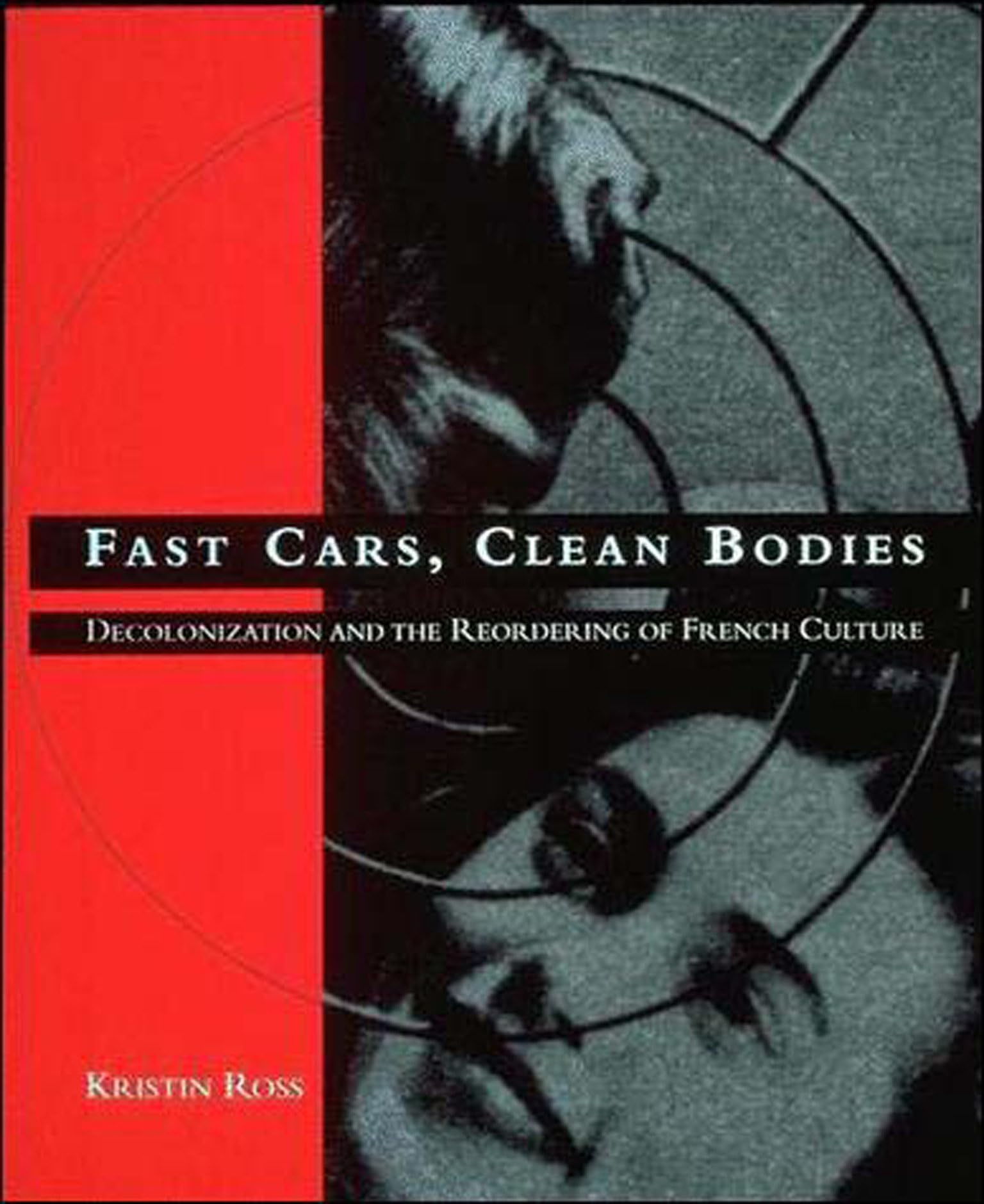
Fast Cars, Clean Bodies: Decolonization and the Reordering of French Culture (October Books),Used
Sold by Ergodebooks, an authorized reseller.
Returns accepted within 30 days | support@ergodebooks.com
Shipping Information
- Free Standard Shipping — United States only
- Processing Time: 3–5 business days
- Estimated Delivery: 6–10 business days after dispatch
- Double-boxed, fully insured & discreetly packaged
- Tracking number sent via email once dispatched
Returns & Refund
Returns accepted within 30 days of delivery.
Damaged or Defective Item
Free return shipping + replacement or full refund
Wrong Item Received
Free return shipping + replacement or full refund
Change of Mind
Return shipping at customer's expense · 25% restocking fee applies
Payment Option

Fast Cars, Clean Bodies examines the crucial decade from Dien Bien Phu to the mid1960s when France shifted rapidly from an agrarian, insular, and empireoriented society to a decolonized, Americanized, and fully industrial one. In this analysis of a startling cultural transformation Kristin Ross finds the contradictions of the period embedded in its various commodities and cultural artifactsautomobiles, washing machines, women's magazines, film, popular fiction, even structuralismas well as in the practices that shape, determine, and delimit their uses.In each of the book's four chapters, a central object of mythical image is refracted across a range of discursive and material spaces: social and private, textual and cinematic, national and international. The automobile, the new cult of cleanliness in the capital and the colonies, the waning of Sartre and de Beauvoir as the couple of national attention, and the emergence of reshaped, functionalist masculinities (revolutionary, corporate, and structural) become the key elements in this prehistory of postmodernism in France.Modernization ideology, Ross argues, offered the promise of limitless, even timeless, development. By situating the rise of 'end of history' ideologies within the context of France's transition into mass culture and consumption, Ross returns the touted timelessness of modernization to history. She shows how the realist fiction and film of the period, as well as the work of social theorists such as Barthes, Lefebvre, and Morin who began at the time to conceptualize 'everyday life,' laid bare the disruptions and the social costs of events. And she argues that the logic of the racism prevalent in France today, focused on the figure of the immigrant worker, is itself the outcome of the French state's embrace of capitalist modernization ideology in the 1950s and 1960s.
⚠️ WARNING (California Proposition 65):
This product may contain chemicals known to the State of California to cause cancer, birth defects, or other reproductive harm.
For more information, please visit www.P65Warnings.ca.gov.
- Q: How many pages does the book have? A: The book has two hundred seventy-four pages. This provides a comprehensive examination of the cultural transformation in France during the mid-twentieth century.
- Q: What are the dimensions of the book? A: The book measures eight point nine eight inches in length, six point nine three inches in width, and zero point five nine inches in height. These dimensions make it a convenient size for reading.
- Q: What type of binding does the book have? A: The book is published in paperback binding. This makes it lightweight and easy to handle for readers.
- Q: Who is the author of 'Fast Cars, Clean Bodies'? A: The author is Kristin Ross. She provides a critical analysis of France's cultural shift during a significant historical period.
- Q: What is the main theme of the book? A: The main theme is the cultural transformation in France from an agrarian society to a decolonized, industrial one. This theme is explored through various commodities and cultural artifacts.
- Q: Is this book suitable for academic study? A: Yes, this book is suitable for academic study. It offers in-depth analysis and insights into the cultural and historical context of France in the mid-twentieth century.
- Q: Can I read this book if I'm a beginner in cultural studies? A: Yes, beginners can read this book. While it addresses complex themes, Kristin Ross’s writing is accessible to those new to cultural studies.
- Q: What kind of insights can I gain from this book? A: You can gain insights into the contradictions and cultural artifacts of post-war French society. The book examines how modernization ideology influenced social practices.
- Q: How should I care for this paperback book? A: To care for this paperback book, store it in a dry place and keep it away from direct sunlight. This will help preserve its condition over time.
- Q: Is this book safe for young readers? A: No, this book is not specifically designed for young readers. It covers complex themes and historical context that may not be suitable for children.
- Q: What if my book arrives damaged? A: If your book arrives damaged, you should contact the seller for a return or exchange. Ensure you have your order details handy for a smoother process.
- Q: Can I return the book if I don't like it? A: Yes, you can typically return the book if you’re not satisfied. Check the specific return policy of the seller for details on timeframes and conditions.
- Q: What type of insights does Kristin Ross provide in this book? A: Kristin Ross provides insights into the cultural impacts of modernization in France and discusses how these influenced societal norms and ideologies.
- Q: What are some key topics covered in the book? A: Key topics include the role of automobiles, cleanliness, and the depiction of masculinity in post-war French culture. These elements illustrate broader societal shifts.
- Q: Is this book part of a series? A: No, 'Fast Cars, Clean Bodies' is not part of a series. It stands alone as an independent examination of French cultural history.
- Q: What is the publisher of the book? A: The book is published by The MIT Press. This publisher is known for its scholarly works in various fields, including cultural studies.