
Title
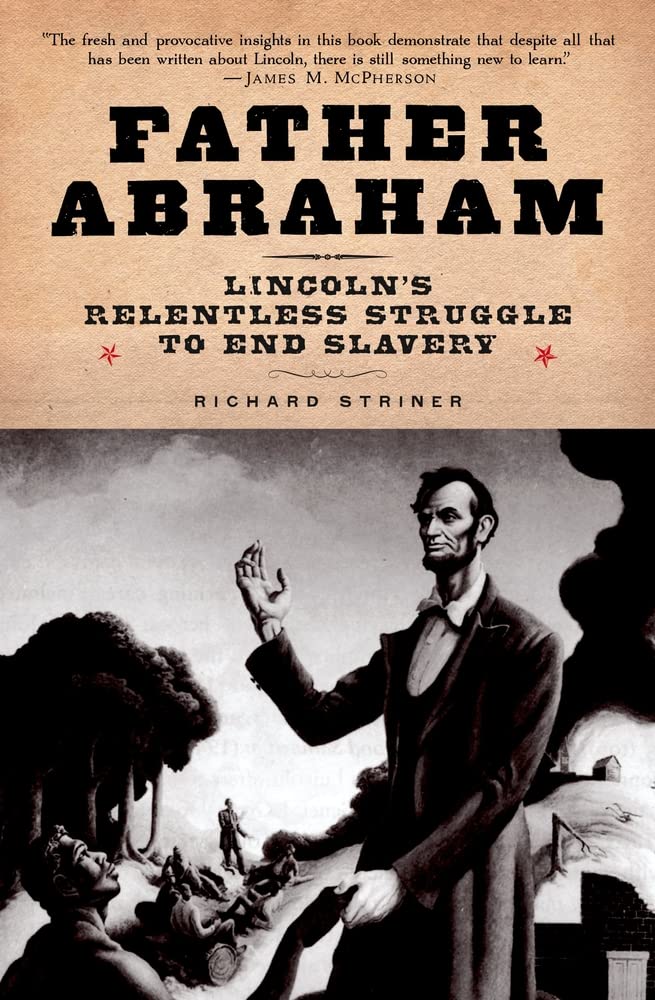
Father Abraham: Lincoln's Relentless Struggle to End Slavery,Used
Sold by Ergodebooks, an authorized reseller.
Returns accepted within 30 days | support@ergodebooks.com
Shipping Information
- Free Standard Shipping — United States only
- Processing Time: 3–5 business days
- Estimated Delivery: 6–10 business days after dispatch
- Double-boxed, fully insured & discreetly packaged
- Tracking number sent via email once dispatched
Returns & Refund
Returns accepted within 30 days of delivery.
Damaged or Defective Item
Free return shipping + replacement or full refund
Wrong Item Received
Free return shipping + replacement or full refund
Change of Mind
Return shipping at customer's expense · 25% restocking fee applies
Payment Option

Lincoln is the single most compelling figure in our history, but also one of the most enigmatic. Was he the Great Emancipator, a man of deep convictions who ended slavery in the United States, or simply a reluctant politician compelled by the force of events to free the slaves? In Father Abraham, Richard Striner offers a fresh portrait of Lincoln, one that helps us make sense of his many contradictions.Striner shows first that, if you examine the speeches that Lincoln made in the 1850s, you will have no doubt of his passion to end slavery. These speeches illuminate the anger, vehemence, and sheer brilliance of candidate Lincoln, who worked up crowds with charismatic fervor as he gathered a national following. But if he felt so passionately about abolition, why did he wait so long to release the Emancipation Proclamation? As Striner points out, politics is the art of the possible, and Lincoln was a consummate politician, a shrewd manipulator who cloaked his visionary ethics in the more pragmatic garb of the coalitionbuilder. He was at bottom a Machiavellian prince for a democratic age. When secession began, Lincoln used the battle cry of saving the Union to build a power base, one that would eventually break the slaveholding states forever. Striner argues that Lincoln was a rare man indeed: a fervent idealist and a crafty politician with a remarkable gift for strategy. It was the harmonious blend of these two qualities, Striner concludes, that made Lincoln's role in ending slavery so fundamental.Father Abraham challenges recent portraits of Lincoln as an essentially passive politician and reluctant abolitionist. Exhaustively researched and crisply argued, this superb book gives us a new appreciation of Lincoln as moral leader.
⚠️ WARNING (California Proposition 65):
This product may contain chemicals known to the State of California to cause cancer, birth defects, or other reproductive harm.
For more information, please visit www.P65Warnings.ca.gov.