
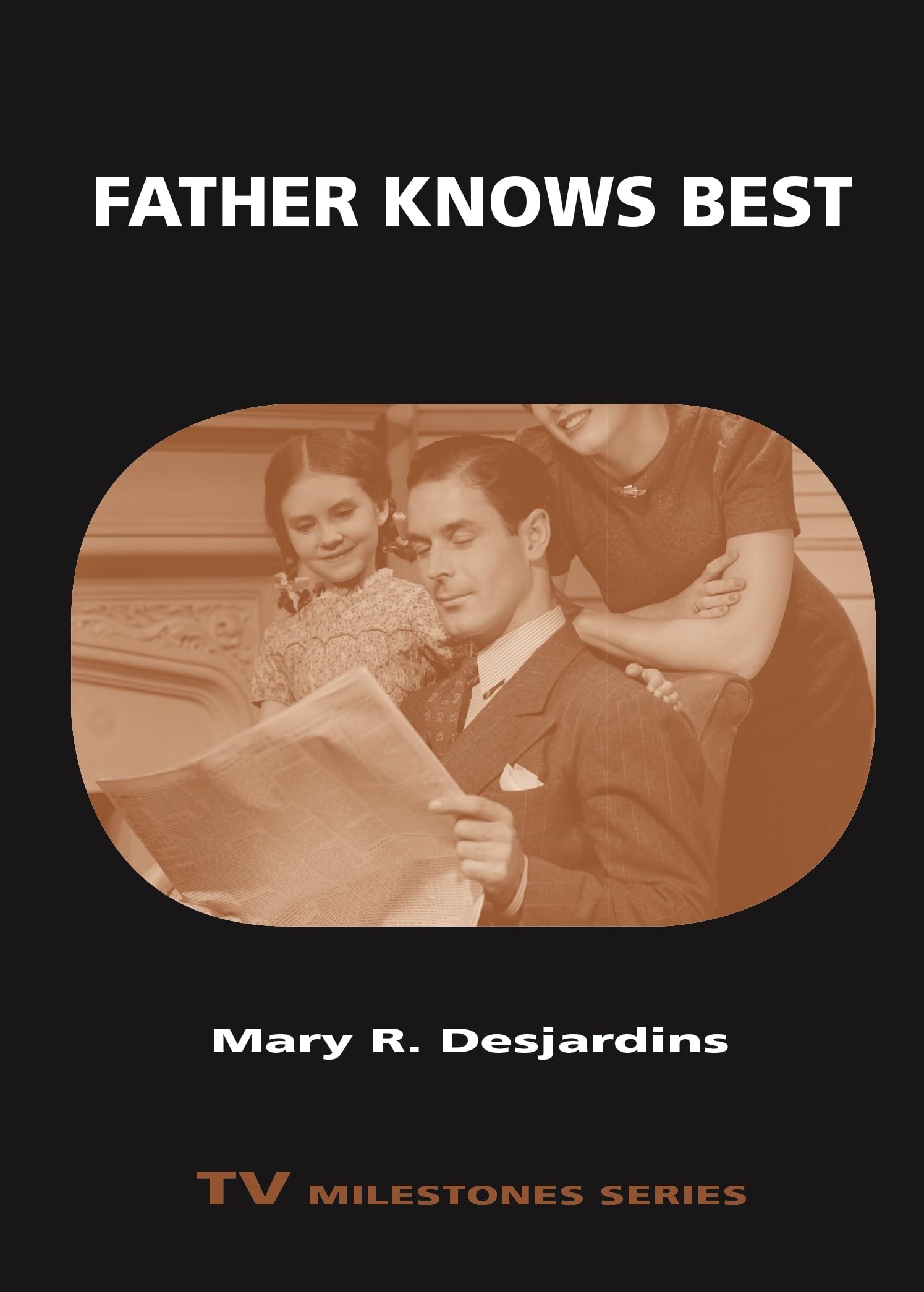
Title
Father Knows Best (Tv Milestones),Used
Sold by Ergodebooks, an authorized reseller.
Returns accepted within 30 days | support@ergodebooks.com
Shipping Information
- Free Standard Shipping — United States only
- Processing Time: 3–5 business days
- Estimated Delivery: 6–10 business days after dispatch
- Double-boxed, fully insured & discreetly packaged
- Tracking number sent via email once dispatched
Returns & Refund
Returns accepted within 30 days of delivery.
Damaged or Defective Item
Free return shipping + replacement or full refund
Wrong Item Received
Free return shipping + replacement or full refund
Change of Mind
Return shipping at customer's expense · 25% restocking fee applies
Payment Option

Although the iconic television series Father Knows Best (CBS 195455; NBC 195558; CBS 195860) has enjoyed a long history in rerun syndication and an enduring fan base, it is often remembered as cultural shorthand for 1950sera conformism and authoritarianism. In this study of Father Knows Best, author Mary R. Desjardins examines the program, its popularity, and its critical position within historical, industrial, and generic contexts to challenge oversimplified assumptions about the show's use of comedy and melodrama in exploring the place of family in midtwentiethcentury American society.Desjardins begins by looking at Father Knows Best within media and production contexts, including its origin on radio, its place in the history of Screen Gems telefilm production, and its roots in the backgrounds and creative philosophies of coproducer Eugene Rodney and starproducer Robert Young. She goes on to examine the social contexts for the creation and reception of the series, especially in the era's emphasis on family togetherness, shared parenting by both father and mother, and generational stages of the life cycle. Against this background, Desjardins also discusses several Father Knows Best episodes indepth to consider their treatment of conflicts over appropriate gender roles for women. She concludes by exploring how the series' cast participated in reevaluations of the Anderson family's meaning in relation to 'real families' of the fifties, through television specials, talk show appearances, magazine and book interviews, and documentaries.Blending melodrama and comedy, naturalistic acting, and stylized cinematic visuals, Father Knows Best dramatized ideological tensions in the most typical situations facing the American family. Scholars of midcentury American popular culture and film history as well as fans of the show will appreciate Desjardin's measured analysis.
⚠️ WARNING (California Proposition 65):
This product may contain chemicals known to the State of California to cause cancer, birth defects, or other reproductive harm.
For more information, please visit www.P65Warnings.ca.gov.