
Title
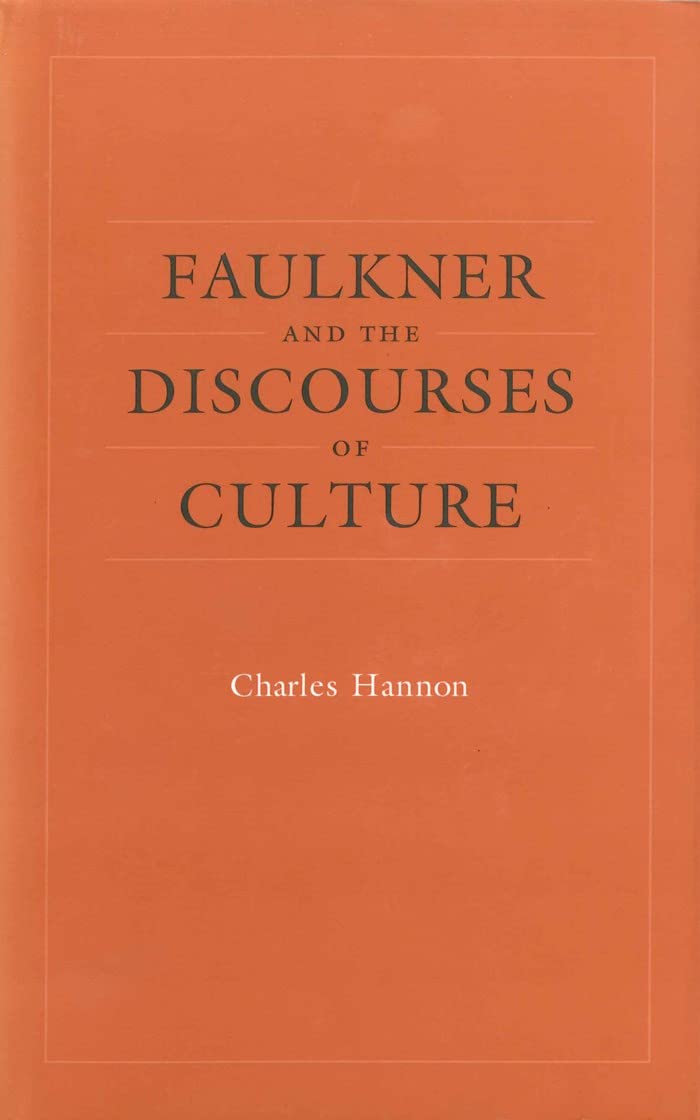
Faulkner and the Discourses of Culture (Southern Literary Studies),New
Sold by Ergodebooks, an authorized reseller.
Returns accepted within 30 days | support@ergodebooks.com
Shipping Information
- Free Standard Shipping — United States only
- Processing Time: 3–5 business days
- Estimated Delivery: 6–10 business days after dispatch
- Double-boxed, fully insured & discreetly packaged
- Tracking number sent via email once dispatched
Returns & Refund
Returns accepted within 30 days of delivery.
Damaged or Defective Item
Free return shipping + replacement or full refund
Wrong Item Received
Free return shipping + replacement or full refund
Change of Mind
Return shipping at customer's expense · 25% restocking fee applies
Payment Option

Throughout his career, William Faulkner produced a literary discourse remarkably contiguous with other discourses of American culture, but seldom has his work been explored as a participant in the shifts and ruptures that characterize modern discursive systems. Charles Hannon argues in his brilliant new study that the language of Faulkner's fiction is replete with the voiced conflicts that shaped America and the South from the 1920s to1950. Specifically, Hannon takes five contemporary debates in historiography, law, labor, ethnography, and film and relates them both to canonical and lessdiscussed texts of Faulkner.Hannon employs a theoretical middle ground between Michael Bakhtin's stylistics of the novel and Michel Foucault's model of discourse as an autonomous selfregulated domain, while also drawing from the vast critical literature on Faulkner's fiction. He begins by linking the story cycle The Unvanquished to the battle over interpretations of American history as voiced by the Nashville Agrarians on the one hand and W. E. B. DuBois on the other. Next Hannon shows how Faulkner's detective fiction of the early 1930s and portions of his novel The Hamlet were affected by the emerging schism between adherents of a new school of legal realism and those bound to a more conservative formalist jurisprudence. According to Hannon, Faulkner's great novel Absalom, Absalom! reflects in its depiction of various forms of labor one of Franklin Roosevelt's major New Deal accomplishments the Wagner Act of 1935 as well as contract disputes in the agricultural and manufacturing South and in the film studios of Hollywood. Hannon discusses Faulkner's experimentation in The Hamlet visvis the development of the ethnographic method in the field of anthropology. He concludes with a fascinating analysis of the filming of Intruder in the Dust in Faulkner's hometown of Oxford, Mississippi.Through Hannon's keen interpretive readings, Faulkner's texts emerge as a complex 'node' in the larger discursive conflicts of his time. Though he often seemed to be detached from influence, Faulkner was, Hannon reveals, intensely attentive to ideas at the fore.
⚠️ WARNING (California Proposition 65):
This product may contain chemicals known to the State of California to cause cancer, birth defects, or other reproductive harm.
For more information, please visit www.P65Warnings.ca.gov.