
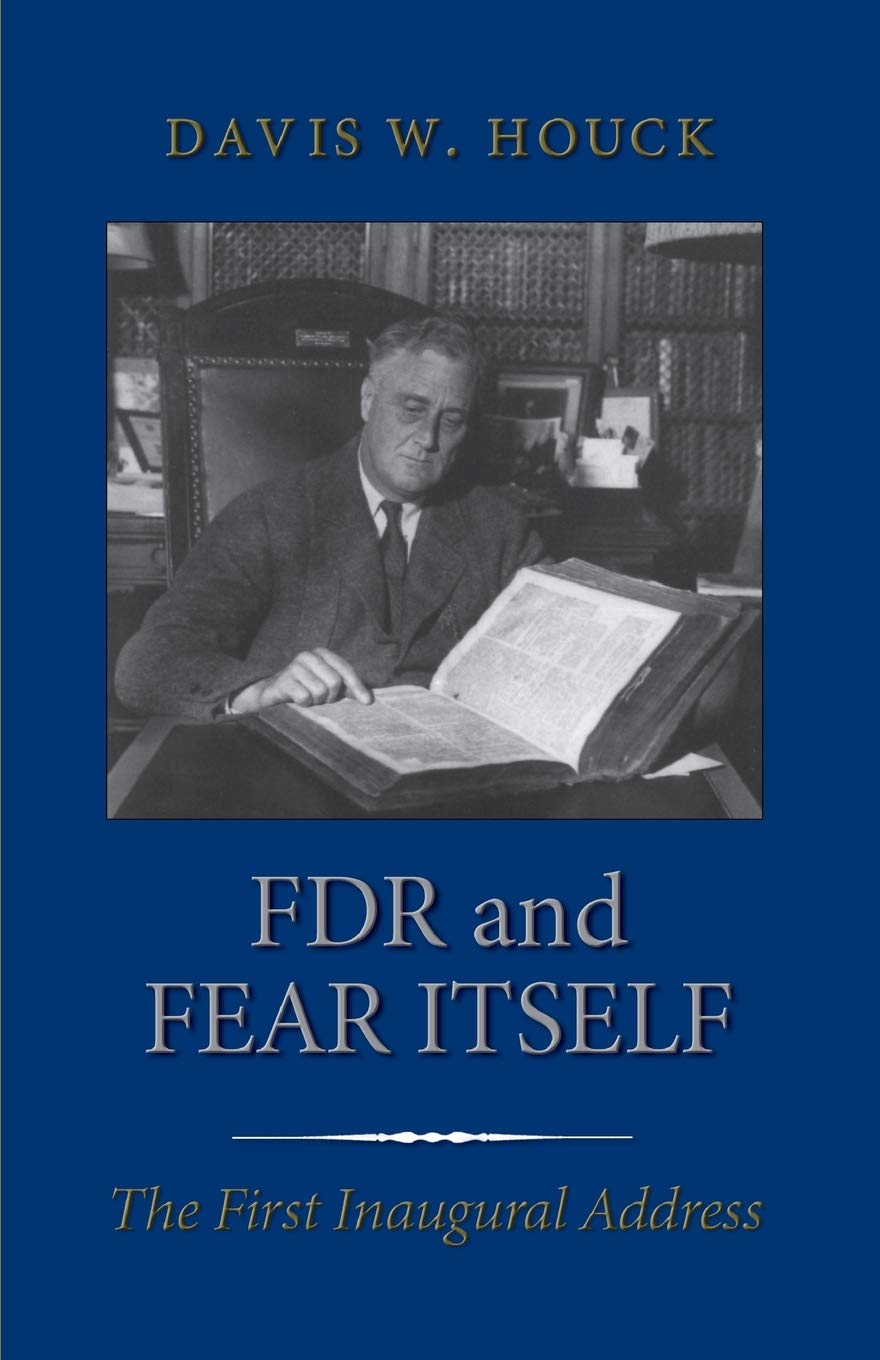
Title
FDR and Fear Itself: The First Inaugural Address (Library of Presidential Rhetoric),New
Sold by Ergodebooks, an authorized reseller.
Returns accepted within 30 days | support@ergodebooks.com
Shipping Information
- Free Standard Shipping — United States only
- Processing Time: 3–5 business days
- Estimated Delivery: 6–10 business days after dispatch
- Double-boxed, fully insured & discreetly packaged
- Tracking number sent via email once dispatched
Returns & Refund
Returns accepted within 30 days of delivery.
Damaged or Defective Item
Free return shipping + replacement or full refund
Wrong Item Received
Free return shipping + replacement or full refund
Change of Mind
Return shipping at customer's expense · 25% restocking fee applies
Payment Option

The only thing we have to fear is fear itself.' These are some of the most famous, the most quoted, and the best remembered words in American political history. They seem to be a natural expression of American democratic will, yet these words from Franklin Roosevelt's first inaugural address had an actual author who struggled with how best to express that thoughtand it wasnt the new president. In this innovative book on the crafting of this crucial speech, Davis W. Houck leads the reader from its negative, mechanical, and Hooverian first draft through its final revision, its delivery, and the responses of those who were inspired by it during those troubled times.Houcks analysis, dramatic and at points riveting, focuses on three themes: how the speech came to be written; an explication of the text itself; and its reception. Drawing on the writings and memories of several people who were present in the crowd at the inauguration, Houck shows how powerfully the new presidents speech affected those who were there or who heard it on the radio. Some were so moved by Roosevelts delivery that they would have been willing to make him a dictator, and many believed such inspired words could have come only from a divine source.Houck then flashes back to the final year of the 1932 presidential campaign to show how Raymond Moley, the principal architect of the address, came to be trusted by Roosevelt to craft this important speech. Houck traces the relationships of Moley with Roosevelt and Roosevelts influential confidante, Louis Howe, who was responsible for important changes in the speechs later drafts, including the famous aphorism.Although the book focuses primarily on the speech and its drafting, Houck also offers telling glimpses of Roosevelt's complex relationship with his wife, who dreaded her new duties as First Lady, and his deep, personal dislike of Herbert Hoover, all while conveying a strong sense of the urgency of the times. The text of this compelling address is provided in its entirety so that students and others may experience for themselves the full power of the rhetoric.
⚠️ WARNING (California Proposition 65):
This product may contain chemicals known to the State of California to cause cancer, birth defects, or other reproductive harm.
For more information, please visit www.P65Warnings.ca.gov.