
Title

Feedback: Television against Democracy,Used
Sold by Ergodebooks, an authorized reseller.
Returns accepted within 30 days | support@ergodebooks.com
Shipping Information
- Free Standard Shipping — United States only
- Processing Time: 3–5 business days
- Estimated Delivery: 6–10 business days after dispatch
- Double-boxed, fully insured & discreetly packaged
- Tracking number sent via email once dispatched
Returns & Refund
Returns accepted within 30 days of delivery.
Damaged or Defective Item
Free return shipping + replacement or full refund
Wrong Item Received
Free return shipping + replacement or full refund
Change of Mind
Return shipping at customer's expense · 25% restocking fee applies
Payment Option

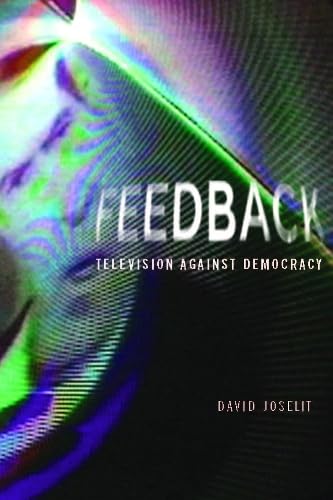
In a world where politics is conducted through images, the tools of art history can be used to challenge the privatized antidemocratic sphere of American television.American television embodies a paradox: it is a privately owned and operated public communications network that most citizens are unable to participate in except as passive specators. Television creates an image of community while preventing the formation of actual social ties because behind its simulated exchange of opinions lies a highly centralized corporate structure that is profoundly antidemocratic. In Feedback, David Joselit describes the privatized public sphere of television and recounts the tactics developed by artists and media activists in the 1960s and 1970s to break open its closed circuit.The figures whose work Joselit examinesamong them Nam June Paik, Dan Graham, Joan Jonas, Abbie Hoffman, Andy Warhol, and Melvin Van Peeblesstaged political interventions within television's closed circuit. Joselit identifies three kinds of imageevents: feedback, which can be both disabling noise and rational responseas when Abbie Hoffman hijacked television time for the Yippies with flamboyant stunts directed to the media; the imagevirus, which proliferates parasitically, invading, transforming, and even blocking systemsas in Nam June Paik's synthesized videotapes and installations; and the avatar, a quasifictional form of identity available to anyone, which can function as a political actoras in Melvin Van Peebles's invention of Sweet Sweetback, an AfricanAmerican hero who appealed to a broad audience and influenced styles of Black Power activism. These strategies, writes Joselit, remain valuable today in a world where the overlapping information circuits of television and the Internet offer different opportunities for democratic participation.In Feedback, Joselit analyzes such midcentury imageevents using the procedures and categories of art history. The trope of figure/ground reversal, for instance, is used to assess acts of representation in a variety of mediaincluding the medium of politics. In a televisual world, Joselit argues, where democracy is conducted through images, art history has the capacity to become a political science.
⚠️ WARNING (California Proposition 65):
This product may contain chemicals known to the State of California to cause cancer, birth defects, or other reproductive harm.
For more information, please visit www.P65Warnings.ca.gov.