If you have any questions, you are always welcome to contact us. We'll get back to you as soon as possible, withing 24 hours on weekdays.
Customer service
All questions about your order, return and delivery must be sent to our customer service team by e-mail at yourstore@yourdomain.com
Sale & Press
If you are interested in selling our products, need more information about our brand or wish to make a collaboration, please contact us at press@yourdomain.com
Help
If you have any questions, you are always welcome to contact us. We'll get back to you as soon as possible, withing 24 hours on weekdays.
Customer service
All questions about your order, return and delivery must be sent to our customer service team by e-mail at yourstore@yourdomain.com
Sale & Press
If you are interested in selling our products, need more information about our brand or wish to make a collaboration, please contact us at press@yourdomain.com
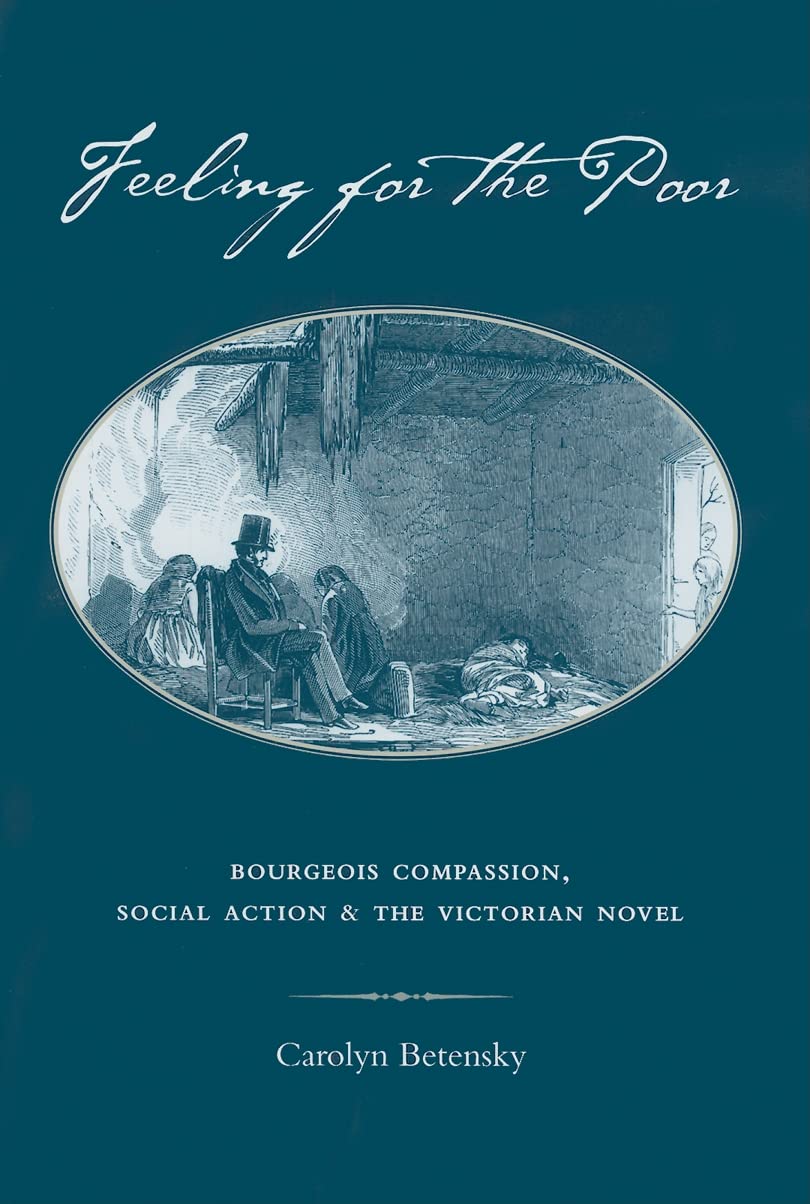
What if the political work of Victorian socialproblem novels was precisely to make the reader feel as if reading themin and of itselfmattered? Surveying novels by Charles Dickens, Frances Trollope, Benjamin Disraeli, Elizabeth Gaskell, George Eliot, and Henry James, Carolyn Betensky tracks the promotion of bourgeois feeling as a response to the suffering of the poor and working classes. Victorian socialproblem novels, she argues, volunteered the experience of their own reading as a viable response to conflicts that seemed daunting or irreconcilable. Encoded at multiple levels within the novels themselves, reading became something to do about the pain of others.Beyond representations of conscious or unconscious wishes to control, conquer, or discipline the industrial poor, socialproblem novels offered their middleclass readers the opportunity to experience themselves in the position of both benefactor and beneficiary. Betensky argues that these narratives were not only about middleclass fear of or sympathy for the working classes. They gave voice, just as importantly, to a middleclass desire for and even envy of the experience of the dominated classes. In their representations of poor and workingclass characters, socialproblem novels offered middleclass subjects an expanded range of emotional experience that included a claim to sympathy on their own behalf.
⚠️ WARNING (California Proposition 65):
This product may contain chemicals known to the State of California to cause cancer,
birth defects, or other reproductive harm.
For MAP (Minimum Advertised Price) violations and Intellectual Property (IP) or Trademark concerns, please contact:
support@ergodebooks.com
⚠️ California Proposition 65 Warning: Some products sold on this website may expose you to chemicals known to the State of California to cause cancer, birth defects, or other reproductive harm. For more information, visit www.P65Warnings.ca.gov.