
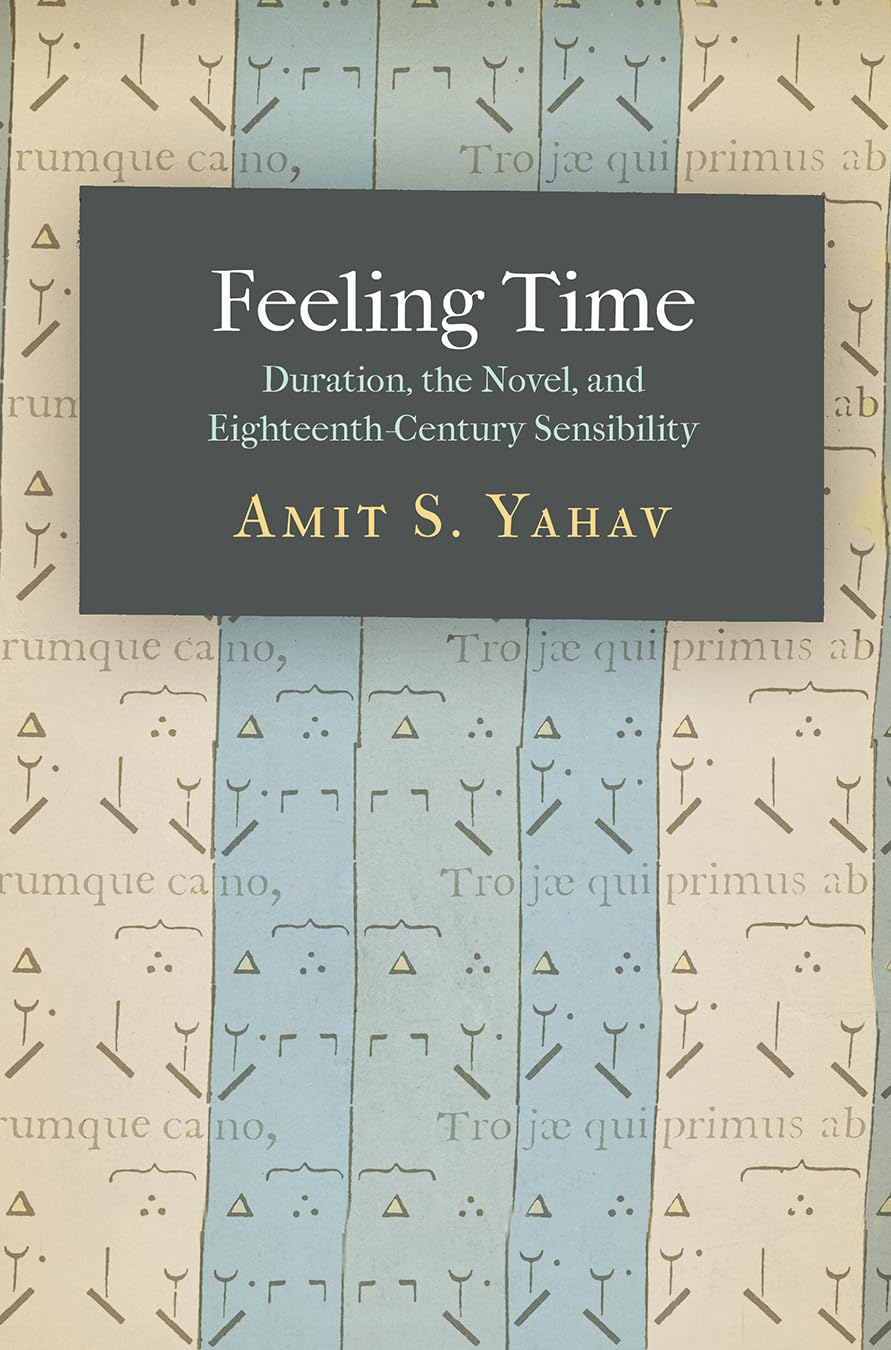
Title
Feeling Time: Duration, The Novel, And Eighteenthcentury Sensibility,Used
Sold by Ergodebooks, an authorized reseller.
Returns accepted within 30 days | support@ergodebooks.com
Shipping Information
- Free Standard Shipping — United States only
- Processing Time: 3–5 business days
- Estimated Delivery: 6–10 business days after dispatch
- Double-boxed, fully insured & discreetly packaged
- Tracking number sent via email once dispatched
Returns & Refund
Returns accepted within 30 days of delivery.
Damaged or Defective Item
Free return shipping + replacement or full refund
Wrong Item Received
Free return shipping + replacement or full refund
Change of Mind
Return shipping at customer's expense · 25% restocking fee applies
Payment Option

Literary historians have tended to associate the eighteenth century with the rise of the tyranny of the clockthe notion of time as ruled by mechanical chronometry. The transition to standardized scheduling and timediscipline, the oftentold story goes, inevitably results in modernity's timekeeper societies and the characterization of modern experience as qualitatively diminished.In Feeling Time, Amit Yahav challenges this narrative of the triumph of chronometry and the consequent impoverishment of individual experience. She explores the fascination eighteenthcentury writers had with the mental and affective processes through which human beings come not only to know that time has passed but also to feel the durations they inhabit. Yahav begins by elucidating discussions by Locke and Hume that examine how humans come to know time, noting how these philosophers often consider not only knowledge but also experience. She then turns to novels by Richardson, Sterne, and Radcliffe, attending to the material dimensions of literary language to show how novelists shape the temporal experience of readers through their formal choices. Along the way, she considers a wide range of eighteenthcentury aesthetic and moral treatises, finding that these identify the subjective experience of duration as the crux of pleasure and judgment, described more as patterned durational activity than as static state.Feeling Time highlights the temporal underpinnings of the eighteenth century's culture of sensibility, arguing that novelists have often drawn on the logic of musical composition to make their writing an especially effective tool for exploring time and for shaping durational experience.
⚠️ WARNING (California Proposition 65):
This product may contain chemicals known to the State of California to cause cancer, birth defects, or other reproductive harm.
For more information, please visit www.P65Warnings.ca.gov.