
Title
Felix Longoria's Wake: Bereavement, Racism, and the Rise of Mexican American Activism (CMAS History, Culture, and Society Series,Used
Sold by Ergodebooks, an authorized reseller.
Returns accepted within 30 days | support@ergodebooks.com
Shipping Information
- Free Standard Shipping — United States only
- Processing Time: 3–5 business days
- Estimated Delivery: 6–10 business days after dispatch
- Double-boxed, fully insured & discreetly packaged
- Tracking number sent via email once dispatched
Returns & Refund
Returns accepted within 30 days of delivery.
Damaged or Defective Item
Free return shipping + replacement or full refund
Wrong Item Received
Free return shipping + replacement or full refund
Change of Mind
Return shipping at customer's expense · 25% restocking fee applies
Payment Option

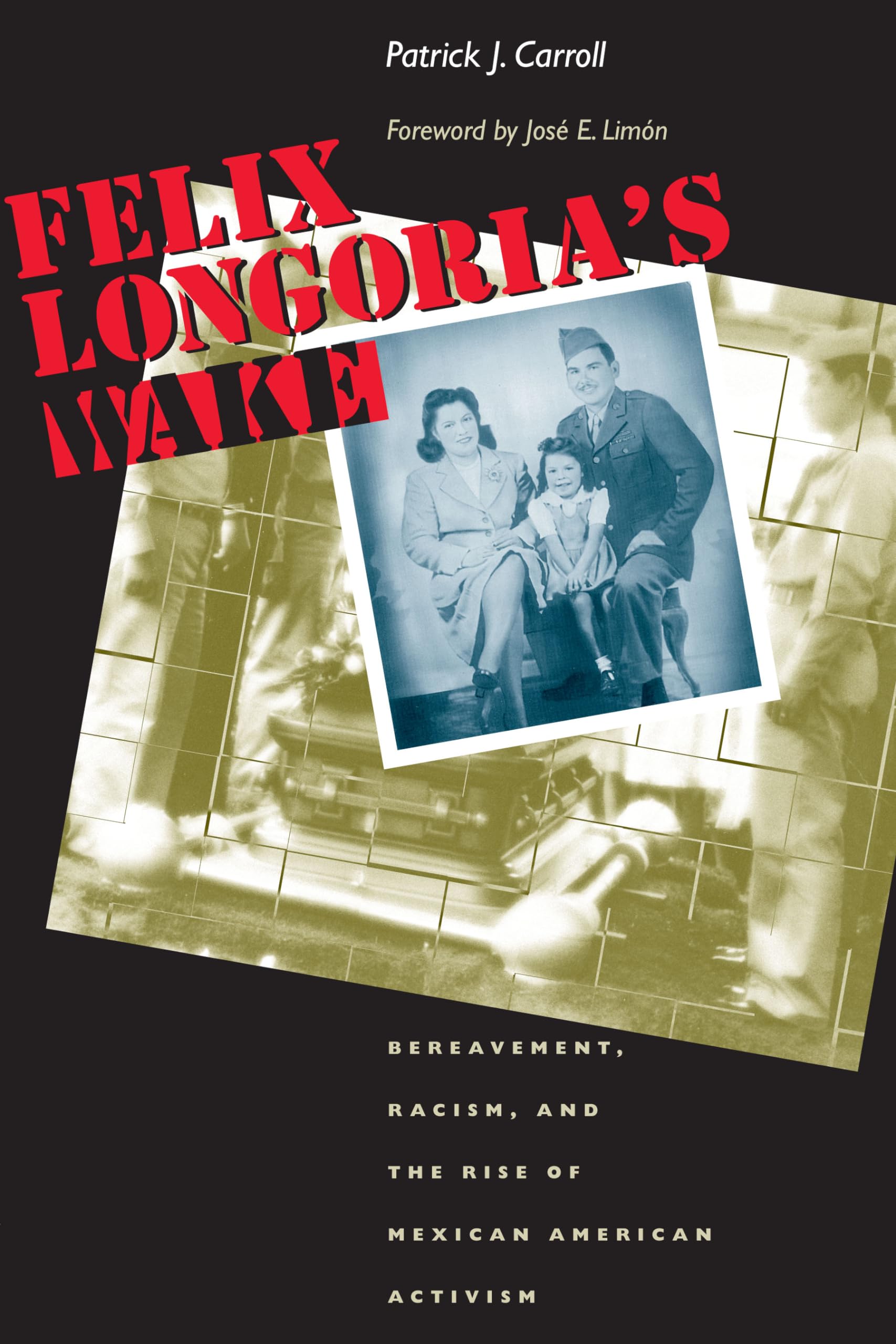
Winner, Tullis Prize, Texas State Historical Association, 2004Private First Class Felix Longoria earned a Bronze Service Star, a Purple Heart, a Good Conduct Medal, and a Combat Infantryman's badge for service in the Philippines during World War II. Yet the only funeral parlor in his hometown of Three Rivers, Texas, refused to hold a wake for the slain soldier because 'the whites would not like it.' Almost overnight, this act of discrimination became a defining moment in the rise of Mexican American activism. It launched Dr. Hctor P. Garca and his newly formed American G.I. Forum into the vanguard of the Mexican civil rights movement, while simultaneously endangering and advancing the career of Senator Lyndon B. Johnson, who arranged for Longoria's burial with full military honors in Arlington National Cemetery.In this book, Patrick Carroll provides the first fully researched account of the Longoria controversy and its farreaching consequences. Drawing on extensive documentary evidence and interviews with many key figures, including Dr. Garca and Mrs. Longoria, Carroll convincingly explains why the Longoria incident, though less severe than other acts of discrimination against Mexican Americans, ignited the activism of a whole range of interest groups from Argentina to Minneapolis. By putting Longoria's wake in a national and international context, he also clarifies why it became such a flash point for conflicting understandings of bereavement, nationalism, reason, and emotion between two powerful culturesMexicanidad and Americanism.
⚠️ WARNING (California Proposition 65):
This product may contain chemicals known to the State of California to cause cancer, birth defects, or other reproductive harm.
For more information, please visit www.P65Warnings.ca.gov.
- Q: What is the primary focus of 'Felix Longoria's Wake'? A: The book focuses on the discrimination faced by Private First Class Felix Longoria and how his wake became a pivotal moment in Mexican American activism, highlighting issues of racism and national identity.
- Q: Who is the author of 'Felix Longoria's Wake'? A: The author of the book is Patrick J. Carroll.
- Q: What recognition has the book received? A: The book won the Tullis Prize from the Texas State Historical Association in 2004.
- Q: What is the publication date of 'Felix Longoria's Wake'? A: The book was published on April 1, 2003.
- Q: How many pages does 'Felix Longoria's Wake' have? A: The book contains 288 pages.
- Q: What type of binding does this book have? A: The book is available in paperback binding.
- Q: Is 'Felix Longoria's Wake' suitable for academic study? A: Yes, the book provides extensive research and documentation, making it suitable for academic study on topics of activism, racism, and Mexican American history.
- Q: Does the book include interviews with key figures? A: Yes, it draws on interviews with significant figures involved in the Longoria incident, including Dr. Héctor P. García.
- Q: What themes are explored in the book? A: The book explores themes of bereavement, nationalism, and the emotional connections between Mexican and American cultures.
- Q: Can 'Felix Longoria's Wake' be considered a historical account? A: Yes, it is a fully researched historical account of the Longoria controversy and its implications for civil rights movements.