If you have any questions, you are always welcome to contact us. We'll get back to you as soon as possible, withing 24 hours on weekdays.
Customer service
All questions about your order, return and delivery must be sent to our customer service team by e-mail at yourstore@yourdomain.com
Sale & Press
If you are interested in selling our products, need more information about our brand or wish to make a collaboration, please contact us at press@yourdomain.com
Help
If you have any questions, you are always welcome to contact us. We'll get back to you as soon as possible, withing 24 hours on weekdays.
Customer service
All questions about your order, return and delivery must be sent to our customer service team by e-mail at yourstore@yourdomain.com
Sale & Press
If you are interested in selling our products, need more information about our brand or wish to make a collaboration, please contact us at press@yourdomain.com
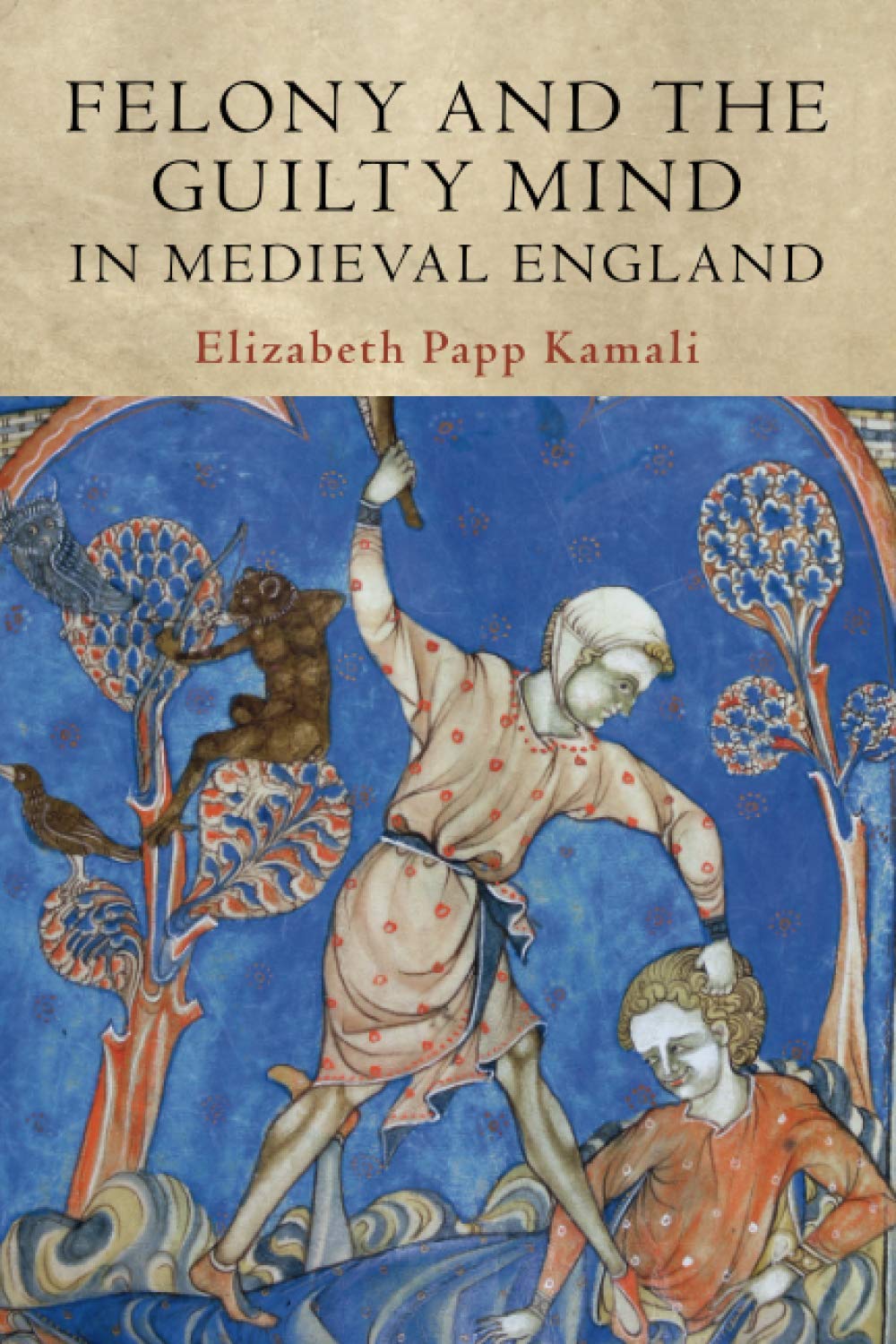
This book explores the role of mens rea, broadly defined as a factor in jury assessments of guilt and innocence from the early thirteenth through the fourteenth century the first two centuries of the English criminal trial jury. Drawing upon evidence from the plea rolls, but also relying heavily upon nonlegal textual sources such as popular literature and guides for confessors, Elizabeth Papp Kamali argues that issues of mind were central to jurors' determinations of whether a particular defendant should be convicted, pardoned, or acquitted outright. Demonstrating that the word 'felony' itself connoted a guilty state of mind, she explores the interplay between social conceptions of guilt and innocence and jury behavior. Furthermore, she reveals a medieval understanding of felony that involved, in its paradigmatic form, three essential elements: an act that was reasoned, was willed in a way not constrained by necessity, and was evil or wicked in its essence.
⚠️ WARNING (California Proposition 65):
This product may contain chemicals known to the State of California to cause cancer,
birth defects, or other reproductive harm.
For MAP (Minimum Advertised Price) violations and Intellectual Property (IP) or Trademark concerns, please contact:
support@ergodebooks.com
⚠️ California Proposition 65 Warning: Some products sold on this website may expose you to chemicals known to the State of California to cause cancer, birth defects, or other reproductive harm. For more information, visit www.P65Warnings.ca.gov.