
Title
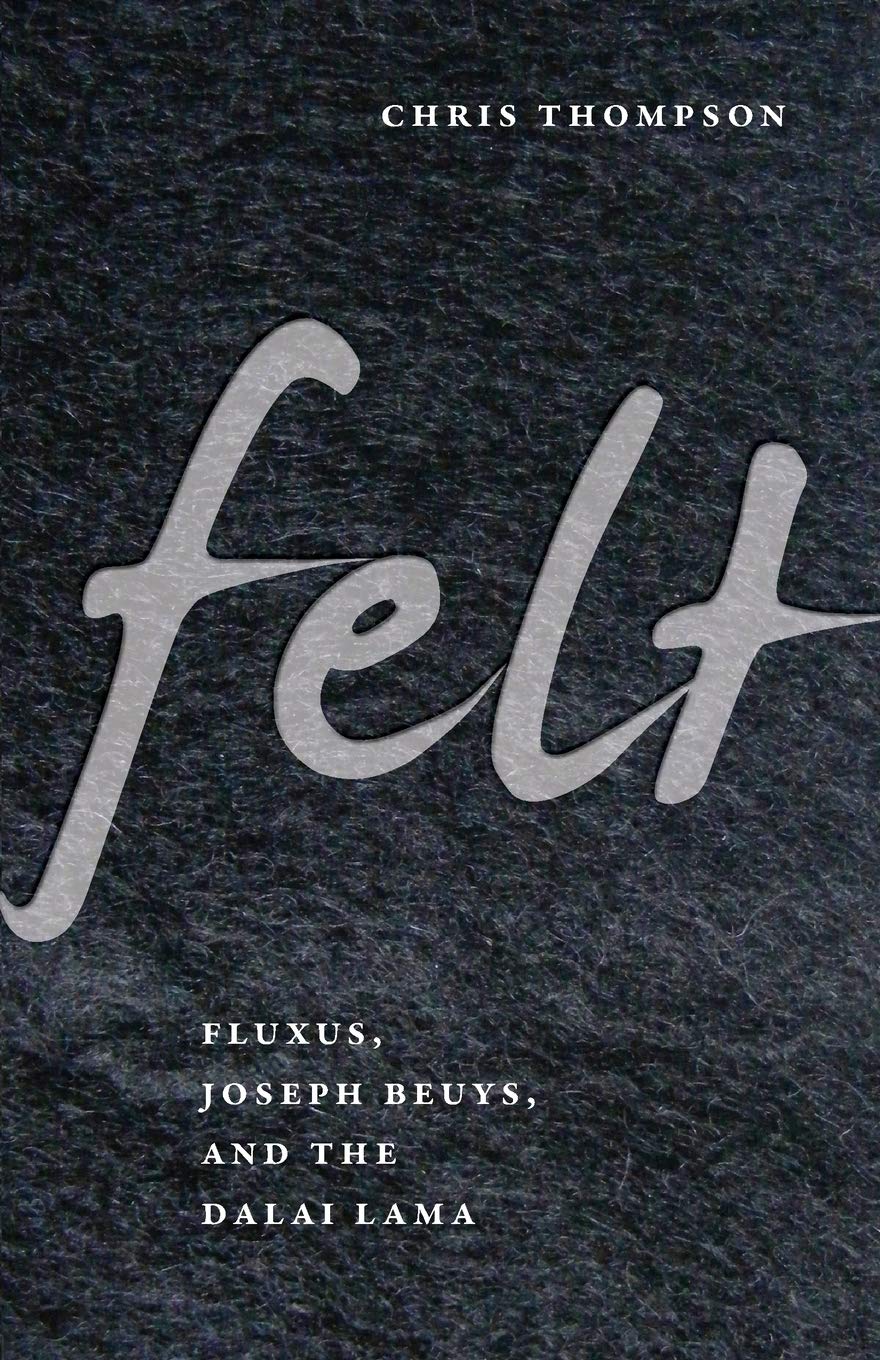
Felt: Fluxus, Joseph Beuys, And The Dalai Lama,Used
Sold by Ergodebooks, an authorized reseller.
Returns accepted within 30 days | support@ergodebooks.com
Shipping Information
- Free Standard Shipping — United States only
- Processing Time: 3–5 business days
- Estimated Delivery: 6–10 business days after dispatch
- Double-boxed, fully insured & discreetly packaged
- Tracking number sent via email once dispatched
Returns & Refund
Returns accepted within 30 days of delivery.
Damaged or Defective Item
Free return shipping + replacement or full refund
Wrong Item Received
Free return shipping + replacement or full refund
Change of Mind
Return shipping at customer's expense · 25% restocking fee applies
Payment Option

Felt provides a nonlinear look at the engagement of the postwar avantgarde with Eastern spirituality, a context in which the German artist Joseph Beuys appears as an uneasy shaman. Centered on a highly publicized yet famously inconclusive 1982 meeting between Beuys and the Dalai Lama, arranged by the Dutch artist Louwrien Wijers, Chris Thompson explores the interconnections among Beuys, the Fluxus movement, and Eastern philosophy and spiritual practice.Building from the resonance of felt, the fabric, in both Tibetan culture and in Beuyss art, Thompson takes as his point of departure Deleuze and Guattaris discussion in A Thousand Plateaus of felt as smooth space that is in principle infinite, open, and unlimited in every direction, its structure determined by chance as opposed to the planned, woven nature of most fabrics. Felt is thus seen as an alternative to the model of the network: felts anarchic form is not reducible to the regularity of the net, grid, or mesh, and the more it is pulled, tweaked, torn, and agitated, the greater its structural integrity.Felt thus invents its methodology from the material that represents its object of inquiry and from this advances a reading of the avantgarde. At the same time, Thompson demonstrates that it is sometimes the failures of thought, the disappointing meetings, even the untimely deaths that open portals through which life flows into art and allows new conjunctions of life, art, and thought. Thompson explores both the wellknown engagement of Fluxus artists with Eastern spirituality and the more elusive nature of Beuyss own late interest in Tibetan culture, arriving at a sense of how such noncausal interactionsinterhuman intriguecreate culture and shape contemporary art history.
⚠️ WARNING (California Proposition 65):
This product may contain chemicals known to the State of California to cause cancer, birth defects, or other reproductive harm.
For more information, please visit www.P65Warnings.ca.gov.