
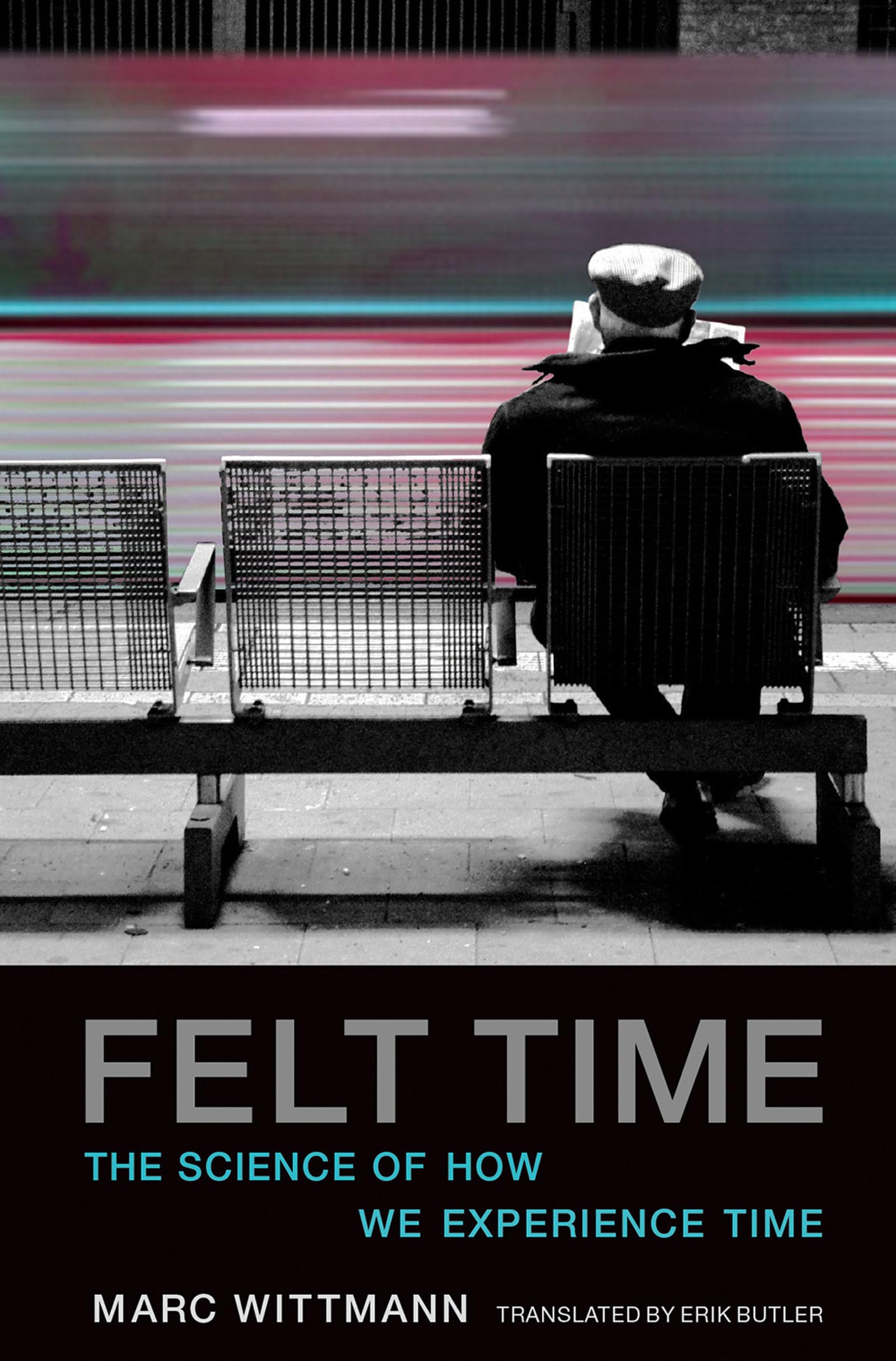
Title
Felt Time: The Science of How We Experience Time (Mit Press),New
Sold by Ergodebooks, an authorized reseller.
Returns accepted within 30 days | support@ergodebooks.com
Shipping Information
- Free Standard Shipping — United States only
- Processing Time: 3–5 business days
- Estimated Delivery: 6–10 business days after dispatch
- Double-boxed, fully insured & discreetly packaged
- Tracking number sent via email once dispatched
Returns & Refund
Returns accepted within 30 days of delivery.
Damaged or Defective Item
Free return shipping + replacement or full refund
Wrong Item Received
Free return shipping + replacement or full refund
Change of Mind
Return shipping at customer's expense · 25% restocking fee applies
Payment Option

An expert explores the riddle of subjective time, from why time speeds up as we grow older to the connection between time and consciousness.We have widely varying perceptions of time. Children have trouble waiting for anything. (Are we there yet?) Boredom is often connected to our sense of time passing (or not passing). As people grow older, time seems to speed up, the years flitting by without a pause. How does our sense of time come about? In Felt Time, Marc Wittmann explores the riddle of subjective time, explaining our perception of timewhether moment by moment, or in terms of life as a whole. Drawing on the latest insights from psychology and neuroscience, Wittmann offers a new answer to the question of how we experience time.Wittmann explains, among other things, how we choose between savoring the moment and deferring gratification; why impulsive people are bored easily, and why their boredom is often a matter of time; whether each person possesses a personal speed, a particular brain rhythm distinguishing quick people from slow people; and why the feeling of duration can serve as an error signal, letting us know when it is taking too long for dinner to be ready or for the bus to come. He considers the practice of mindfulness, and whether it can reduce the speed of life and help us gain more time, and he describes how, as we grow older, subjective time accelerates as routine increases; a fulfilled and varied life is a long life. Evidence shows that bodily processesespecially the heartbeatunderlie our feeling of time and act as an internal clock for our sense of time. And Wittmann points to recent research that connects time to consciousness; ongoing studies of time consciousness, he tells us, will help us to understand the conscious self.
⚠️ WARNING (California Proposition 65):
This product may contain chemicals known to the State of California to cause cancer, birth defects, or other reproductive harm.
For more information, please visit www.P65Warnings.ca.gov.