
Title

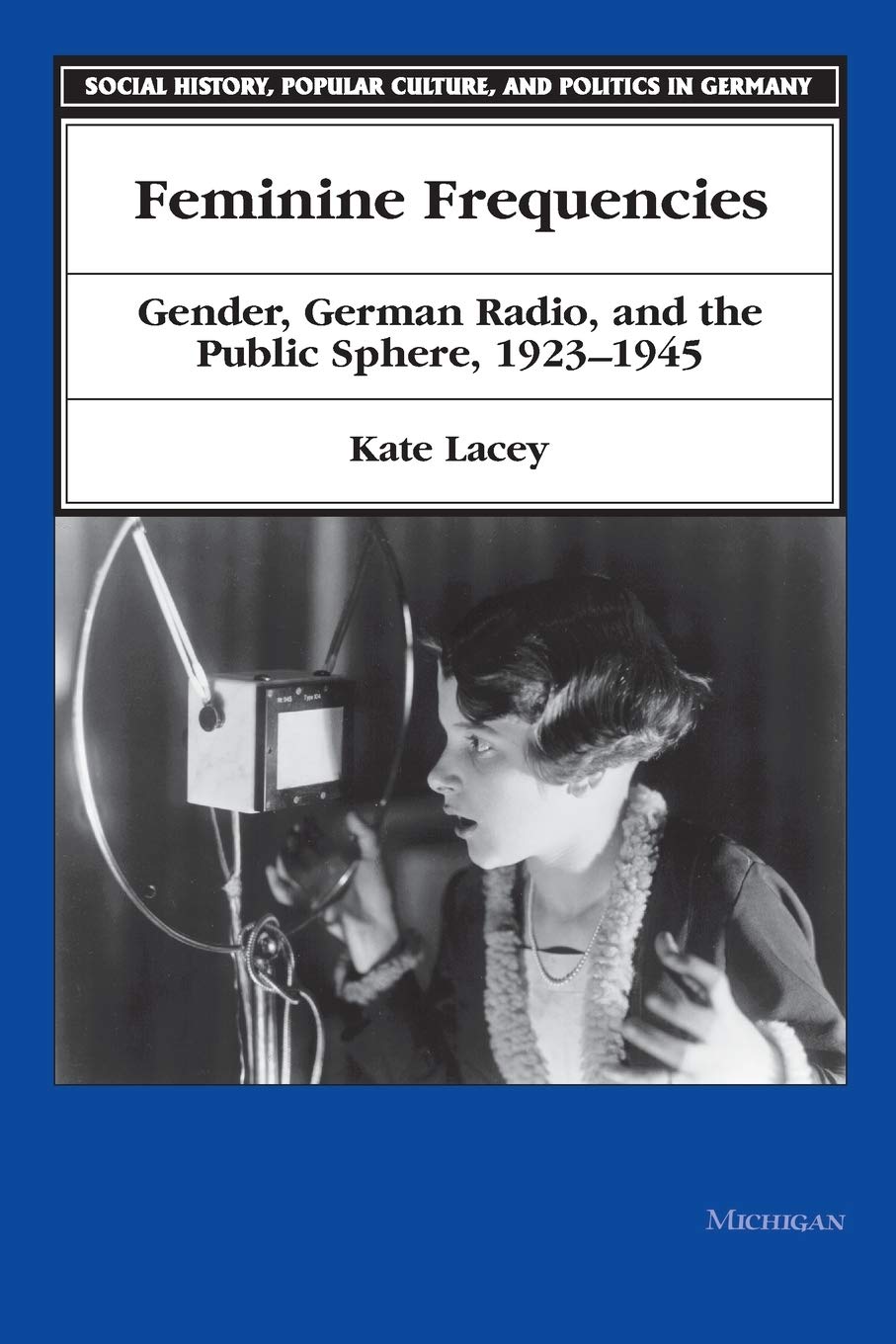
Feminine Frequencies: Gender, German Radio, And The Public Sphere 19231945 (Social History, Popular Culture, And Politics In Ge
Sold by Ergodebooks, an authorized reseller.
Returns accepted within 30 days | support@ergodebooks.com
Shipping Information
- Free Standard Shipping — United States only
- Processing Time: 3–5 business days
- Estimated Delivery: 6–10 business days after dispatch
- Double-boxed, fully insured & discreetly packaged
- Tracking number sent via email once dispatched
Returns & Refund
Returns accepted within 30 days of delivery.
Damaged or Defective Item
Free return shipping + replacement or full refund
Wrong Item Received
Free return shipping + replacement or full refund
Change of Mind
Return shipping at customer's expense · 25% restocking fee applies
Payment Option

The Years Following World War I In Germany Saw The Simultaneous Emergence Of Radio As A Public Medium Entering The Private Sphere Of The Home And The Largescale Emergence Of Women Entering The Public Sphere Of Politics And Production. In Feminine Frequencies, Kate Lacey Examines The Mutual Implications Of These Important Developments And Provides A Distinctive Analysis Of Radio In The Weimar Republic And The Third Reich Which Not Only Restores Women To The History Of Radio, But Identifies And Investigates The Impact Of Gender Politics On The Development Of German Broadcasting.At The Heart Of The Book Is An Exploration Of Radio Programming For Women From The Mid1920S To The End Of World War Ii. Largely Through The Frauenfunk, Radio Transformed Women'S Domestic Life, Mediated Women'S Experience Of Modernity And War, And Worked To Integrate Women Into The Modern Consumer Culture, The National Economy, And Eventually The National Community Of The Volksgemeinschaft. At The Same Time, Decisions About How That Programming Was To Operate Influenced The Way Radio Was Conceived As A Broadcast Rather Than An Interactive Technology.Ultimately, The Cultural Practice And Propaganda Of The Third Reich Were Anticipated In And Enabled By The Legacy Of Broadcasting In The Weimar Republic. Feminine Frequencies Confronts The Consequences Of A Missed Opportunity To Harness The Democratic Potential Of A New Medium Of Communication.Based On Original Archival Research, And Interdisciplinary In Approach, This Book Will Be Of Great Interest To Students And Scholars In German Studies, Women'S Studies, And Media Studies.Kate Lacey Is Lecturer In Media Studies, School Of European Studies, University Of Sussex.
⚠️ WARNING (California Proposition 65):
This product may contain chemicals known to the State of California to cause cancer, birth defects, or other reproductive harm.
For more information, please visit www.P65Warnings.ca.gov.
- Q: How many pages does this book have? A: This book has three hundred twenty pages. It provides an in-depth analysis of gender and radio in Germany.
- Q: What is the binding type of this book? A: This book is paperback bound. This makes it flexible and easy to carry.
- Q: Who is the author of Feminine Frequencies? A: The author is Kate Lacey. She is a Lecturer in Media Studies at the University of Sussex.
- Q: What is the size of the book? A: The book measures six inches in length, zero point seven one inches in width, and nine point zero two inches in height. This makes it a standard size for paperback books.
- Q: What topics does this book cover? A: The book covers gender politics, radio programming, and the cultural history of Germany between nineteen twenty-three and nineteen forty-five. It explores the role of women in the public sphere.
- Q: Is this book suitable for academic study? A: Yes, it is suitable for academic study. It is based on original archival research and is interdisciplinary in approach.
- Q: How does the book address radio programming for women? A: The book examines radio programming for women from the mid-1920s to the end of World War II. It discusses how radio influenced women's domestic lives and consumer culture.
- Q: What historical events does this book relate to? A: The book relates to the Weimar Republic and the Third Reich. It discusses how these periods affected women's roles in society and broadcasting.
- Q: Can this book be used for a research project? A: Yes, it can be used for research projects. It will be of great interest to students and scholars in German studies, women’s studies, and media studies.
- Q: What is the main argument of Feminine Frequencies? A: The main argument is that the legacy of broadcasting in the Weimar Republic enabled the cultural practice and propaganda of the Third Reich. It highlights a missed opportunity for democratic communication.
- Q: Is there a focus on women's experiences in this book? A: Yes, the book focuses on women's experiences. It discusses how radio mediated women's experience of modernity and war.
- Q: What kind of research is this book based on? A: The book is based on original archival research. It draws from various interdisciplinary sources to support its arguments.
- Q: Does the book discuss the impact of radio on society? A: Yes, it discusses the impact of radio on society, particularly on women's integration into the national economy and consumer culture.
- Q: What are the cultural implications examined in this book? A: The book examines the cultural implications of radio as a medium and how it shaped societal norms regarding gender during critical historical periods.
- Q: Is this book part of a larger series? A: Yes, it is part of the series titled 'Social History, Popular Culture, and Politics in Germany.' This series focuses on significant historical and cultural topics.
- Q: What audience is this book intended for? A: The intended audience includes students, scholars, and anyone interested in gender studies, media studies, and German history.