If you have any questions, you are always welcome to contact us. We'll get back to you as soon as possible, withing 24 hours on weekdays.
Customer service
All questions about your order, return and delivery must be sent to our customer service team by e-mail at yourstore@yourdomain.com
Sale & Press
If you are interested in selling our products, need more information about our brand or wish to make a collaboration, please contact us at press@yourdomain.com
Help
If you have any questions, you are always welcome to contact us. We'll get back to you as soon as possible, withing 24 hours on weekdays.
Customer service
All questions about your order, return and delivery must be sent to our customer service team by e-mail at yourstore@yourdomain.com
Sale & Press
If you are interested in selling our products, need more information about our brand or wish to make a collaboration, please contact us at press@yourdomain.com
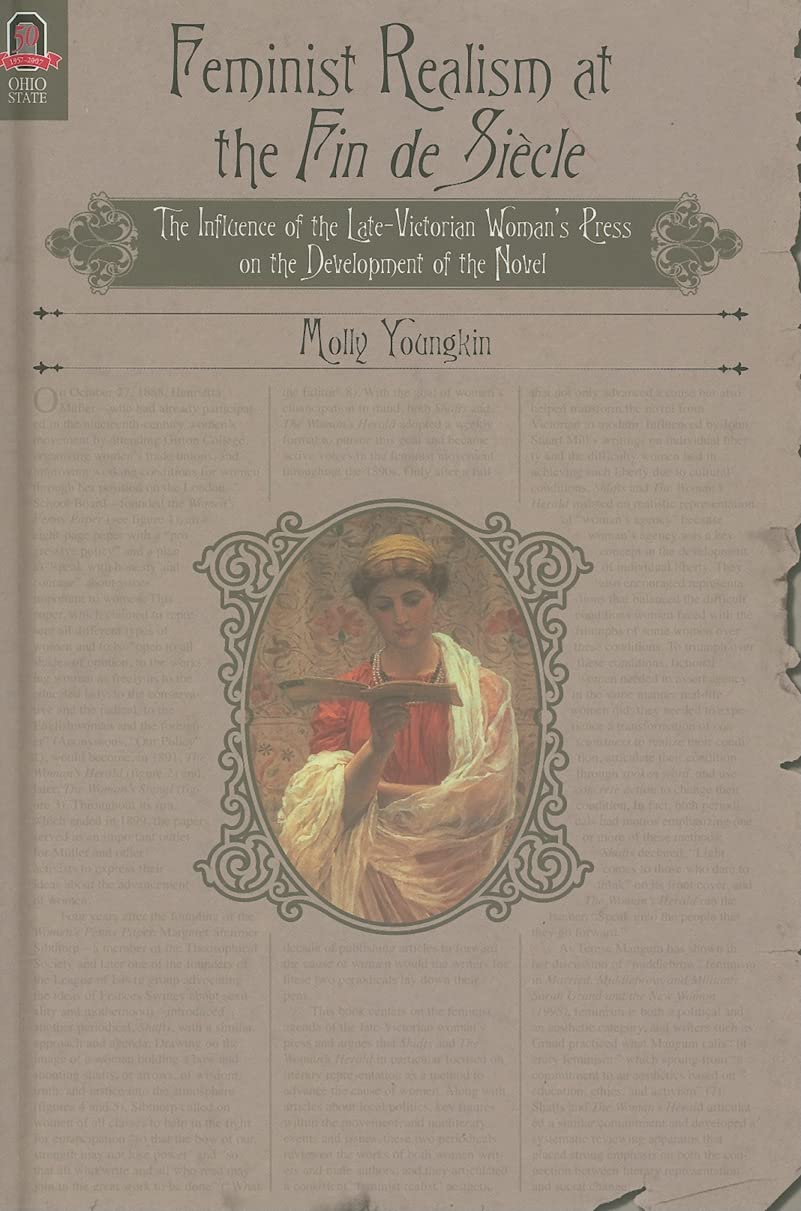
Molly Youngkin takes on a major literary problem of the turnofthecentury: Was the transition from the Victorian novel to the modern novel enabled by antirealist or realist narrative strategies? To answer this question, Youngkin analyzes book reviews that appeared in two prominent feminist periodicals circulated during the lateVictorian eraShafts and The Womans Herald.Through reviews of the works of important male and female authors of the decadeThomas Hardy, Sarah Grand, George Gissing, Mona Caird, George Meredith, Mnie Dowie, George Moore, and Henrietta Stannardthese periodicals developed a feminist realist aesthetic that drew on three aspects of womans agency (consciousness, spoken word, and action) and emphasized corresponding narrative strategies (internal perspective, dialogue, and description of characters actions). Still, these periodicals privileged consciousness over spoken word and action and, by doing so, encouraged authors to push the boundaries of traditional realism and anticipate the modernist aesthetic.By acknowledging the role of the womans press in the development of the novel, this book revises our understanding of the transition from Victorianism to modernism, which often is characterized as antirealist. LateVictorian authors working within the realist tradition also contributed to this transition, particularly through their engagement with feminist realism. Youngkin deftly illustrates this transition and in so doing proves that it cannot be attributed to antirealist narrative strategies alone.
⚠️ WARNING (California Proposition 65):
This product may contain chemicals known to the State of California to cause cancer,
birth defects, or other reproductive harm.
For MAP (Minimum Advertised Price) violations and Intellectual Property (IP) or Trademark concerns, please contact:
support@ergodebooks.com
⚠️ California Proposition 65 Warning: Some products sold on this website may expose you to chemicals known to the State of California to cause cancer, birth defects, or other reproductive harm. For more information, visit www.P65Warnings.ca.gov.