If you have any questions, you are always welcome to contact us. We'll get back to you as soon as possible, withing 24 hours on weekdays.
Customer service
All questions about your order, return and delivery must be sent to our customer service team by e-mail at yourstore@yourdomain.com
Sale & Press
If you are interested in selling our products, need more information about our brand or wish to make a collaboration, please contact us at press@yourdomain.com
Help
If you have any questions, you are always welcome to contact us. We'll get back to you as soon as possible, withing 24 hours on weekdays.
Customer service
All questions about your order, return and delivery must be sent to our customer service team by e-mail at yourstore@yourdomain.com
Sale & Press
If you are interested in selling our products, need more information about our brand or wish to make a collaboration, please contact us at press@yourdomain.com
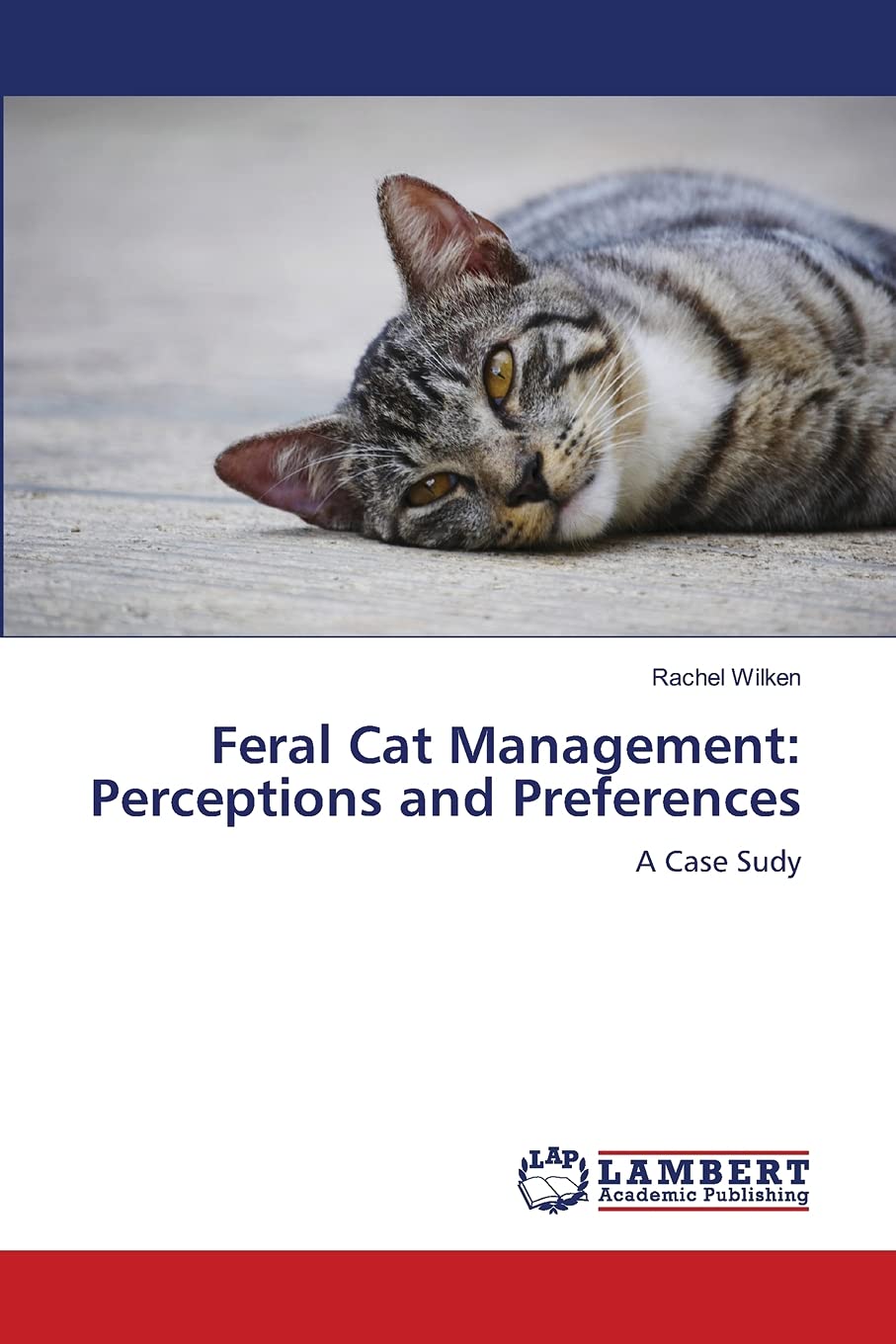
Feral cat management is a highly debated topic. Trap, Neuter, and Return (TNR) programs have become increasingly popular as an alternative to eradication. Public preference about how to manage feral cats has been explored by previous authors, but no consensus has been reached. Public policy and best management practices depend in part upon public opinion on this topic. Wording of a feral cat management preference in surveys can play a role in respondent opinion. For this book, the researcher examined public opinion about feral cat control by surveying 298 Stanford University faculty and staff members using two different communication approaches. Half the surveys included scientific language, feral and euthanasia, and half included colloquial terminology, freeroaming and removal. Results suggested education and pet ownership affect preference for TNR. The humane treatment of feral cats was of great importance, and respondents were split as to whether feral cats are part of the natural spectrum of wildlife. Public education about feral cat issues and management were of little importance to the respondents.
⚠️ WARNING (California Proposition 65):
This product may contain chemicals known to the State of California to cause cancer,
birth defects, or other reproductive harm.
For MAP (Minimum Advertised Price) violations and Intellectual Property (IP) or Trademark concerns, please contact:
support@ergodebooks.com
⚠️ California Proposition 65 Warning: Some products sold on this website may expose you to chemicals known to the State of California to cause cancer, birth defects, or other reproductive harm. For more information, visit www.P65Warnings.ca.gov.