
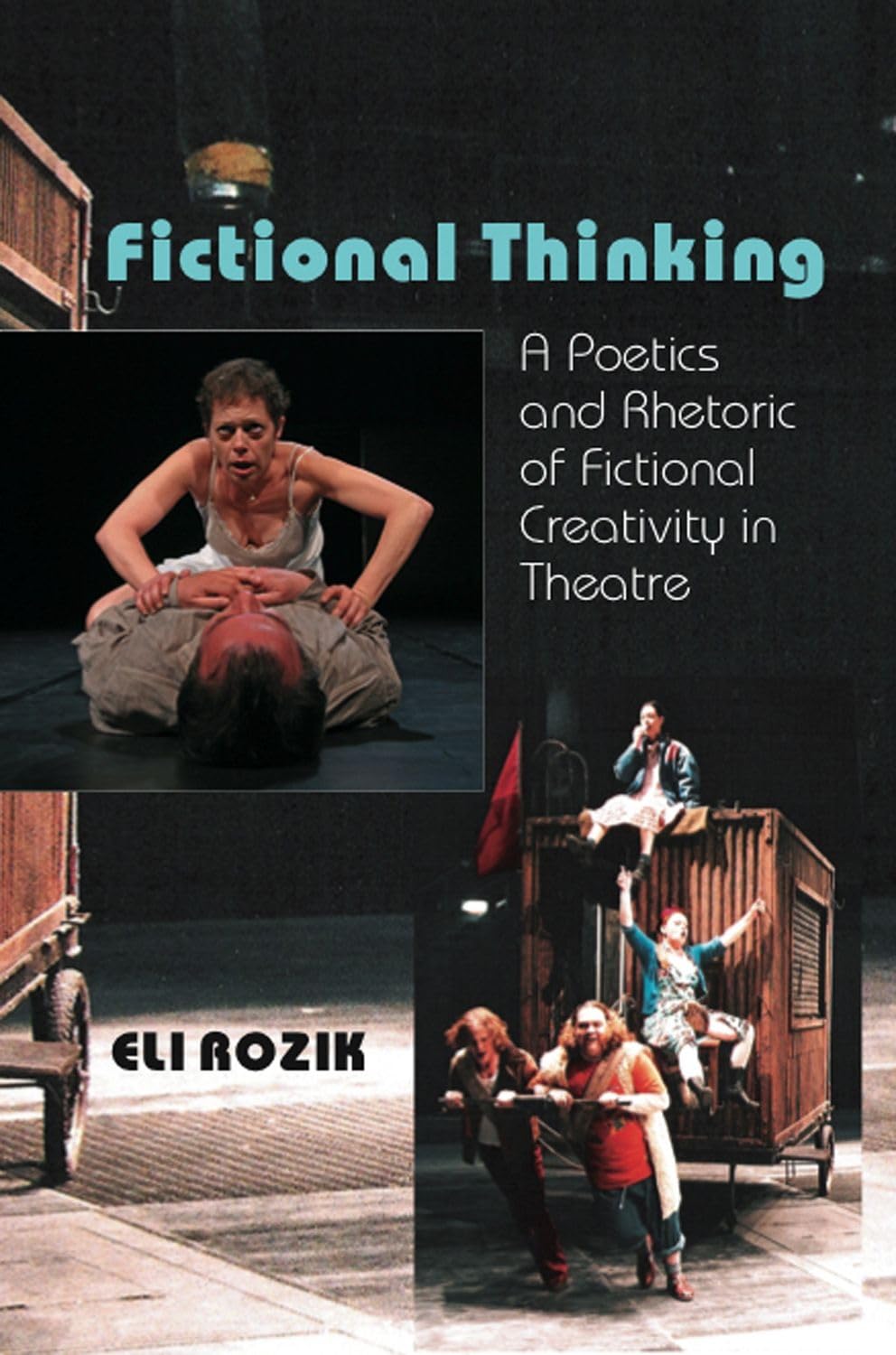
Title
Fictional Thinking: A Poetics & Rhetoric of Fictional Creativity in Theatre,Used
Sold by Ergodebooks, an authorized reseller.
Returns accepted within 30 days | support@ergodebooks.com
Shipping Information
- Free Standard Shipping — United States only
- Processing Time: 3–5 business days
- Estimated Delivery: 6–10 business days after dispatch
- Double-boxed, fully insured & discreetly packaged
- Tracking number sent via email once dispatched
Returns & Refund
Returns accepted within 30 days of delivery.
Damaged or Defective Item
Free return shipping + replacement or full refund
Wrong Item Received
Free return shipping + replacement or full refund
Change of Mind
Return shipping at customer's expense · 25% restocking fee applies
Payment Option

This book offers a theory of the archaic mode of fictional thinking and a methodology for the analysis of fictional worlds. It presupposes the mutual independence of the description of a fictional world, in any language or medium, and the described fictional world. Such a world is generated by an autonomous fictional structure, which reflects the spontaneous expectations of the spectator, and thematic specification. A model of this structure is presented, comprising seven layers: personified, mythical, praxical, naive, ironic and aesthetic and overriding these layers, the fictional experience on the level of relationship between the fictional world and spectator. This experience depends on the spectator's ability to complement such a description with pertinent associations, drawn from shared cultural resources, and psychical mechanisms of response. Explanations and examples are couched in poetic, pragmatic, aesthetic and rhetoric methodologies. An Introduction surveys the major contributions made to a methodology of fictional analysis since Aristotle's Poetics, problematises them and suggests possible alternatives. Part I is devoted to the inner structure of fictional worlds; i.e., to the poetic rules that generate them. The innovation of this approach lies in its multilayered nature. Part II deals with the structure of the fictional experience, which is metaphoric and rhetoric in nature. Part III deals with the specific structures of fictional worlds that reflect the particular intentions and purposes of their authors. Part IV contains analyses of actual fictional worlds that illustrate the application of the previously presented principles. The focus throughout is on theatre fictional worlds which by their nature exhibit the most complex fictional thoughts that the human brain can generate. The theoretical insights gained for theatre assumedly apply to descriptions of such worlds in any language or medium. More than a hundred fictional worlds created during 2500 years of theatre recorded history are analysed. The volume has been purposefully designed to address undergraduate and postgraduate student needs to provide a fundamental competence of theatre studies.
⚠️ WARNING (California Proposition 65):
This product may contain chemicals known to the State of California to cause cancer, birth defects, or other reproductive harm.
For more information, please visit www.P65Warnings.ca.gov.