
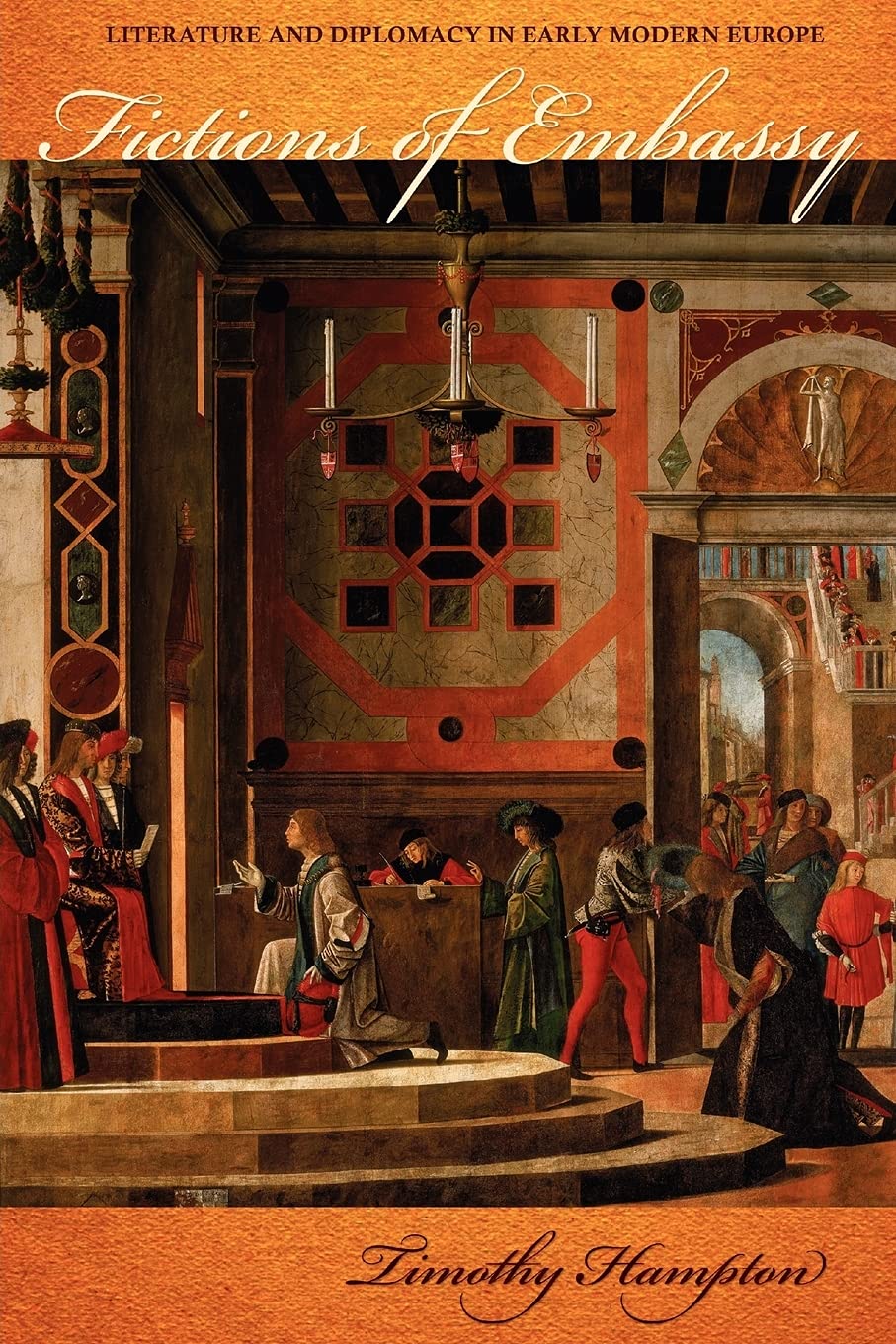
Title
Fictions of Embassy: Literature and Diplomacy in Early Modern Europe,Used
Sold by Ergodebooks, an authorized reseller.
Returns accepted within 30 days | support@ergodebooks.com
Shipping Information
- Free Standard Shipping — United States only
- Processing Time: 3–5 business days
- Estimated Delivery: 6–10 business days after dispatch
- Double-boxed, fully insured & discreetly packaged
- Tracking number sent via email once dispatched
Returns & Refund
Returns accepted within 30 days of delivery.
Damaged or Defective Item
Free return shipping + replacement or full refund
Wrong Item Received
Free return shipping + replacement or full refund
Change of Mind
Return shipping at customer's expense · 25% restocking fee applies
Payment Option

Historians of early modern Europe have long stressed how new practices of diplomacy that emerged during the period transformed European politics. Fictions of Embassy is the first book to examine the cultural implications of the rise of modern diplomacy. Ranging across two and a half centuries and half a dozen languages, Timothy Hampton opens a new perspective on the intersection of literature and politics at the dawn of modernity.Hampton argues that literary textstragedies, epics, essaysuse scenes of diplomatic negotiation to explore the relationship between politics and aesthetics, between the world of political rhetoric and the dynamics of literary form. The diplomatic encounter is a scene of cultural exchange and linguistic negotiation. Literary depictions of diplomacy offer occasions for reflection on the definition of genre, on the power of representation, on the limits of rhetoric, on the nature of fiction making itself. Conversely, discussions of diplomacy by jurists, political philosophers, and ambassadors deploy the tools of literary tradition to articulate new theories of political action. Hampton addresses these topics through a discussion of the major diplomatic writers between 1450 and 1700Machiavelli, Grotius, Gentili, Guicciardiniand through detailed readings of literary works that address the same topicsworks by Shakespeare, More, Rabelais, Montaigne, Tasso, Corneille, Racine, and Camoens. He demonstrates that the issues raised by diplomatic theorists helped shape the emergence of new literary forms, and that literature provides a lens through which we can learn to read the languages of diplomacy.
⚠️ WARNING (California Proposition 65):
This product may contain chemicals known to the State of California to cause cancer, birth defects, or other reproductive harm.
For more information, please visit www.P65Warnings.ca.gov.