
Title
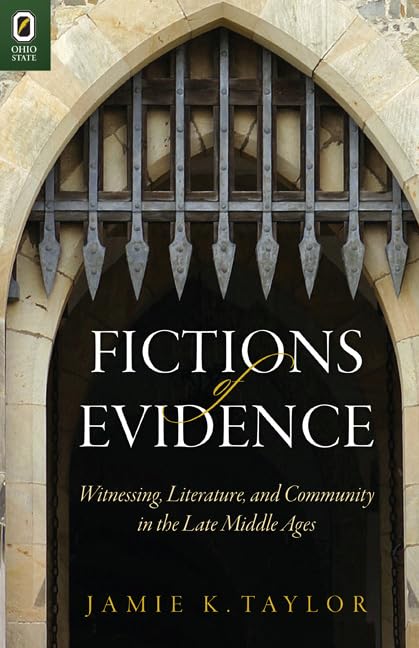
Fictions of Evidence: Witnessing, Literature, and Community in the Late Middle Ages (Interventions: New Studies Medieval Cult),Used
Sold by Ergodebooks, an authorized reseller.
Returns accepted within 30 days | support@ergodebooks.com
Shipping Information
- Free Standard Shipping — United States only
- Processing Time: 3–5 business days
- Estimated Delivery: 6–10 business days after dispatch
- Double-boxed, fully insured & discreetly packaged
- Tracking number sent via email once dispatched
Returns & Refund
Returns accepted within 30 days of delivery.
Damaged or Defective Item
Free return shipping + replacement or full refund
Wrong Item Received
Free return shipping + replacement or full refund
Change of Mind
Return shipping at customer's expense · 25% restocking fee applies
Payment Option

Product DescriptionThroughout the Middle Ages, witnessing was a crucial way religious and legal truths were understood and produced. Religious and secular officials alike harnessed the power of testimony to assert doctrinal, political, or legal responsibilities. Swearing an oath, testifying in court, and signing a deposition were common ways to shape and discipline both devotional and legal communities. In Fictions of Evidence: Witnessing, Literature, and Community in the Late Middle Ages, Jamie K. Taylor traces depictions of witnessing in a wide range of late medieval texts and shows how witnessing practices formed and reformed, policed and challenged medieval communities.Through close study of texts like the Man of Laws Tale and Piers Plowman alongside sermon exempla, common law statutes, and pastoral treatises, Fictions of Evidence argues that vernacular literature was a vital site of criticism and dissent. It shows that devotional and legal witnessing practices offered medieval writers a distinct vocabulary they could use to expose how the ethical and legal obligations to ones community were constructed. And since vernacular writers often challenged the ways ecclesiastical or secular authorities asserted community bonds, they found they could use those same witnessing practices and language to imagine extralegal or extraecclesiastical communities that followed different ethical codes.ReviewFictions of Evidence is an important book and will be influential in advancing scholarship about how law and religious practice shape literature and how vernacular writers explore the truth claims that undergird legal and religious practices. Ed Craun, Henry S. Fox Jr. Professor of English, Emeritus, Washington and Lee UniversityFictions of Evidence is widely implicated and should be of great interest to scholars in a range of latemedieval fields, from literature to history to theology. It is an important project. Andrew Galloway, Cornell UniversityAbout the AuthorJamie K. Taylor is assistant professor of English at Bryn Mawr College.
⚠️ WARNING (California Proposition 65):
This product may contain chemicals known to the State of California to cause cancer, birth defects, or other reproductive harm.
For more information, please visit www.P65Warnings.ca.gov.
- Q: What is the main theme of 'Fictions of Evidence'? A: 'Fictions of Evidence' explores the role of witnessing in the late Middle Ages, focusing on how testimony shaped religious and legal truths within communities.
- Q: Who is the author of this book? A: The author of 'Fictions of Evidence' is Jamie K. Taylor.
- Q: What type of binding does this book have? A: 'Fictions of Evidence' is available in hardcover binding.
- Q: How many pages are in this book? A: 'Fictions of Evidence' contains 256 pages.
- Q: When was 'Fictions of Evidence' published? A: 'Fictions of Evidence' was published on April 10, 2013.
- Q: What subjects does this book cover? A: 'Fictions of Evidence' covers subjects related to medieval literature, law, and community practices during the late Middle Ages.
- Q: Is this book suitable for academic study? A: Yes, 'Fictions of Evidence' is suitable for academic study, particularly for those interested in medieval culture, literature, and legal history.
- Q: What style of writing is used in this book? A: 'Fictions of Evidence' employs a scholarly style, incorporating close readings of texts and analyses of historical practices.
- Q: Does this book include references or citations? A: Yes, 'Fictions of Evidence' includes references and citations to support its analysis and arguments.
- Q: What makes this book unique in its field? A: 'Fictions of Evidence' is unique in its examination of how vernacular literature served as a site for criticism and dissent regarding community bonds in the Middle Ages.