
Title
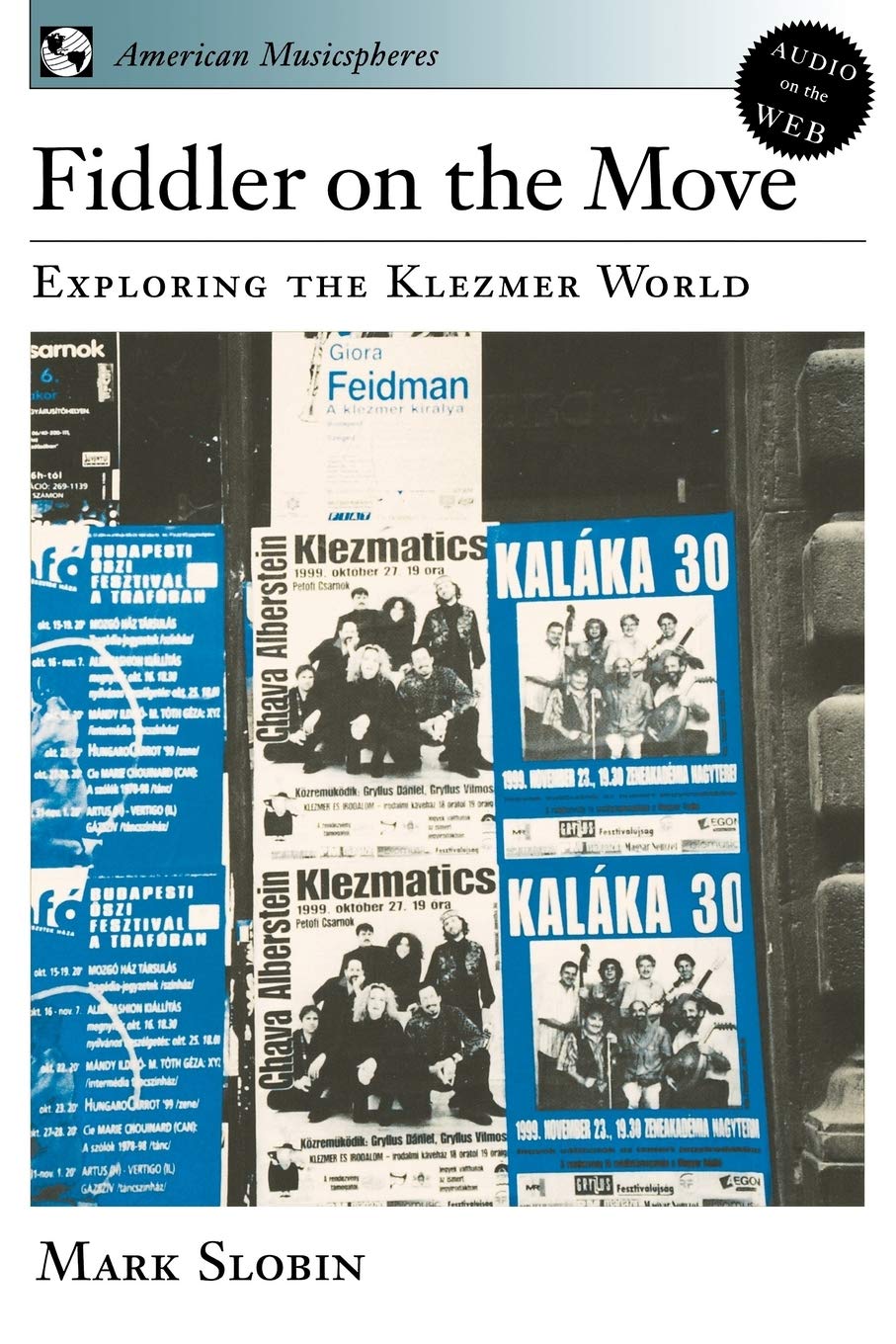
Fiddler On The Move: Exploring The Klezmer World (American Musicspheres)
Sold by Ergodebooks, an authorized reseller.
Returns accepted within 30 days | support@ergodebooks.com
Shipping Information
- Free Standard Shipping — United States only
- Processing Time: 3–5 business days
- Estimated Delivery: 6–10 business days after dispatch
- Double-boxed, fully insured & discreetly packaged
- Tracking number sent via email once dispatched
Returns & Refund
Returns accepted within 30 days of delivery.
Damaged or Defective Item
Free return shipping + replacement or full refund
Wrong Item Received
Free return shipping + replacement or full refund
Change of Mind
Return shipping at customer's expense · 25% restocking fee applies
Payment Option

Klezmer' is a Yiddish word for professional folk instrumentalistthe flutist, fiddler, and bass player that made brides weep and guests dance at weddings throughout Jewish eastern Europe before the culture was destroyed in the Holocaust, silenced under Stalin, and lost out to assimilation in America. Klezmer music is now experiencing a tremendous new spurt of interest worldwide with both Jews and nonJews recreating this restless volatile, and vibrant musical culture. Firmly centered in the United States, klezmer has paradoxically moved back across the Atlantic as a distinctly 'American' music, played throughout central and eastern Europe, as well as in many other parts of the world.Fiddler on the Move places klezmer music squarely within American music studies, cultural studies, and ethnomusicology. Neither a chronology nor a comprehensive survey, the book describes a variety of approaches and perspectives for coming to terms with the highly diverse array of activities found under the klezmer umbrella. Bringing to his subject the insights of an accomplished ethnomusicologist, Slobin addresses such questions as: How does klezmer overlap with, and differ from, the many other contemporary 'heritage' musics based on an assumed connection with a group identity and links to a tradition? How do economics, artistic expression, and the evocation of the past interact in motivating klezmer performers and audiences? In what kinds of environment does klezmer flourish? How do stylistic features such as genre, form, and ornamentation help to define the technique, affect, and aesthetic of klezmer? Featuring a music CD with many of the archival and contemporary recordings discussed in the text, this fascinating study will interest scholars, students, musicians, and music lovers
⚠️ WARNING (California Proposition 65):
This product may contain chemicals known to the State of California to cause cancer, birth defects, or other reproductive harm.
For more information, please visit www.P65Warnings.ca.gov.