
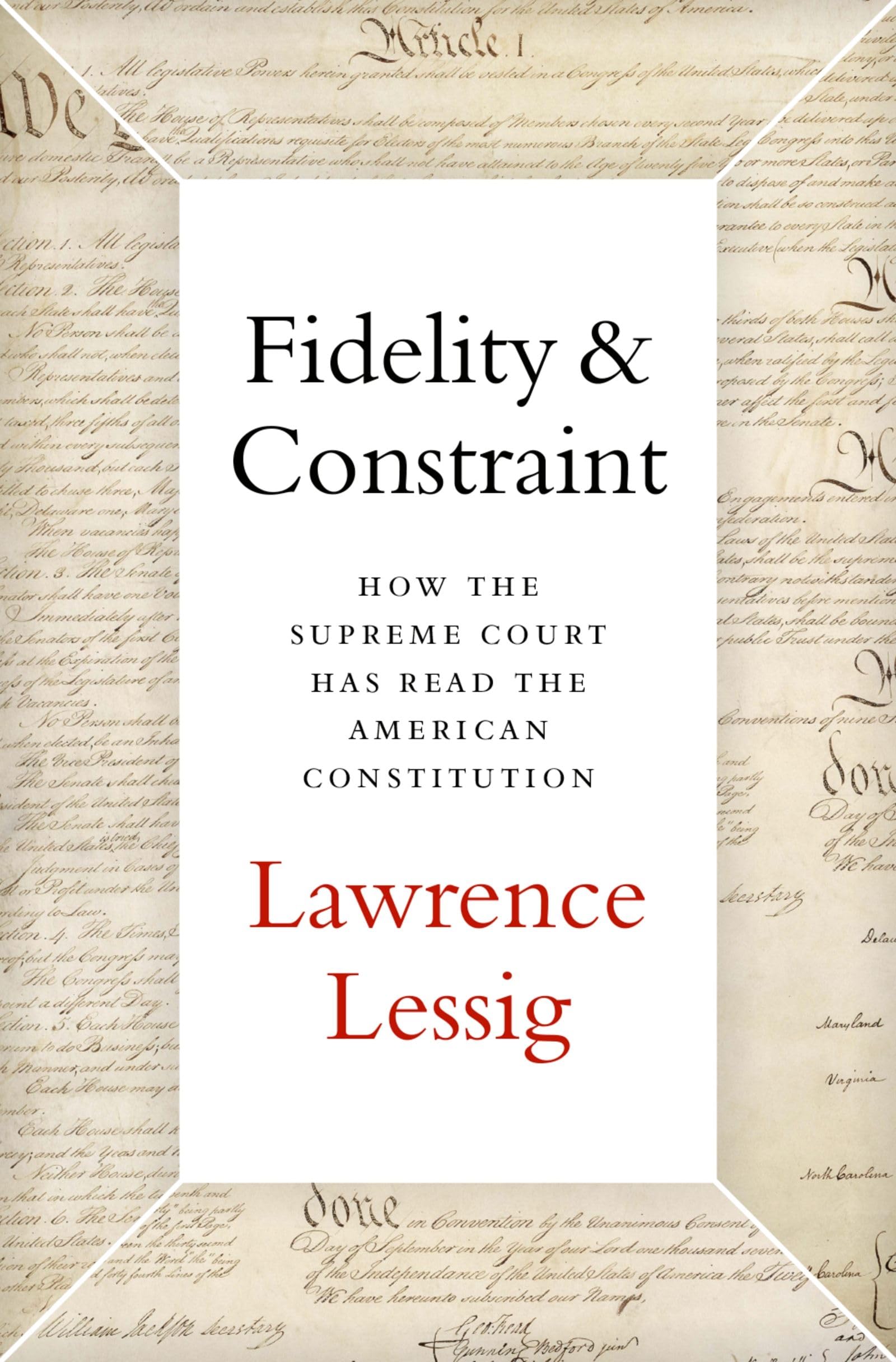
Title
Fidelity & Constraint: How The Supreme Court Has Read The American Constitution,Used
Sold by Ergodebooks, an authorized reseller.
Returns accepted within 30 days | support@ergodebooks.com
Shipping Information
- Free Standard Shipping — United States only
- Processing Time: 3–5 business days
- Estimated Delivery: 6–10 business days after dispatch
- Double-boxed, fully insured & discreetly packaged
- Tracking number sent via email once dispatched
Returns & Refund
Returns accepted within 30 days of delivery.
Damaged or Defective Item
Free return shipping + replacement or full refund
Wrong Item Received
Free return shipping + replacement or full refund
Change of Mind
Return shipping at customer's expense · 25% restocking fee applies
Payment Option

The fundamental fact about our Constitution is that it is old the oldest written constitution in the world. The fundamental challenge for interpreters of the Constitution is how to read that old document over time.In Fidelity & Constraint, legal scholar Lawrence Lessig explains that one of the most basic approaches to interpreting the constitution is the process of translation. Indeed, some of the most significant shifts in constitutional doctrine are products of the evolution of the translation process over time. In every new era, judges understand their translations as instances of 'interpretive fidelity,' framed within each new temporal context.Yet, as Lessig also argues, there is a repeatedly occurring countermove that upends the process of translation. Throughout American history, there has been a second fidelity in addition to interpretive fidelity: what Lessig calls 'fidelity to role.' In each of the cycles of translation that he describes, the role of the judge the ultimate translator has evolved too. Old ways of interpreting the text now become illegitimate because they do not match up with the judge's perceived role. And when that conflict occurs, the practice of judges within our tradition has been to follow the guidance of a fidelity to role. Ultimately, Lessig not only shows us how important the concept of translation is to constitutional interpretation, but also exposes the institutional limits on this practice.The first work of both constitutional and foundational theory by one of America's leading legal minds, Fidelity & Constraint maps strategies that both help judges understand the fundamental conflict at the heart of interpretation whenever it arises and work around the limits it inevitably creates.
⚠️ WARNING (California Proposition 65):
This product may contain chemicals known to the State of California to cause cancer, birth defects, or other reproductive harm.
For more information, please visit www.P65Warnings.ca.gov.
- Q: What is the page count of this book? A: This book has six hundred pages. It provides an in-depth analysis of constitutional interpretation.
- Q: What type of binding does this book have? A: This book features hardcover binding. This ensures durability and a professional appearance.
- Q: Who is the author of this book? A: The author of this book is Lawrence Lessig. He is a renowned legal scholar and expert in constitutional theory.
- Q: What is the main theme of 'Fidelity & Constraint'? A: The main theme is the interpretation of the American Constitution over time. It explores the conflict between interpretive fidelity and fidelity to role.
- Q: What category does this book fall under? A: This book falls under the category of Federal Jurisdiction. It addresses significant legal and constitutional issues.
- Q: Is this book suitable for legal professionals? A: Yes, this book is suitable for legal professionals. It provides valuable insights into constitutional interpretation and judicial roles.
- Q: Can beginners understand this book? A: Yes, beginners can understand this book, but prior knowledge of constitutional law may enhance comprehension.
- Q: How does 'Fidelity & Constraint' relate to constitutional interpretation? A: This book examines how the Supreme Court's interpretation of the Constitution evolves. It highlights the role of translation in legal contexts.
- Q: What makes this book unique among legal texts? A: This book is unique because it focuses on the historical evolution of constitutional interpretation. It emphasizes the balance between different types of fidelity.
- Q: How should I care for this hardcover book? A: To care for this hardcover book, keep it in a dry, cool place. Avoid exposure to direct sunlight to preserve its condition.
- Q: What should I do if the book arrives damaged? A: If the book arrives damaged, contact the seller for a replacement or refund. Keep the original packaging for return purposes.
- Q: Is there a warranty for this book? A: No, there is no warranty for this book. However, return policies may vary by seller.
- Q: What if I am not satisfied with the book? A: If you are not satisfied, check the return policy of the seller. Many provide options for returns within a specific timeframe.
- Q: Is this book appropriate for academic courses? A: Yes, this book is appropriate for academic courses focused on constitutional law. It serves as a foundational text for discussions on legal theory.
- Q: Does this book include references to historical cases? A: Yes, this book includes references to significant historical cases. These examples illustrate the evolution of constitutional interpretation.