
Title
Field Command,Used
Sold by Ergodebooks, an authorized reseller.
Returns accepted within 30 days | support@ergodebooks.com
Shipping Information
- Free Standard Shipping — United States only
- Processing Time: 3–5 business days
- Estimated Delivery: 6–10 business days after dispatch
- Double-boxed, fully insured & discreetly packaged
- Tracking number sent via email once dispatched
Returns & Refund
Returns accepted within 30 days of delivery.
Damaged or Defective Item
Free return shipping + replacement or full refund
Wrong Item Received
Free return shipping + replacement or full refund
Change of Mind
Return shipping at customer's expense · 25% restocking fee applies
Payment Option

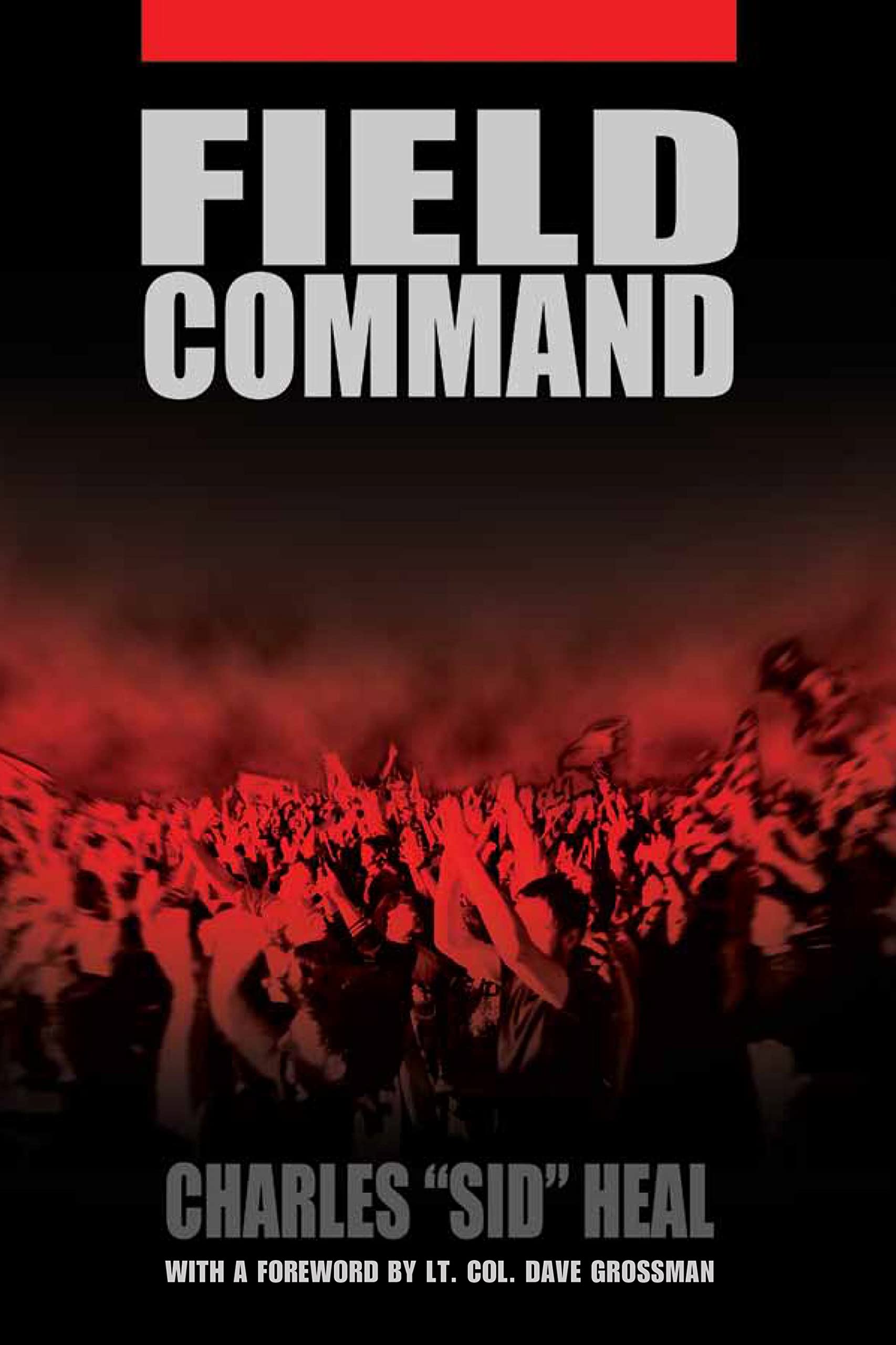
Ever wondered about the difference between a sector of fire and a field of fire? How about command and control, information and intelligence or drifting standards and creeping missions? Is time on your side? What is key terrain and how do you recognize it? Should a tactical intervention always be considered a last resort?What would we think of a doctor who had the latest and most sophisticated MRIs, CAT scans and Xrays but without the knowledge to interpret and understand them? Sadly, that is the state of many tacticians in contemporary law enforcement. It is somewhat ironic that in the most technologically advanced period in history the most conspicuous capability gap appears to be a lack of knowledge of tried and true scientific principles that can be dated back thousands of years.Field Command is a first of its kind in that it introduces and explains more than 250 timetested, tried and true tactical concepts in an easy to understand format tightly focused on domestic law enforcement applications. Critical concepts like initiative, tempo, speed, friction, fog, and surprise are explained in detail. Commonly confused terms with distinctly different meanings and applications, such as: fields of fire vs. sectors of fire, situational awareness vs. common operational picture, main effort vs. focus of effort, centers of gravity vs. critical vulnerabilities, proximate causes vs. root causes, and many others are both defined and compared for easy understanding.Field Command is formatted to be used as both a text and a reference. For example, no footnotes are used to facilitate continuity and an easier style of reading and each of the principles is boldprinted and defined when first introduced. Many of the concepts are amplified with endnotes that provide the historical context of how they were discovered or determined. The concepts and principles are taken from tactical texts and military field manuals but are presented in scenarios that commonly confront law enforcement officers. The book includes more than 40 illustrations to elucidate and amplify key concepts and includes both a comprehensive index and ?concept glossary? to facilitate reference and research.
⚠️ WARNING (California Proposition 65):
This product may contain chemicals known to the State of California to cause cancer, birth defects, or other reproductive harm.
For more information, please visit www.P65Warnings.ca.gov.
- Q: What are the dimensions of 'Field Command'? A: The book measures six inches in length, one point one inches in width, and nine point zero two inches in height.
- Q: How many pages does 'Field Command' have? A: The book contains four hundred forty-eight pages, providing a comprehensive overview of tactical concepts.
- Q: What type of binding does 'Field Command' use? A: The book is available in paperback binding, making it easy to handle and read.
- Q: Who is the author of 'Field Command'? A: The author is Charles Sid Heal, known for his expertise in tactical applications.
- Q: What genre does 'Field Command' belong to? A: The book falls under the Military Technology genre, focusing on law enforcement applications.
- Q: How do I apply the concepts from 'Field Command' in real situations? A: You can apply the concepts by understanding tactical principles and using them in law enforcement scenarios.
- Q: Is 'Field Command' suitable for beginners in law enforcement? A: Yes, the book presents tactical concepts in an easy-to-understand format, making it suitable for beginners.
- Q: What kind of illustrations are included in 'Field Command'? A: The book includes over forty illustrations that help elucidate and amplify key tactical concepts.
- Q: Can I use 'Field Command' as a reference book? A: Yes, 'Field Command' is formatted for both reading and reference, with a comprehensive index for easy navigation.
- Q: How should I care for my copy of 'Field Command'? A: Keep the book in a dry place and avoid exposing it to direct sunlight to maintain its condition.
- Q: Is 'Field Command' safe for all audiences? A: Yes, the book does not contain adult content, making it appropriate for a general audience.
- Q: What if my copy of 'Field Command' arrives damaged? A: If your book arrives damaged, you should contact the retailer for their return policy and support options.
- Q: How do the tactical concepts in 'Field Command' differ from standard practices? A: The concepts in 'Field Command' are time-tested and focus on practical applications in law enforcement, differing from standard practices.
- Q: Are there any endnotes in 'Field Command'? A: Yes, the book includes endnotes that provide historical context for the tactical concepts presented.
- Q: Does 'Field Command' cover modern technological advancements? A: Yes, the book discusses the integration of modern technology in the context of tactical principles.
- Q: What is the main focus of 'Field Command'? A: The main focus is on providing tactical concepts and principles relevant to domestic law enforcement applications.