
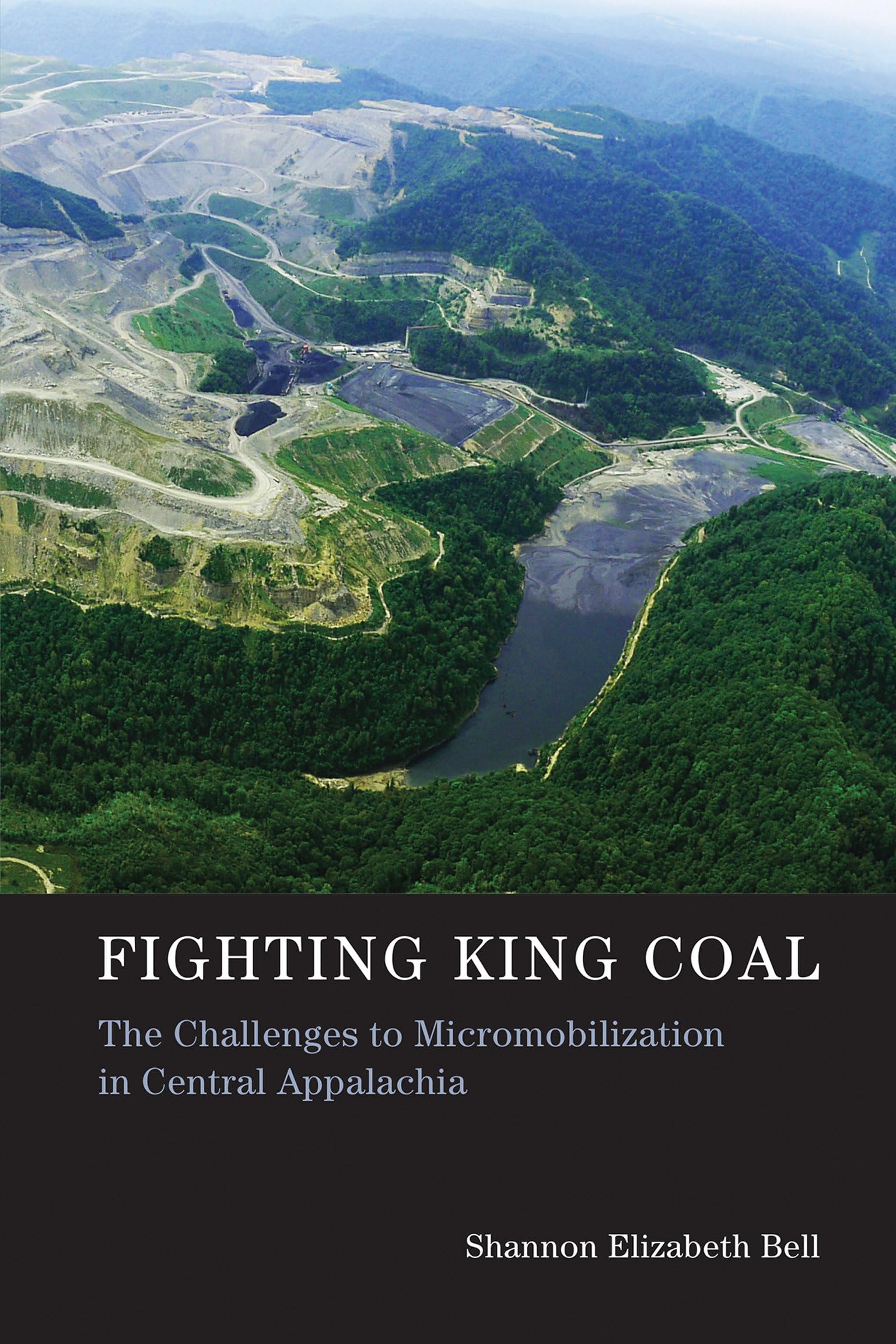
Title
Fighting King Coal: The Challenges to Micromobilization in Central Appalachia (Urban and Industrial Environments),Used
Sold by Ergodebooks, an authorized reseller.
Returns accepted within 30 days | support@ergodebooks.com
Shipping Information
- Free Standard Shipping — United States only
- Processing Time: 3–5 business days
- Estimated Delivery: 6–10 business days after dispatch
- Double-boxed, fully insured & discreetly packaged
- Tracking number sent via email once dispatched
Returns & Refund
Returns accepted within 30 days of delivery.
Damaged or Defective Item
Free return shipping + replacement or full refund
Wrong Item Received
Free return shipping + replacement or full refund
Change of Mind
Return shipping at customer's expense · 25% restocking fee applies
Payment Option

An examination of why so few people suffering from environmental hazards and pollution choose to participate in environmental justice movements.In the coalmining region of Central Appalachia, mountaintopremoval mining and coalindustryrelated flooding, water contamination, and illness have led to the emergence of a grassroots, womendriven environmental justice movement. But the number of local activists is small relative to the affected population, and recruiting movement participants from within the region is an ongoing challenge.In Fighting King Coal, Shannon Elizabeth Bell examines an understudied puzzle within social movement theory: why so few of the many people who suffer from industryproduced environmental hazards and pollution rise up to participate in social movements aimed at bringing about social justice and industry accountability. Using the coalmining region of Central Appalachia as a case study, Bell investigates the challenges of micromobilization through indepth interviews, participant observation, content analysis, geospatial viewshed analysis, and an eightmonth Photovoice projectan innovative means of studying, in real time, the social dynamics affecting activist involvement in the region. Although the Photovoice participants took striking photographs and wrote movingly about the environmental destruction caused by coal production, only a few became activists. Bell reveals the importance of local identities to the success or failure of local recruitment efforts in social movement struggles, ultimately arguing that, if the local identities of environmental justice movements are lost, the movements may also lose their power.
⚠️ WARNING (California Proposition 65):
This product may contain chemicals known to the State of California to cause cancer, birth defects, or other reproductive harm.
For more information, please visit www.P65Warnings.ca.gov.