
Title
Fighting Traffic: The Dawn of the Motor Age in the American City (Inside Technology),Used
Sold by Ergodebooks, an authorized reseller.
Returns accepted within 30 days | support@ergodebooks.com
Shipping Information
- Free Standard Shipping — United States only
- Processing Time: 3–5 business days
- Estimated Delivery: 6–10 business days after dispatch
- Double-boxed, fully insured & discreetly packaged
- Tracking number sent via email once dispatched
Returns & Refund
Returns accepted within 30 days of delivery.
Damaged or Defective Item
Free return shipping + replacement or full refund
Wrong Item Received
Free return shipping + replacement or full refund
Change of Mind
Return shipping at customer's expense · 25% restocking fee applies
Payment Option

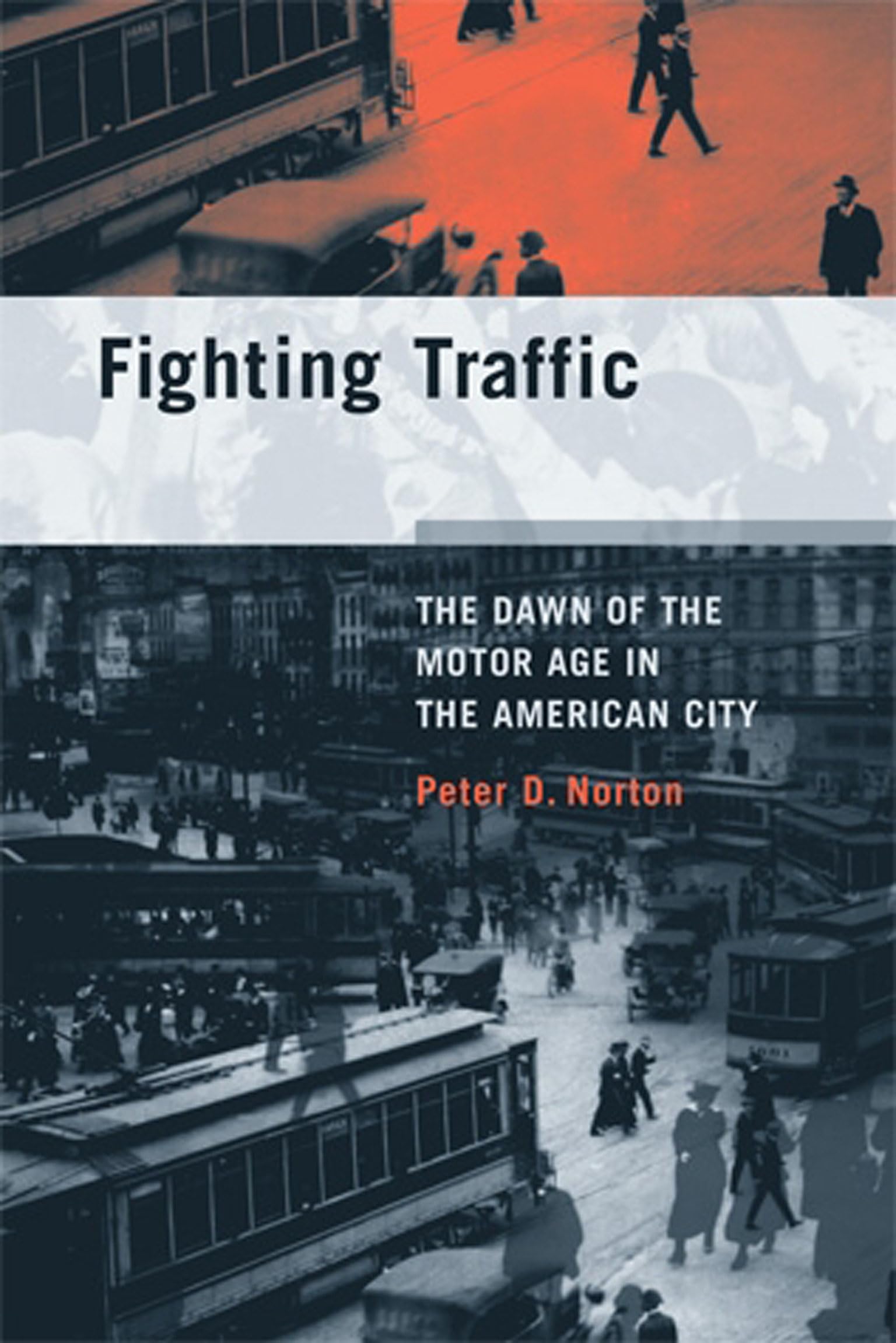
The fight for the future of the city street between pedestrians, street railways, and promoters of the automobile between 1915 and 1930.Before the advent of the automobile, users of city streets were diverse and included children at play and pedestrians at large. By 1930, most streets were primarily a motor thoroughfares where children did not belong and where pedestrians were condemned as jaywalkers. In Fighting Traffic, Peter Norton argues that to accommodate automobiles, the American city required not only a physical change but also a social one: before the city could be reconstructed for the sake of motorists, its streets had to be socially reconstructed as places where motorists belonged. It was not an evolution, he writes, but a bloody and sometimes violent revolution. Norton describes how street users struggled to define and redefine what streets were for. He examines developments in the crucial transitional years from the 1910s to the 1930s, uncovering a broad antiautomobile campaign that reviled motorists as road hogs or speed demons and cars as juggernauts or death cars. He considers the perspectives of all userspedestrians, police (who had to become traffic cops), street railways, downtown businesses, traffic engineers (who often saw cars as the problem, not the solution), and automobile promoters. He finds that pedestrians and parents campaigned in moral terms, fighting for justice. Cities and downtown businesses tried to regulate traffic in the name of efficiency. Automotive interest groups, meanwhile, legitimized their claim to the streets by invoking freedoma rhetorical stance of particular power in the United States. Fighting Traffic offers a new look at both the origins of the automotive city in America and how social groups shape technological change.
⚠️ WARNING (California Proposition 65):
This product may contain chemicals known to the State of California to cause cancer, birth defects, or other reproductive harm.
For more information, please visit www.P65Warnings.ca.gov.