If you have any questions, you are always welcome to contact us. We'll get back to you as soon as possible, withing 24 hours on weekdays.
Customer service
All questions about your order, return and delivery must be sent to our customer service team by e-mail at yourstore@yourdomain.com
Sale & Press
If you are interested in selling our products, need more information about our brand or wish to make a collaboration, please contact us at press@yourdomain.com
Help
If you have any questions, you are always welcome to contact us. We'll get back to you as soon as possible, withing 24 hours on weekdays.
Customer service
All questions about your order, return and delivery must be sent to our customer service team by e-mail at yourstore@yourdomain.com
Sale & Press
If you are interested in selling our products, need more information about our brand or wish to make a collaboration, please contact us at press@yourdomain.com
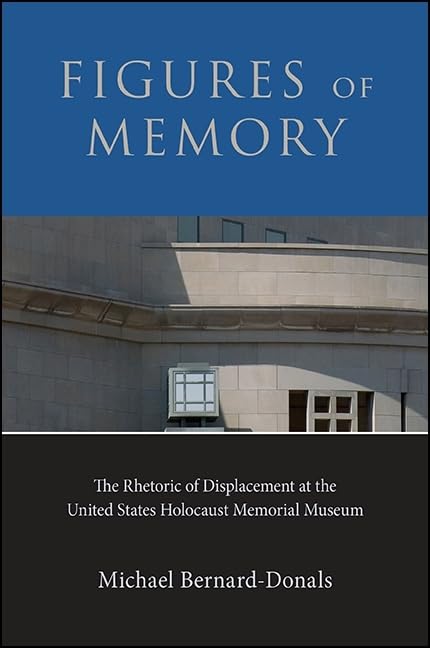
Explores how the USHMM and other museums and memorials both displace and disturb the memories that they are trying to commemorate.Figures of Memory examines how the United States Holocaust Memorial Museum (USHMM) in Washington, DC, uses its space and the design of its exhibits to move its visitors to memory. From the objects and their placement to the architectural design of the building and the floor plan, the USHMM was meant to teach visitors about the Holocaust. But what Michael BernardDonals found is that while they learn, and remember, the Holocaust, visitors also call to mind other, sometimes unrelated memories. Partly this is because memory itself works in multidirectional ways, but partly its because of decisions made in the planning that led to the creation of the museum.Drawing on material from the USHMMs institutional archive, including meeting minutes, architectural renderings, visitor surveys, and comments left by visitors, Figures of Memory is both a theoretical exploration of memoryits relation to identity, space, and ethicsand a practical analysis of one of the most discussed memorials in the United States. The book also extends recent discussions of the rhetoric of memorial sites and museums by arguing that sites like the USHMM dont so much make a case for events through the act of memorialization, but actually displace memory, disturbing itand the museum visitorso much so that they call it into question. Memory, like rhetorical figures, moves, and the USHMM moves its visitors, figuratively and literally, both to and beyond the events the museum is meant to commemorate.
⚠️ WARNING (California Proposition 65):
This product may contain chemicals known to the State of California to cause cancer,
birth defects, or other reproductive harm.
For MAP (Minimum Advertised Price) violations and Intellectual Property (IP) or Trademark concerns, please contact:
support@ergodebooks.com
⚠️ California Proposition 65 Warning: Some products sold on this website may expose you to chemicals known to the State of California to cause cancer, birth defects, or other reproductive harm. For more information, visit www.P65Warnings.ca.gov.