
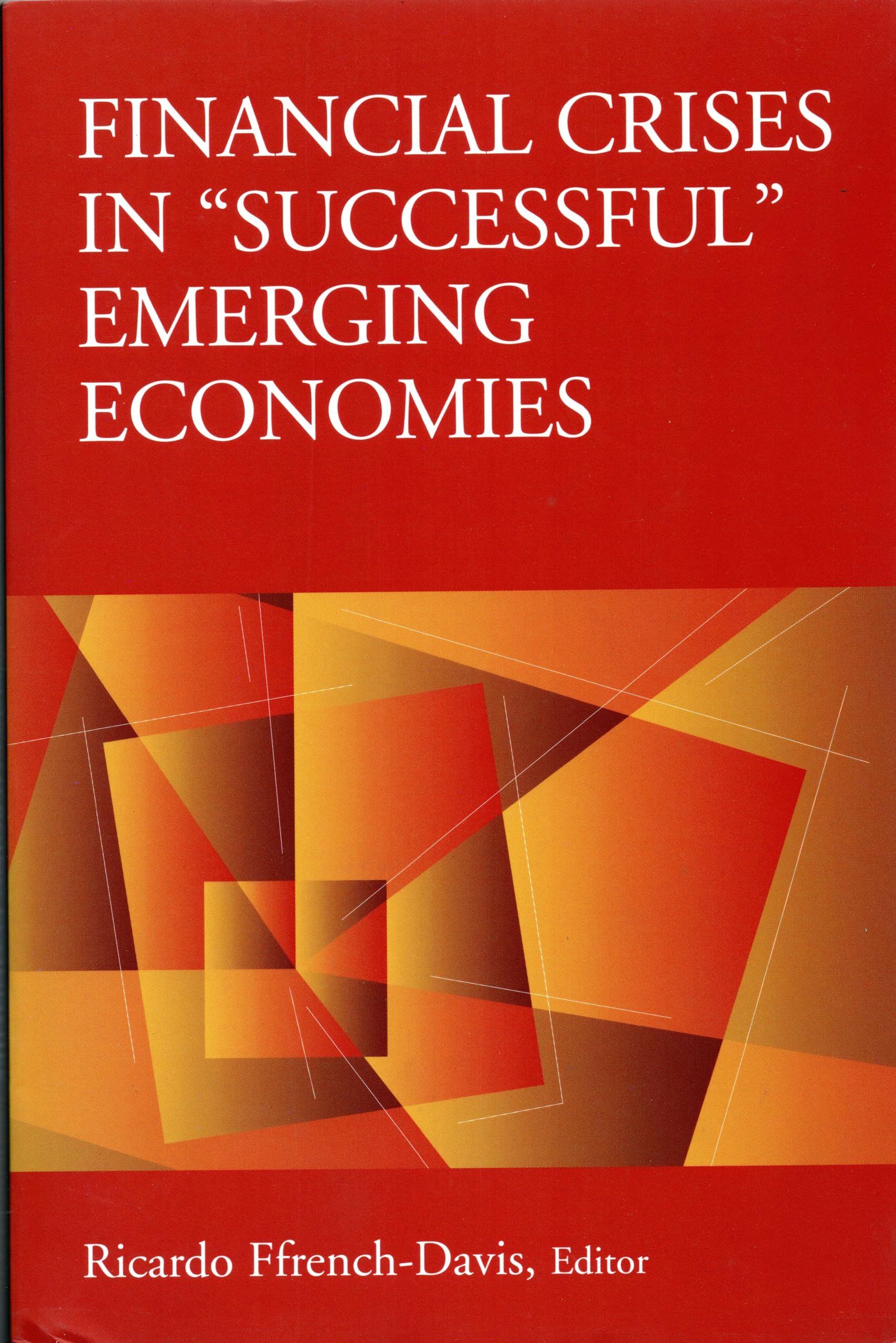
Title
Financial Crises in "Successful" Emerging Economies,Used
Sold by Ergodebooks, an authorized reseller.
Returns accepted within 30 days | support@ergodebooks.com
Shipping Information
- Free Standard Shipping — United States only
- Processing Time: 3–5 business days
- Estimated Delivery: 6–10 business days after dispatch
- Double-boxed, fully insured & discreetly packaged
- Tracking number sent via email once dispatched
Returns & Refund
Returns accepted within 30 days of delivery.
Damaged or Defective Item
Free return shipping + replacement or full refund
Wrong Item Received
Free return shipping + replacement or full refund
Change of Mind
Return shipping at customer's expense · 25% restocking fee applies
Payment Option

"Financial crises in emerging economies are very different today than they were in the past. Between 1940 and the 1970s, such traumas involved large fiscal deficits, repressed domestic financial systems, and balance of payments situations that were associated with a sharp worsening of terms of trade. In recent years, however, a ""new variety"" of crisis has evolved in Asia and Latin America. Many of the emerging economies that have experienced financial trauma have been considered very successful until the crises explode. This collection focuses on such economies. The five contributors provide policyoriented analysis that seeks to identify crucial variables that affect the probability or intensity of crisis. Jos Antonio Ocampo (ECLAC) and Ricardo FfrenchDavis explore the variables that play a part in determining whether a financial crisis is likely to occur. They analyze ""vulnerability zones"" for certain key variablessuch as net liquid external liabilities, currentaccount deficits, and real exchange ratesand examine how and why capital surges have contributed to worsen marcoeconomic fundamentals in emerging economies. Manuel Agosin (University of Chile) draws a parallel between Korea and Taiwan, showing how the two countries had similar histories between the mid1960s and the early 1990s, then followed different paths during the 1990s. Ricardo FfrenchDavis (ECLAC) concentrates on Chile's experience with three ""positive"" financial shocks: in the 1970s, in 199194, and in 199597. Jaime Ros (Notre Dame University) explores contrasting situations in Mexico in 199194 and 199697, and discusses the variables that explain the marked differences between the two episodes. Ricardo FfrenchDavis is principal regional adviser at ECLAC and cofounder of the Center for Economic Research on Latin America (CIEPLAN). He is the author or editor of fifteen books on international economics, development, strategies, foreign financial, and Latin American economies, including Reforming the Reforms: Macro, Trade, Finance (Palgrave/Macmillan, 1999)."
⚠️ WARNING (California Proposition 65):
This product may contain chemicals known to the State of California to cause cancer, birth defects, or other reproductive harm.
For more information, please visit www.P65Warnings.ca.gov.