
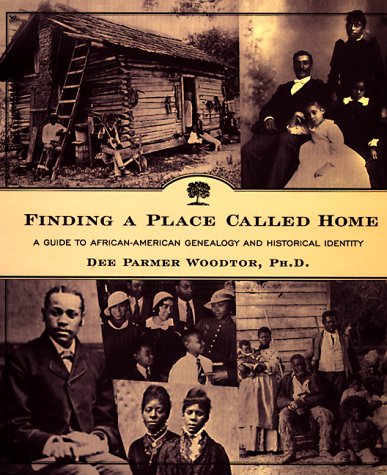
Title
Finding A Place Called Home: A Guide To Africanamerican Genealogy And Historical Identity,New
Sold by Ergodebooks, an authorized reseller.
Returns accepted within 30 days | support@ergodebooks.com
Shipping Information
- Free Standard Shipping — United States only
- Processing Time: 3–5 business days
- Estimated Delivery: 6–10 business days after dispatch
- Double-boxed, fully insured & discreetly packaged
- Tracking number sent via email once dispatched
Returns & Refund
Returns accepted within 30 days of delivery.
Damaged or Defective Item
Free return shipping + replacement or full refund
Wrong Item Received
Free return shipping + replacement or full refund
Change of Mind
Return shipping at customer's expense · 25% restocking fee applies
Payment Option

I Teach The Kings Of Their Ancestors So That The Lives Of The Ancients Might Serve Them As An Example, For The World Is Old But The Future Springs From The Past.'Mamadou Kouyate 'Sundiata', An Epic Of Old Mali, A.D. 12171257Two Major Questions Of The Ages Are: Who Am I? And Where Am I Going? From The Moment The First African Slaves Were Dragged Onto These Shores, These Questions Have Become Increasingly Harder For Africanamericans To Answer. To Find The Answers, You First Must Discover Where You Have Been, You Must Go Back To Your Family Treebut You Must Dig Through Rocky Layers Of Lost Information, Of Slaveryto Find Your Roots.During The Great Migration In The 1940S, When Africanamericans Fled The Strangling Hands Of Jim Crow For The Relative Freedoms Of The North, Many Tossed Away Or Buried The Painful Memories Of Their Past. As We Approach The New Millennium, Africanamericans Are Reaching Back To Uncover Where We Have Been, To Help Us Determine Where We Are Going.Finding A Place Called Home Is A Comprehensive Guide To Finding Your Africanamerican Roots And Tracing Your Family Tree. Written In A Clear, Conversational, And Accessible Style, This Book Shows You, Stepbystep, How To Find Out Who Your Family Was And Where They Came From.Beginning With Your Immediate Family, Dr. Dee Parmer Woodtor Gives You All The Necessary Tools To Dig Up Your Past: How To Interview Family Members; How To Research Your Past Using Census Reports, Slave Schedules, Property Deeds, And Courthouse Records; And How To Find These Records. Using The Internet For Genealogical Research Is Also Discussed In This Timely And Necessary Book.Finding A Place Called Home Helps You Find Your Family Tree, And Helps Place It In The Context Of The Garden Of Africanamerican People. As You Learn How To Find Your Own History, You Learn The History Of All Africans In The Americas, Including The Caribbean, And How To Benefit From A New Understanding Of Your Family'S History, And Your People'S.Finding A Place Called Home Also Discusses The Growing Family Reunion Movement And Other Ways To Clebrate Newly Discovered Family History.Tomorrow Will Always Lie Ahead Of Us If We Don'T Forget Yesterday. Finding A Place Called Home Shows How To Retrieve Yesterday To Free You For All Of Your Tomorrows.Finding A Place Called Home: An Africanamerican Guide To Genealogy And Historical Identity Takes Us Back, Stepbystep, Including: Methods Of Searching And Interpreting Records, Such As Marriage, Birth, And Death Certificates, Census Reports, Slave Schedules, Church Records, And Freedmen'S Bureau Information.Interviewing And Taking Inventory Of Family Membersusing The Internet For Genealogical Purposesinformation On Tracing Caribbean Ancestry
⚠️ WARNING (California Proposition 65):
This product may contain chemicals known to the State of California to cause cancer, birth defects, or other reproductive harm.
For more information, please visit www.P65Warnings.ca.gov.
- Q: How many pages does this book have? A: This book has four hundred sixty-four pages. It's a detailed guide to African-American genealogy and historical identity.
- Q: What is the binding type of this book? A: This book is a hardcover edition. The hardcover ensures durability and a professional appearance for your bookshelf.
- Q: What are the dimensions of this book? A: The dimensions are eight point seven five inches in length, one point seven five inches in width, and ten inches in height. This size makes it easy to handle while reading.
- Q: What is the target audience for this book? A: This book is suitable for anyone interested in African-American genealogy, particularly families tracing their roots. It's accessible to both beginners and those with prior knowledge.
- Q: How can I use this book for genealogical research? A: You can use this book to learn methods for interviewing family members and researching historical records. It provides step-by-step instructions to aid in tracing your family tree.
- Q: Is this book suitable for beginners in genealogy? A: Yes, this book is perfect for beginners. It uses a clear and conversational style, making complex topics easy to understand.
- Q: How should I store this book to keep it in good condition? A: Store this book in a cool, dry place away from direct sunlight. Keeping it upright on a shelf will help maintain its shape.
- Q: Does this book contain any sensitive content? A: Yes, the book discusses themes related to slavery and historical identity. It approaches these topics with sensitivity and respect.
- Q: What if the book arrives damaged? A: If the book arrives damaged, you should contact the seller for a return or exchange. Most sellers have policies in place for damaged items.
- Q: Can I find information about Caribbean ancestry in this book? A: Yes, this book includes information on tracing Caribbean ancestry. It broadens the scope of African-American genealogy to include the Caribbean context.
- Q: What kind of records does the book help you to research? A: The book helps you research various records, including census reports, marriage certificates, and slave schedules. It provides tools for thorough genealogical research.
- Q: Does this book discuss family reunion planning? A: Yes, it discusses the growing family reunion movement and offers insights into celebrating newly discovered family history.
- Q: Who is the author of this book? A: The author is Dr. Dee Parmer Woodtor. She brings expertise in genealogy and a passion for helping others trace their heritage.
- Q: What themes does this book explore? A: This book explores themes of identity, ancestry, and historical context within the African-American experience. It emphasizes understanding one's roots.
- Q: Is there a specific methodology mentioned in the book for genealogical research? A: Yes, the book outlines specific methodologies for searching and interpreting various historical records. It provides practical guidance for effective research.