
Title
Finding A Social Voice: The Church And Marxism In Africa,Used
Sold by Ergodebooks, an authorized reseller.
Returns accepted within 30 days | support@ergodebooks.com
Shipping Information
- Free Standard Shipping — United States only
- Processing Time: 3–5 business days
- Estimated Delivery: 6–10 business days after dispatch
- Double-boxed, fully insured & discreetly packaged
- Tracking number sent via email once dispatched
Returns & Refund
Returns accepted within 30 days of delivery.
Damaged or Defective Item
Free return shipping + replacement or full refund
Wrong Item Received
Free return shipping + replacement or full refund
Change of Mind
Return shipping at customer's expense · 25% restocking fee applies
Payment Option

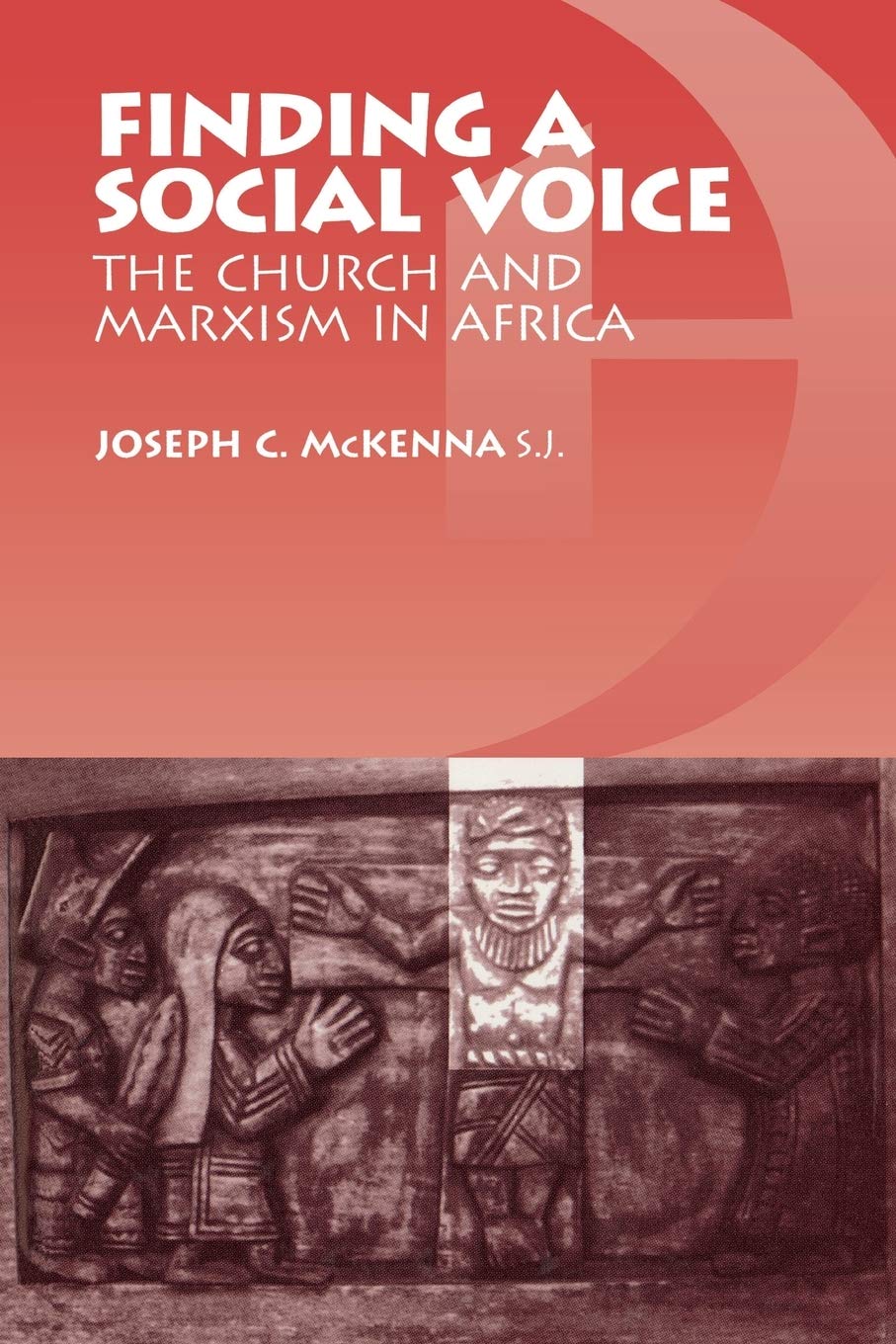
From the late 1960s until the mid1980s, the influence of Marxist ideas expanded in subSaharan Africa. The Catholic Church saw this influence as likely to affect the accomplishment of its mission, and its pastoral efforts accordingly sought to deal with the Marxist thrust. In the late 1980s, Marxist influence in Africa declined sharply as Marxist political dominance became less intense. Nevertheless, the Church's encounter with African Marxism constituted an important chapter in both secular and ecclesiastical history. Finding a Social Voice records and analyzes the significant elements of this encounter. Father McKenna's book investigates how postcolonial African regimes under varying degree of Marxist influence have interacted with the Catholic Church, and studies how the Church has grown through its response to that interaction. The book contributes greatly to the virtually unexplored topic of churchstate interaction in contemporary Africa. McKenna's claim that the Catholic Chruch's response to Marxism was a 'part of its coming to maturity,' part of its bringing its social perspective to bear on the processes of political, economic, and social modernization through which traditional cultures were passing, is an important contribution to the more recent literature on the emergence of 'civil society' in SubSaharan Africa.The text also provides an introduction to postVatican II understandings of ecclesiastical activity in Africa. It reviews the theory and practice of Marxism as developed by Marx, Engels, Lenin, and the leaders of Soviet Russia and other Communist countries. It then presents an overview of the ways in which Marxist influence worked in Africa and a similar overview of how the Church functioned and was affected by that influence. Finally, the book offers casestudies on the interaction of Marxism and the Church in four diverse Africa countries: Mozambique, Madagascar, Zimbabwe, and Zambia.The introductory chapters make this book accessible to the general reader; the book as a whole is an enrichment of our understanding of contemporary Africa.
⚠️ WARNING (California Proposition 65):
This product may contain chemicals known to the State of California to cause cancer, birth defects, or other reproductive harm.
For more information, please visit www.P65Warnings.ca.gov.